More Like Myself

Love… love… love. There are few people on Earth who do not yearn for a remarkable love like those found in the movies. While the “with all my heart, happily ever after variety” of romance often portrayed in film usually ranges somewhere between partial fact to dream-like fantasy, many still desire what they see. At least to a degree, I am among them and below are three movie quotes that have special meaning to me (with a 4th bonus line at the bottom)

“Look, I guarantee there’ll be tough times. I guarantee that at some time, one or both of us is gonna want to get out of this thing. But I also guarantee that if I don’t ask you to be mine, I’ll regret it for the rest of my life, because I know, in my heart, you’re the only one for me.” (from “Runaway Bride”)

“Love is passion, obsession, someone you can’t live without. If you don’t start with that, what are you going to end up with? Fall head over heels. I say find someone you can love like crazy and who’ll love you the same way back. And how do you find him? Forget your head and listen to your heart. To make the journey and not fall deeply in love – well, you haven’t lived a life at all.” (from “Meet Joe Black”)

“It was a million tiny little things that, when you added them all up, they meant we were supposed to be together … and I knew it. I knew it the very first time I touched her. It was like coming home. .. only to no home I’d ever known … I was just taking her hand to help her out of a car and I knew. It was like … magic.” (From “Sleepless in Seattle”)

A many-times-broken heart within still loves and desires to be loved, maybe more so than ever. In appropriate measure the lesson to cherish the gift of being loved was taught to me the most difficult way. There is much gratefulness for the love I once had in my arms and let slip way; not once but several times. Through those losses I came to know great teachers such as grief, heartache and misery who brought some of the wisdom I possess today.  

“I am someone else when I’m with you, someone more like myself”.
(from “Original Sin” starring Antonio Banderas and Angelina Jollie)
A Thousand Reasons to Smile

Living in a modern country in an era filled with ample time to think, a myriad of choices and substantial leisure time it is easy to forget things have not always been. Delving into that line of thinking is something I do occasionally to get myself pointed into a more optimistic and appreciative direction.

I begin by taking stock of my perceived problems:  Economics cause my work to be the most challenging of my life. My age is a subject of some consternation. My health is good overall, but a back injury ails me. Being single is my choice, but loneliness is a factor more than I want. A relationship with someone special in my life has been challenging and has an uncertain future. While a long way into recovery, I still have issues from childhood that mess me up emotionally here and there.

In my life are: a lovely home and handsome furnishings, a good job, love of dear friends, someone special in my life, a choice of more than one vehicle to drive, much better than average income and resources, very good health overall, caring friends, a close relationship with my son, coworkers I enjoy a lot, a spiritual path that lights my way and so much more.

When I simply slow down and take stock for a short while of the perceived challenges, conditions, benefits and assets of my life, I become humbled. That humility comes from awakening more strongly an awareness of how easy, blessed and rich my life is.

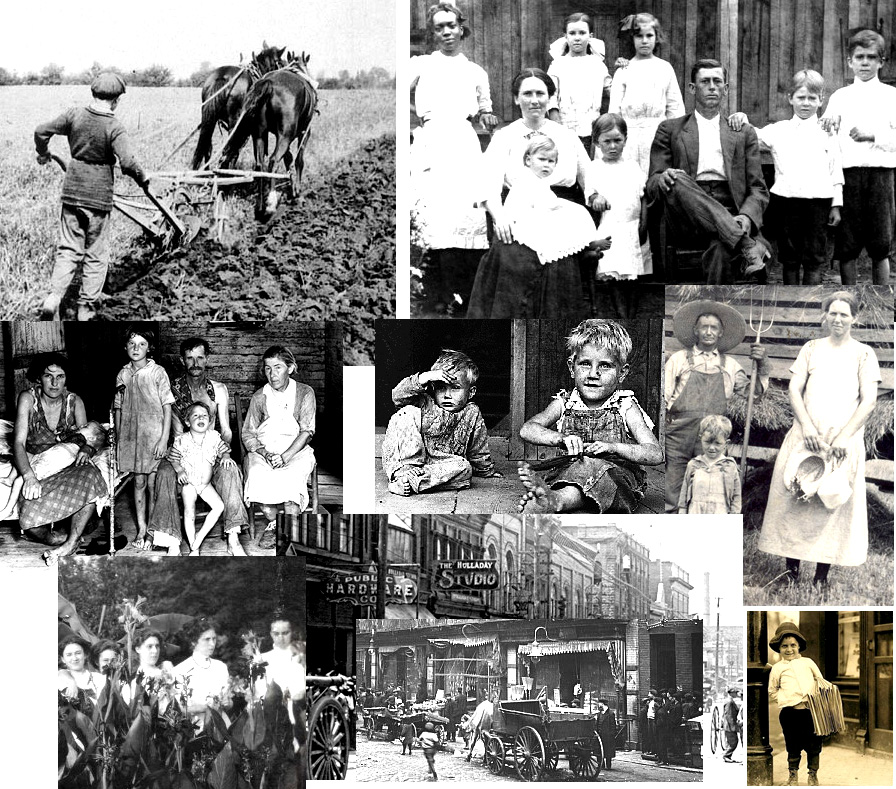
Had my time been a hundred years ago I’d likely not even still be here since the average life expectancy for men was 47 years (I’m 58). There would have been a 20% chance reading and writing would have exceeded my ability. If I had a good job my pay would probably not have exceeded $1,000 per year with a work week of at least sixty hours or more.

Any doctor I might have gone to would not have had a college education at a time when pneumonia and tuberculosis were the most feared diseases. The toilet at my home would probably not have been indoors and my transportation would have been by horse or a trolley. And just for a reference point, in 1912 there was no canned beer, iced tea and almost no one had a home telephone.

Amazingly simple how just taking myself through that train of thought improves my outlook on life. It was not bad to begin with as I am a generally grateful and appreciative person. However, when I focus on ‘was is’ instead of ‘what isn’t’, that ‘glass half full’ attitude brings me to the great comfort and gratitude found in seeing how wonderful my life is.

When life gives you a hundred reasons to cry,
show life that you have a thousand reasons to smile.
Unknown

Never Too Late To Have A Happy Childhood

Frequently it’s a simple thing that wakes or heightens my gratitude. A cloud in the sky, a stunning flower, a memory, a dream, a hope, watching a small child or even a feeling that arrives from a source unknown. This morning I came across the children’s poem below that talks about a whimsical carefree life a make-believe trout might have. While complete fantasy, the spirit of it put a smiling feeling inside me at the start of my day.

“The Wishing Fish” by Thomas Vorce

What if you could be a trout
And splash and flip
And flop about.

Amidst the river’s ripples you
Would catch sun shimmers
And renew the summer wind.

You’d stop to chat
With ‘trouty’ friends
And make amends.

Or discourse on the willow’s bend.
The gala of the water’s course,
Like laughter of a child,
Would run along your gullet
With the mystery of the wild.

And every wish you ever heard
Would be in chorus with the birds.
As palettes made of rainbows play,
You’d flap your fins
To greet the day.

Along the banks you’d rest at night
And fire flies like lamps would light
The glowing of the August Moon,
Where fish make wishes of their own
And all the best remains unknown.

In childhood I found nursery rhymes and fairy tales caused great mystery and fantasy to unfold in my mind. Then I could imagine such things might happen and could even see them in my child’s theatre of the mind. While mostly dormant for a long time, I am grateful the child within is awakened.  Being able to feel the wonder of make-believe again is a wonderful gift that I appreciate more at this age than I ever did as a child.  I am grateful the sad child of youth has found some measure contentment and gladness for living.  I have found it is never too late to have a happy childhood.

Fantasies are more than substitutes for unpleasant reality;
they are also dress rehearsals, plans.
All acts performed in the world begin in the imagination.
Barbara Grizzuti Harrison

Your’s Is the Earth and Everything In It

John Keats wrote, Poetry should strike the reader as a wording of his own highest thoughts, and appear almost a remembrance.  So it is for me with the poem below.  Many years have passed since encountering the Kipling poem below.  Last time reading it I was still a young man. The meaning falls upon me with greater weight and deeper meaning now being near the end of my 5th decade and have a son dear to me. For my boy, who is now a man near thirty, I hope all of Kipling’s thoughts will ring true.  This entry is dedicated to my son.  

“If” by Rudyard Kipling
If you can keep your head when all about you
Are losing theirs and blaming it on you,
If you can trust yourself when all men doubt you,
But make allowance for their doubting too;
If you can wait and not be tired by waiting,
Or being lied about, don’t deal in lies,
Or being hated, don’t give way to hating,
And yet don’t look too good, nor talk too wise:
If you can dream – and not make dreams your master;
If you can think – and not make thoughts your aim;
If you can meet with Triumph and Disaster
And treat those two impostors just the same;
If you can bear to hear the truth you’ve spoken
Twisted by knaves to make a trap for fools,
Or watch the things you gave your life to, broken,
And stoop and build ’em up with worn-out tools:
If you can make one heap of all your winnings
And risk it on one turn of pitch-and-toss,
And lose, and start again at your beginnings
And never breathe a word about your loss;
If you can force your heart and nerve and sinew
To serve your turn long after they are gone,
And so hold on when there is nothing in you
Except the Will which says to them: ‘Hold on!’
If you can talk with crowds and keep your virtue,
‘ Or walk with Kings – nor lose the common touch,
if neither foes nor loving friends can hurt you,
If all men count with you, but none too much;
If you can fill the unforgiving minute
With sixty seconds’ worth of distance run,
Yours is the Earth and everything that’s in it,
And – which is more – you’ll be a Man, my son!

One of the most difficult yet wonderful gifts of my growth in recent years is the ability to feel deeply and openly. It seems every ounce of emotion and sentiment lies just a millimeter below my skin waiting to be brushed up against and set free. While weighty to bear sometimes, I am so very grateful for this heightened ability to feel that makes me more alive than ever before.

Poetry is when an emotion has found its thought and the thought has found words.
Robert Frost

 At the link below you can hear Kipling’s poem above read in a distinctive “British accent” as is appropriate since the poet was English.
http://classicpoetryaloud.podomatic.com/entry/2007-06-03T12_50_03-07_00


The Source from Which Self-Respect Springs

 A relationship without basic trust has no security. Lack of trust creates anxiety. When we can’t tolerate anxiety, we resort to blame. And blame kills relationships. Anxiety is at the core of blame. When we’re upset, disappointed or angry because of another person’s behavior, we often use blame to discharge our feelings. To say it bluntly, we dump our negative emotions onto another person. Carl Alasko, Ph.D., the author of the book”Beyond Blame”.

John is rushing through breakfast. There’s no milk. He’s upset and says to Mary, “Darn it, Mary, why can’t you at least keep some milk in the house?”

In essence, John is criticizing Mary of being too domestically incompetent to even keep track of the household’s supply of milk.

Instantly she gets angry. “You know, John, I work too.” Frequently an accusation follows: “Since when are you so important that you can’t buy some milk yourself?”

Mary’s accusation angers him even more. “I almost got laid off at work and you expect me to stop and buy milk?!” Clearly, this argument is only going to get worse.

The antidote to blame is simple: state your complaint without criticizing or accusing. Admittedly not an easy thing to do.

But here’s how it works. John says: “Oh, darn, there’s no milk.” Not a word more.

Since Mary is devoted to John and committed to their success as a couple, she takes on the responsibility. “Really? I’m sorry. I forgot.” Nothing more needs to be said. Mary already feels bad. Carrying on about it won’t add anything to either the discussion or the reliability of the household milk supply.

To ensure trust, avoid blame. It’s a simple formula that helps keep relationships together.

A decade ago I might have been able to grasp the concept that Dr. Alasko writes about, but I would not have been able to practice it consistently. My anger about the past and fear about the future would have prevented it. How very grateful I am today that storm has dissipated though acceptance, hard word and growth. Today ‘I get it’, thankfully!

The willingness to accept responsibility for one’s own life
is the source from which self-respect springs.
Joan Didion

The majority of what is above comes from an article by Carl Alasko, Ph.D. http://www.psychologytoday.com/blog/beyond-blame/201110/how-blame-kills-love


Within the Walls of My Being

I was conceived in a world
beyond my grasp, beyond my
knowledge. A world for me to be
born in…. and to die.
But what about the “in-between” time?
Can I connect birth, live, and death
into a flowing stream of consciousness?
The only decision that is truly mine
is how I choose to spend my days, hours,
and minutes.

Will I develop my “Being” into something
of significance? Will I find contentment
and enjoyment deep within the walls of my
being, or will I wander through life blindly,
unaware of my own purpose? Will I find this
for myself or will I perish? Only I can decide!

Those lines are from a book titled “Visions of You” by George Betts published by Celestial Arts Publishing during the latter part of the “hippie era” in 1972; the year my nineteenth birthday arrived. That time of “freaks” and “straights” is remembered well. The deep south of  Alabama and Mississippi where I grew up was behind me. Now my home was a rented cottage on Ruxton Avenue under the shadow of Pike’s Peak in Manitou Springs, Colorado, which at that time was a past prime tourist town. Rent was cheap and the empty houses and store fronts had been filled by a good-sized hippie colony.

The late 60’s and early 70’s was a special time when I could pick up a hitch-hiking couple and let them sleep the night on my floor with never a worry about anything bad happening. Those were the days we truly thought we were “brothers and sisters”.

Today the real estate in Manitou Springs is high-priced and vestiges of the 60’s and 70’s when I lived there are mostly long gone. But there still are people around the town you can tell by their hair and clothes still hang on to that time gone by.

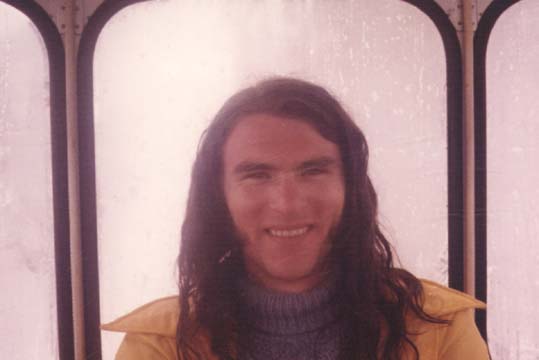
I’m told the big turquoise ring I wear on my right hand, the bracelet on my wrist and my somewhat longer length of my hair signifies I too am one of those people. I accept the “old hippie” moniker gladly and am proud to be part of a generation that worked to stop a war, moved women’s and civil rights steps forward, were involved politically and brought sex out of the closet. We were naive, but really did believe in something hopeful and beautiful… at least for a little while.

I wonder if the author of “Visions of You” is the same George Betts who today on-line is found to be a professor at the College of Education and Behavioral Sciences in Greeley, Colorado. He’d be about 68 years old or about 10 years older than me. In the press photo for the school Professor Betts looks today mostly like a kindly grandfather. I wonder … is that how I look now? Being not much more than a year from being sixty years old there is awareness within that I became invisible to college girls decades ago and am also entering my “Grandpa phase”. Many might not think of me today as a “hip dude” as we once called guys who were “with it” and “cool”, but once upon a time that was me (or at least in my own mind I was).

I am proud of my life, my accomplishments and the peace that has been made with my mistakes (and I made some doozies!). My days have been colorful, my experiences rich and I’ve lived more fully than most.  There is still more to come; quite possibly the best parts. I am learning, growing, becoming more aware, finding harmony with myself and a spiritual path is unfolding for me. In some ways I’m picking up where I left off back in my early 20’s and that’s a good thing.

Peace, Brothers and Sisters!

He who takes a stand is often wrong,
but he who fails to take a stand is always wrong.
Anonymous

Too Precious to Waste… Never Long Enough to Worry About

For the total of fifty cents, plus tax, yesterday I bought a used copy of a small book published in 2010 by Dr. Criswell Freeman titled “When Life Throws You a Curveball… Hit It!”. The little thing is only about a quarter of an inch thick containing not much more than a hundred pages in a four by six-inch cover.

Being previously unknown to me my searching on-line for info about Dr. Freeman yielded surprising results. With little fanfare, he has compiled and edited well over a hundred titles that have now sold over 8,000,000 copies. The Washington Post calls him “possibly the most prolific ‘quote book’ writer in America. Dr. Freeman jokes about himself saying “I’m one of the best-selling unknown authors in the world”.

The following is called “The Two Most Tiring Days” and comes from the “…Curveball” book by Dr. Criswell Freeman mentioned in my first paragraph:

If you’ve been facing tough times, you’re probably tired. Tough times have a way of leaving you exhausted before the day has even begun. The weariness comes not from physical labor but from constant worry. That’s why it’s so important to understand the source of your energy drain. Your fatigue results not from physical strain but, instead, from your attitude toward the two most tiring days of the week: yesterday and tomorrow.

What are yesterday and tomorrow so draining? Those two days represent those two limitless reservoirs of exhaustion: the past and the future. If we could simply concern ourselves with the day at hand, the world would become much simpler. But sometimes we lack both the ability to accept the past and the faith to accept the future. As if today’s tasks weren’t enough, we take on the burdens of yesterday and the obligations of tomorrow. When we do, today’s work goes wanting and tomorrow’s happiness is placed in jeopardy.

If you can learn from yesterday without undue regret, you are insightful. If you can plan for tomorrow without worry, you are wise. If you can live your life in one-day packages, you are blessed.

When you live in the present, there’s little to worry about anyway. After all, the present is a very small sliver of time, suddenly upon us and too quickly gone. The present moment is too precious to waste but never long enough to worry about.

Dr. Criswell Freeman’s little book which the paragraphs just above come from is subtitled “Simple Wisdom for Life’s Ups and Downs” and is exactly as advertised. I am grateful for the discovery of it and look forward to finding more of the hundred titles or so he has published.

More and more what I need seems to come to me naturally when I need it without doing much except being open to receive. The longer I write about gratitude the more grateful I become. Attention magnifies and multiplies what it is applied to.

Look to this day for it is life,
The very life of life.
In its brief course lie all the realities
And truths of existence;
The joy of growth,
The splendor of action,
The glory of power.
For yesterday is but a memory,
And tomorrow is only a vision.
But today well lived makes every
Yesterday a memory of happiness.
And every tomorrow a vision of hope.
Look well, therefore, to this day.
Ancient Sanskrit poem by Kelidasa

The Exploration of Desire

Choice is the exploration of desire and then the selection of action. In every moment, you are choosing either to align yourself with your own true path or veer away from it. There are no neutral actions. Even the smallest gesture has a direction to it, leading you closer to your path or farther away from it, whether you realize it or not. Cherie Carter-Scott, PH.D.

Studies have found people who make decisions quickly, even when lacking some information, tend to be more satisfied with their choices than those who tediously weight out their options. Some of the difference is simply in the lower level of stress created in making the decision, but a good bit comes from how our brains are wired.

A conscious mind can hold a maximum in the neighborhood of 5 and 9 distinct thoughts at any given time. For most people the number of possible concurrent thoughts is on the lower side of that scale  in the 3-5 range. So generally speaking any considerably complex problem with greater than 5 factors can begin to overflow a conscious mind’s ability to function effectivelywhich can often lead a person to make poor choices.

What’s interesting is our subconscious mind is much better at juggling and working through complex problems. Those who intuitively “go with their gut” are actually trusting the work their subconscious mind has already done, rather than second-guessing it. They don’t rely as much on their conscious mind’s much more limited ability to deal with complex situations.

Whatever process we use to arrive at a choice, the satisfaction with what is picked will depend largely on whether one claims ownership of their choices. Feeling pressured into a choice or those made while feeling not in control are frequently colored negatively, even positive outcomes. Conversely, taking full responsibility for decisions can make even failing feel somewhat successful.  You’ll know you did your best and you’ll have gained valuable experience for next time.

Often I have commented I seem make better choices when I pay attention to what I feel instead of what I think. It is my belief I am naturally repelled by what I should not do and attracted by what I should do. However, it takes an ability to ignore to a degree the constantly yakking, thinking mind that spins all kinds possible scenarios and outcomes, even impossible and ludicrous ones. The knowledge that my feelings are, on average, a more dependable indicator of what I should and should not do has been a sizeable benefit to me. I am grateful for this insight.

The strongest principle of growth lies in human choice.
George Eliot

Dreamers of the Day


For all wishers and dreamers;
For those who hope and pray;
For every faithful schemer;
Who lives from day-to-day;
Are words that count to forty-nine
With wisdom inside for you to find.


All people dream, but not equally.
Those who dream by night in the dusty recesses of their mind
Wake in the morning to find that it was vanity.

But the dreamers of the day are dangerous people
For they dream dreams with open eyes
And make them come true.
D.H. Lawrence


More than ever my dreams are before me.  Like never before they seem possible.  The path to them has become no easier, nor has some windfall of money or brain-power fallen upon me.  I labor under no great epiphany or increase in fortitude and strength. 

What has changed is I am open to what comes and truly believe I can accomplish most anything I set my full self toward. Simply here in the later stages of my life FINALLY I have learned to truly believe in myself and what I am capable of doing.  That understanding comes from a freeing of my mind, a loosing my grasp on much that does not matter and learning to lean on and trust a power beyond my understanding or explanation. 

Letting go, not trying to control everything and being open to “what is” was my new beginning. And for that my gratitude is profound and deeply meaningful.

I am only one,
But still I am one.
I cannot do everything,
But still I can do something;
And because I cannot do everything,
I will not refuse to do the something that I can do.
From “The Book of Good Cheer” by Edwin Osgood Grover


Buddha, Confucius and Franklin


There is nothing more dreadful than the habit of doubt.
Doubt separates people.
It is a poison that disintegrates friendships
And breaks up pleasant relations.
It is a thorn that irritates and hurts;
It is a sword that kills.
Buddha


Life is really simple,
But we insist on making it complicated.
Confucius


Life’s Tragedy is that we get old too soon and wise too late.
Benjamin Franklin
 
 
Inspiration can come from many places, but I have found few sources as consistent as the words of Buddha,Confucius and Ben Franklin.  Completely different men from greatly varied times saying much of the same things.  I am grateful for the bits of wisdom they left behind for me to benefit from.
 
Too bad people can’t switch problems
because nobody knows how to solve their own problems,
but they always know how to solve another’s.
Unknown