The Ultimate Virtue

11b

Wanting to love someone is not the same as loving someone.
Knowledge of how to build something will not build anything.
Needing to get in better shape does not make me healthier.
Aspiring to make a difference does not make a difference.
Wishing to be kinder does not make me more kind.
Knowing what is right is not doing what is right.
Realizing what I should do is not the doing of it.
Craving a relationship does not put me in one.
Desiring to apologize is not an apology.
Yearning to finish a book is not writing.
Wanting to travel is not traveling.
Longing for love is not love.

Knowing is a small thing.
Using what I know is a big thing.

Almost two hundred years after he lived Johan Wolfgang von Goethe is remembered as many things: poet, playwright, dramatist, novelist, scientist. But it’s what the man left behind as a philosopher that has taken root within. Sometimes when I kind of lose my way, I frequently find something ‘good ole Wolfgang’ wrote will nudge me out of “thinking” and into “doing”. Here are four examples:

Doubt can only be removed by action.

As soon as you trust yourself, you will know how to live.

Knowing is not enough; we must apply. Willing is not enough; we must do.

Thinking is easy, acting is difficult, and to put one’s thoughts into action is the most difficult thing in the world.

With the gift of lots of time on my hands it’s not easy some days to direct myself toward something, even if my desired ‘something’ is screwing off. That too can be done well. Wasting time is not performed to its full potential if the voice inside is saying I should get busy being productive. Today I make the commitment to ‘screw off and waste time’ to my fullest potential. I smiled as I typed that because I am humbly grateful for a Tuesday that is mine, all mine.

Knowledge without application
is simply knowledge.
Applying the knowledge
to one’s life is wisdom,
and that is the ultimate virtue.
Kasi Kaye Ilopouloa

From Then Till Now

20130107__0308DSC_0308Imperial-Dunes-sandstorm

It’s not uncommon to have gone through something filled with difficulty and pain, only to end up grateful for what it taught. And so it has been with me the last half-dozen years or so. I went from who I was to who I have become. Like a walk through hell, I do not wish to ever have to again face the sort of things I went through. However, I am grateful to have survived and be so much better for the experience.

Sometimes fate is like a small sandstorm that keeps changing directions. You change direction but the sandstorm chases you. You turn again, but the storm adjusts. Over and over you play this out, like some ominous dance with death just before dawn. Why? Because this storm isn’t something that blew in from far away, something that has nothing to do with you. This storm is you. Something inside of you. So all you can do is give in to it, step right inside the storm, closing your eyes and plugging up your ears so the sand doesn’t get in, and walk through it, step by step. There’s no sun there, no moon, no direction, no sense of time. Just fine white sand swirling up into the sky like pulverized bones. That’s the kind of sandstorm you need to imagine.

And you really will have to make it through that violent, metaphysical, symbolic storm. No matter how metaphysical or symbolic it might be, make no mistake about it: it will cut through flesh like a thousand razor blades. People will bleed there, and you will bleed too. Hot, red blood. You’ll catch that blood in your hands, your own blood and the blood of others.

And once the storm is over you won’t remember how you made it through, how you managed to survive. You won’t even be sure, in fact, whether the storm is really over. But one thing is certain. When you come out of the storm you won’t be the same person who walked in. That’s what this storm’s all about. Haruki Murakami

I have learned it’s not unusual to go through something filled with difficulty and pain, only to end up grateful for what it taught. And so it has been for me the last half-dozen years or so. From then to now I went from who I was to who I have become. That journey was like a walk through a blinding sandstorm that bruised, blinded and left me completely lost at times. I am grateful to have somehow muddled through the shifting sands and be better for it. I am thriving!

There are two questions a man must ask himself:
The first is ‘Where am I going?’
and the second is ‘Who will go with me?’
If you ever get these questions
in the wrong order you are in trouble.
Sam Keen

Extremes of Despair and Gladness

sunclouds

I wish some of my past could be erased; those parts I dislike most. Some were done to me, but many are things I did to others. It’s a hundred times harder to forgive myself than it is find forgiveness for another. My ability to let go beating myself up has improved a lot since I began successfully disputing my own BS a few years ago, but it’s still challenging, especially in a ‘down’ time.

Everyone messes up. Me, you, the neighbors, Mother Teresa, Mahatma Gandhi, King David, the Buddha, everybody.

It’s important to acknowledge mistakes, feel appropriate remorse, and learn from them so they don’t happen again. But most people keep beating themselves up way past the point of usefulness: they’re unfairly self-critical.

For most people, that inner critic is continually yammering away, looking for something, anything, to find fault with. It magnifies small failings into big ones, punishes you over and over for things long past, ignores the larger context, and doesn’t credit you for your efforts to make amends.

Therefore, you really need your inner protector to stick up for you: to put your weaknesses and misdeeds in perspective, to highlight your many good qualities surrounding your lapses, to encourage you to keep getting back on the high road even if you’ve gone down the low one, and – frankly – to tell that inner critic to Shut Up.

The only wholesome purpose of guilt, shame, or remorse is learning – not punishment! – so that you don’t mess up in that way again. Anything past the point of learning is just needless suffering. Plus excessive guilt, etc., actually gets in the way of you contributing to others and helping make this world a better place, by undermining your energy, mood, confidence, and sense of worth. Author and neuropsychologist Dr. Rich Hanson http://www.wildmind.org/blogs/on-practice/the-art-of-self-forgiveness

My gratitude is never stronger than when I come back to the ‘real world’ after a bout of cycling depression. If I am willing to get in the ring with the big “D.” and fight it things get better faster than if I just wait for it to pass.

There is darkness inside all of us… that part of our soul that is irreparably damaged by the very trials and tribulations of life. We are what we are because of it, or perhaps in spite of it. Some use it as a shield to hide behind, others as an excuse to do unconscionable things. But, truly, the darkness is simply a piece of the whole, neither good nor evil unless you make it so. Jenna Maclaine

There is no doubt that I appreciate contentment more than many people. Existing within a world of depression’s darkness and shadow even for a short time makes every breathe more precious when the lightness of ‘normal’ returns. You won’t hear many whines for I know it is the down times that ultimately make being alive so cherished. The wider the gap between the extremes of despair and gladness, the better I can bear the former and more I am grateful for the latter. Oh, what a difference a day makes!

I now see how owning our story
and loving ourselves through that process
is the bravest thing that we will ever do.
Brene Brown

Wildly and Dangerously Free

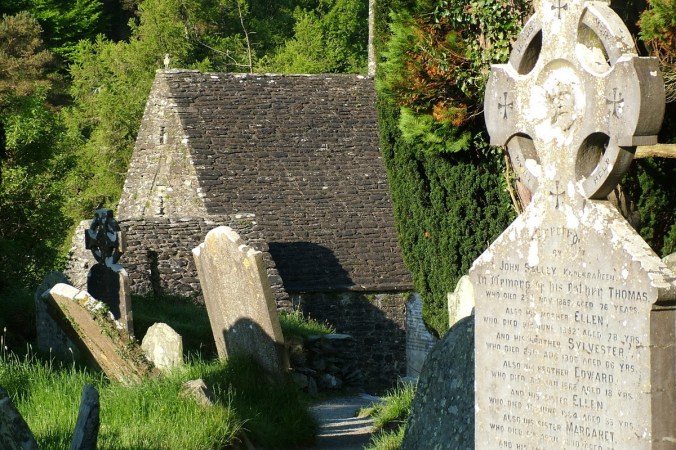
St-Kevins-Church-and-tombstones-Glendalough-Ireland

On the day when
the weight deadens
on your shoulders
and you stumble,
may the clay dance
to balance you.
And when your eyes
freeze behind
the grey window
and the ghost of loss
gets in to you,
may a flock of colors,
indigo, red, green,
and azure blue
come to awaken in you
a meadow of delight.

When the canvas frays
in the currach (boat) of thought
and a stain of ocean
blackens beneath you,
may there come across the waters
a path of yellow moonlight
to bring you safely home.

May the nourishment of the earth be yours,
may the clarity of light be yours,
may the fluency of the ocean be yours,
may the protection of the ancestors be yours.
And so may a slow
wind work these words
of love around you,
an invisible cloak
to mind your life.
“Beannacht” (Blessing)
from “Anna Cara:
A Book of Celtic Wisdom”
by John O’Dononue

Only recently have I discovered the writings of John O’Donohue and I thankful for the finding. He was a contemporary Irish poet, author, priest, and philosopher who lived only fifty-three years. His eloquent words are akin to prayers, just the kind that touch me deepest.

It is a strange and wonderful fact to be here, walking around in a body,
to have a whole world within you and a world at your fingertips outside you.
It is an immense privilege… We are here.
We are wildly and dangerously free.
John O’Donohue

A Prevailing Attitude that Endures

1347909838-425614-0170477_www.nevseoboi.com.ua

A decade’s worth of research on gratitude has shown me that when life is going well, gratitude allows us to celebrate and magnify the goodness. But what about when life goes badly?

My response is that not only will a grateful attitude help—it is essential. In fact, it is precisely under crisis conditions when we have the most to gain by a grateful perspective on life. In the face of demoralization, gratitude has the power to energize. In the face of brokenness, gratitude has the power to heal. In the face of despair, gratitude has the power to bring hope. In other words, gratitude can help us cope with hard times.

Don’t get me wrong. I am not suggesting that gratitude will come easily or naturally in a crisis. It’s easy to feel grateful for the good things. No one “feels” grateful that he or she has lost a job or a home or good health or has taken a devastating hit on his or her retirement portfolio.

But it is vital to make a distinction between feeling grateful and being grateful. We don’t have total control over our emotions. We cannot easily will ourselves to feel grateful, less depressed, or happy. Feelings follow from the way we look at the world, thoughts we have about the way things are, the way things should be, and the distance between these two points.

But being grateful is a choice, a prevailing attitude that endures and is relatively immune to the gains and losses that flow in and out of our lives. When disaster strikes, gratitude provides a perspective from which we can view life in its entirety and not be overwhelmed by temporary circumstances. Yes, this perspective is hard to achieve—but my research says it is worth the effort. Trials and suffering can actually refine and deepen gratefulness if we allow them to show us not to take things for granted.

Why? Well, when times are good, people take prosperity for granted and begin to believe that they are invulnerable. In times of uncertainty, though, people realize how powerless they are to control their own destiny. If you begin to see that everything you have, everything you have counted on, may be taken away, it becomes much harder to take it for granted.

So crisis can make us more grateful—but research says gratitude also helps us cope with crisis. Consciously cultivating an attitude of gratitude builds up a sort of psychological immune system that can cushion us when we fall. There is scientific evidence that grateful people are more resilient to stress, whether minor everyday hassles or major personal upheavals. The contrast between suffering and redemption serves as the basis for one of my tips for practicing gratitude: remember the bad.

It works this way: Think of the worst times in your life, your sorrows, your losses, your sadness—and then remember that here you are, able to remember them, that you made it through the worst times of your life, you got through the trauma, you got through the trial, you endured the temptation, you survived the bad relationship, you’re making your way out of the dark. Taken from an on-line article by Robert Emmons http://greatergood.berkeley.edu/article/item/how_gratitude_can_help_you_through_hard_times

There is no power within me to fully explain the difference a focus on being grateful has had on me. To say gratitude has been life changing may sound exaggerated, but I assure you for me it is absolutely true.

Appreciating what I have
is my medicine.
Betty Jamie Chung

Make as Many Mistakes as You Can

4321tumblr_m1694s65GG1r8cxll

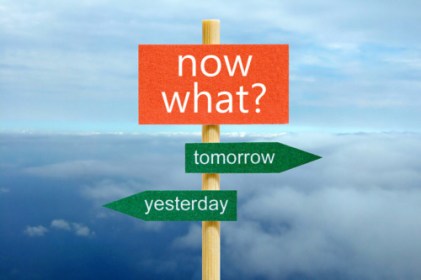
Graduating is not something I have forgotten or better stated, I remember well how I felt at graduation. The title of my feelings could have been “Now What?”. Having spent years growing up and getting an education I was then standing on the threshold of a life I had yet to experience. Hopes and dreams were plenty, but what road to take toward them was fuzzy at best.

And so it is today, my third day into retirement from a long successful professional life. I am lucky and able to do this younger than most and am grateful for the opportunity. However, it feels like I am just past graduation again asking “Now What?”. There’s the same sense of things as when younger: lots I plan and imagine doing but uncertain where to begin.

In a book called “Hold Fast Your Dreams” Carrie Boyko and Kimberly Colen published twenty commencement speeches. Thumbing through it this morning I was touched by an address by Ken Burns at Georgetown University in 2006. Here’s a few highlights that stuck me as pertinent to my most recent “graduation”:

As you pursue your goals in life, that is to say your future, pursue your past. Let it be your guide. Insist on having a past and then you will have a future.

Replace cynicism with its old-fashioned antidote, skepticism.

Don’t confuse success with excellence.

Insist on heroes. And be one.

Read. The book is still the greatest manmade machine of all — not the car, not the TV, not the computer.

Write: write letters. Keep journals. Besides your children, there is no surer way of achieving immortality.

Do not lose your enthusiasm. In its Greek etymology, the word enthusiasm means, “God in us”.

Here at late morning I am off into my day with new inspiration borrowed from the past words of a man I know only through his documentaries and speeches. I am grateful the cosmos choose today for me to pull the book off my shelf that contained Ken Burns 2006 speech. Over and over and over… what I need arrives. All I have to do is believe and let things come to me in their own time. As long as I keep an open heart and mind they always seem to…

When we were five, they asked us what we wanted to be when we grew up.
Our answers were thing like astronaut, president, or in my case… princess.
When we were ten, they asked again and we answered –
rock star, cowboy, or in my case, gold medalist.
But now that we’ve grown up, they want a serious answer.
Well, how ’bout this: who the hell knows?!
This isn’t the time to make hard and fast decisions,
its time to make mistakes.
Take the wrong train and get stuck somewhere chill. Fall in love – a lot.
Major in philosophy ’cause there’s no way to make a career out of that.
Change your mind. Then change it again, because nothing is permanent.
So make as many mistakes as you can. That way, someday,
when they ask again what we want to be… we won’t have to guess.
We’ll know.
Stephenie Meyer

Where I Am

440371442_640

Pain: An unpleasant sensation occurring in varying degrees of severity
as a consequence of injury, disease, or emotional suffering or distress.

A rather amazing realization is beginning to make itself known: how negatively staying in a job I did not enjoy effected me. I loved the people I worked with and that now appears clearly as the reason I kept doing it. Well, that and the fact that I did know what else to do. Making a choice to leave a profession of decades is a bit like climbing a tall, difficult to scale mountain: difficult to prepare for and even more difficult to do.

With my work responsibility lightening up before retirement I find myself reviewing the previous few months. The almost startling discovery is how much less depression has effected me once I made the choice to hang it up. It’s easy to understand why from my current vantage point: I do not have to be concerned about the performance of the business, the profitability of the next quarter or what our competitors might do. Doing such things had been a part of my life for so long they had become habitually normal (but in reality is anything but normal).

Only in giving up the emotional suffering and distress that came with being a responsible manager of a large business have I begun to realize the madness I lived in for so long. It has been said there are four primary ways my body has to deal with pain: sleep, forgetting, madness and death. Many times sleep came with difficulty due to my business worries. Forgetting was not an option and obviously I am still alive, which left madness for me to escape into from time to time. And my brand of madness was depression.

Perhaps the greatest faculty our minds possess is the ability to cope with pain. Classic thinking teaches us of the four doors of the mind, which everyone moves through according to their need.

First is the door of sleep. Sleep offers us a retreat from the world and all its pain. Sleep marks passing time, giving us distance from the things that have hurt us. When a person is wounded they will often fall unconscious. Similarly, someone who hears traumatic news will often swoon or faint. This is the mind’s way of protecting itself from pain by stepping through the first door.

Second is the door of forgetting. Some wounds are too deep to heal, or too deep to heal quickly. In addition, many memories are simply painful, and there is no healing to be done. The saying ‘time heals all wounds’ is false. Time heals most wounds. The rest are hidden behind this door.

Third is the door of madness. There are times when the mind is dealt such a blow it hides itself in insanity. While this may not seem beneficial, it is. There are times when reality is nothing but pain, and to escape that pain the mind must leave reality behind.

Last is the door of death. The final resort. Nothing can hurt us after we are dead, or so we have been told. From “The Name of the Wind” by Patrick Rothfuss

Right now life feels so much lighter than it ever has in my adult life. Allowing me to be accountable only for myself is eye-opening. There are those I care about who I’ll help without hesitation, but I am not responsible for them. It feels like half the weight of the world has been taken from my shoulders and I have not had a bout of depression in months. So this is what taking care of one’s self feels like. I like it and am grateful to be exactly where I am!

I give you this to take with you:
Nothing remains as it was.
If you know this, you can
begin again, with pure joy
in the uprooting.
Judith Minty

Fewer Words

2586027821_d30d0ccc79

Fewer words often say far more than quantity, hence, three sincere thoughts this morning about the art of being grateful.

As the years pass, I am coming more and more to understand that it is the common, everyday blessings of our common everyday lives for which we should be particularly grateful. They are the things that fill our lives with comfort and our hearts with gladness — just the pure air to breathe and the strength to breathe it; just warmth and shelter and home folks; just plain food that gives us strength; the bright sunshine on a cold day; and a cool breeze when the day is warm. Laura Ingalls Wilder

Embracing an attitude of gratitude is nourishing to the soul. When we allow ourselves to be engulfed in gratitude, this abundant soul nourishment overflows to your relationships, careers, and day-to-day lives. Act in gratitude today… If you are grateful to those you love, show them. If you are grateful to those who have helped you, show them. If you are grateful to your creator, to your family, to your friends, and you want it to be known, let it be shown! Steve Maraboli

Woke up today feeling appreciative of being alive and the comfort I live within. I spent time with a friend last night that made hours evaporate quickly. Special people add bright colors and flair to living. I am grateful for every caring soul that has been and is a part of my life.

The invariable mark of wisdom
is to see the miraculous in the common.
Ralph Waldo Emerson

My Imperfectly Human Best

1043876_210391202449050_1194153786_nNow that my physical youth is mostly gone, it’s interesting to read what others wrote while young. Usually at the time a youthful writer puts down their thoughts with the belief that his or her vantage point can only be understood by someone about the same age. I once thought that but I was wrong. Much of my writing when I was in my teens and 20’s is remarkably still true here in my 50’s.
If you’re young you’ll find the following by an unknown writer to be quite meaningful I suspect. If you’re older, I have little doubt you’ll relate to what follows as I did. It reminds me that what was once felt as a young person, is still very much alive inside me today.

…at some point, you’re gonna sit in your bed all night and cry about everything that’s happened to you that day. you’re gonna have a day where everything goes perfect. nothing is ever going to go as it’s planned. you’re going to have a best friend then find out that they talk s#it about you behind your back. you’re going to meet the most amazing person in the world, fall in love, and then get left behind and forgotten about a month later. you’re going to go on vacation and miss everything about it when you leave. you’re going to have the best day of your life. you’re going to have moments where you feel like nothing could bring down and everything is perfect. you’re going to go to parties, and get taken advantage of. you’re going to get drunk and say something that you regret saying. you’re going to have someone who you share everything with, then slowly fade away from each other and eventually never talk again. you’re going to take pictures and think “what was I thinking?” a year later. you’re going to go on the most amazing trip and meet the most amazing people ever and then never talk to or see them again. you’re going to fall in and out of love. you’re going to tell someone something and it’s going to spread around. you’re going to read something that breaks your heart, but you can’t stop reading it over and over. you’re going to miss someone everyday but not do anything about it. you’re going to have awkward moments where you see someone and remember everything you’ve been through together. you’re going to be a bitch [bastard] to someone but not realize how much it affected them. you’re going to have to act like you don’t care when really, you’re heart-broken. you’re going to kiss people and regret it later. you’re going to miss a lot. don’t slow down. don’t have regrets. don’t live in the future. live for right now. smile. you’re young. and only getting older. don’t let anyone stop you.

The person I was at five, fifteen, twenty-five, thirty-five, forty-five and fifty-five years of age is still very much within me. Life has molded me into a composite of all my ages. There is enough insight gained to know the secret to some measure of contentment is to hold on tightly to the good and let go of the bad as quickly as possible. My silent motto is “learn what is to be learned and move on”. Doing my imperfectly human best at that, my heart, mind and soul has become filled with a wealth of wisdom. Life is still hard, but it is good. I am grateful to realize what matters most is inside me and nowhere else.

Knowledge is like an endless resource;
a well of water that satisfies the innate thirst
of the growing human soul.
Therefore never stop learning…
because the day you do,
you will also stop maturing.
Chidi Okonkwo

Gratefulness Is Happiness

gratitude and happiness

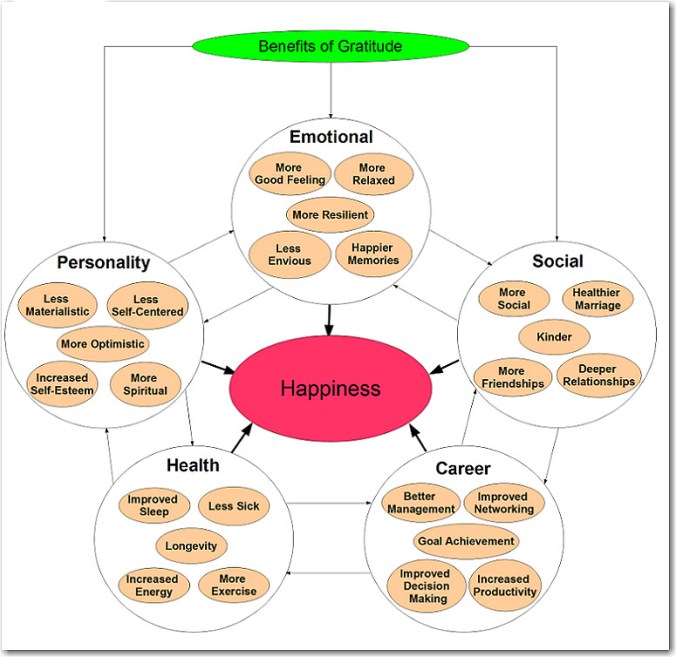
Surprise, surprise: gratitude actually feels good. Yet only 20% of Americans rate gratitude as a positive and constructive emotion (compared to 50% of Europeans). According to gratitude researcher Robert Emmons, gratitude is just happiness that we recognize after-the fact to have been caused by the kindness of others. Gratitude doesn’t just make us happier, it is happiness in and of itself!  http://happierhuman.com/benefits-of-gratitude/

Sorry to burst anyone’s bubble, but if you’re unhappy a good bit of the cause is a lack of gratitude. Being focused on what one wishes was different brings nothing but turmoil and dissatisfaction.

So you want to be happier? Then look deeper into life and see all you have to be grateful for. Over time I have seen the truth of how gratefulness brings IS happiness. What a life changer!

Do not spoil what you have
by desiring what you have not;
remember that what you now have
was once among the things
you only hoped for.
Epicurus