Just Me, All Along

7966380434_6742a8211e_h

I am Me.

In all the world, there is no one else exactly like me.

Everything that comes out of me is authentically mine,
because I alone chose it.

I own everything about me: my body, my feelings,
my mouth, my voice, all my actions,
whether they be to others or myself.

I own my fantasies, my dreams, my hopes, my fears.

I own my triumphs and successes, all my failures and mistakes.

Because I own all of me, I can become intimately acquainted with me.

By so doing, I can love me and be friendly with all my parts.

I know there are aspects about myself that puzzle me,
and other aspects that I do not know,
but as long as I am friendly and loving to myself,
I can courageously and hopefully look for solutions
to the puzzles and ways to find out more about me.

However I look and sound, whatever I say and do,
and whatever I think and feel at a given moment in time
is authentically me.

If later some parts of how I looked, sounded, thought, and felt
turn out to be unfitting, I can discard that which is unfitting,
keep the rest, and invent something new for that which I discarded.

I can see, hear, feel, think, say, and do. I have the tools to survive,
to be close to others, to be productive, and to make sense
and order out of the world of people and things outside of me.

I own me, and therefore, I can engineer me.

I am me, and I am Okay.
Psychologist Virginia Satir

It was a huge step forward when I began taking responsibility for myself without pointing to external factors of why I am the way I am or do what I do. No matter how much influence someone or something has over me, the majority of every choice is mine. In realizing no factor on this earth has influence over me unless I allow it was the beginning of freedom.

How ironic it is now to realize it was my own excuses and reasons I needed to be freed from. When external justifications no longer answered the “whys” of my thoughts and behavior, only one explanation remained; “ME”. I will be always grateful for the insight that connected my past, present and future; that allowed me to finally feel whole.

I’ve figured out now that it was never them
that made me feel that way.
It was just me, all along.
Maggie Stiefvater

I Have Arrived

Dirt Road Africatw2011

I want to grow old without facelifts…
I want to have the courage to be loyal to the face I’ve made.
Sometimes I think it would be easier to avoid old age, to die young,
but then you’d never complete your life, would you?
You’d never wholly know you.
Marilyn Monroe

T-minus four days and counting… In less than a hundred hours I will officially be sixty years old. It’s interesting that internally I feel about half that age, but am reminded in the mirror that in reality is I am entering the outer boundaries of old age.

For at least fifteen years I have tried to sneak up on birthdays. Within three or four months of the anniversary of my birth I’d answer the question “how old are you?” with the age I was about to be, not what I presently was. In some off-beat way that helped me acclimate to being another year older. Just realizing this year I did not do that the previous practice fells silly to me. Yeah for me! I’m finally growing up and accepting of the present chapter of life just ahead.

Pew Research Center Social & Demographic Trends did a survey in 2009 of close to three thousand people and asked different demographic groups “What age does the average person become old?” In their data respondents from 18-29 years of age said 60 was old. Gulp! No wonder so many people in that age group refer to me as “Sir”. The perception of ‘old’ changes with age: 30-49 year-olds see 69 as old; 50-64 year-old folks see 72 as old while 65+ thought 74 was old. Whew! That means to anyone thirty or older I won’t be ‘old’ for at least another ten years!

Back to being called “Sir” by younger people; I have to admit it really bothered me when it began happening with greater and greater frequency about ten years. I thought “Oh, no. He/she thinks I’m an old fart”. I have grown up some though, and now take the reference as respect. Once past the shock of being a “Sir” and becoming accustomed to it, I accepted that people were simply being respectful. None of us gets too much respect at any age.

Another finding in the Pew Research Center survey was the older people get, the younger they feel–relatively speaking. Among 18 to 29 year-olds, about half say they feel their age, while about quarter say they feel older than their age and another quarter say they feel younger. By contrast, among adults 65 and older, fully 60% say they feel younger than their age, compared with 32% who say they feel exactly their age and just 3% who say they feel older than their age.

And one of the best parts for me in the Pew survey was nearly half (45%) of adults ages 75 and older say their life has turned out better than they expected, while just 5% say it has turned out worse (the remainder say things have turned out the way they expected or have no opinion). All other age groups also tilt positive, but considerably less so, when asked to assess their lives so far against their own expectations. I agree completely. My life so far has turned out to be far more interesting, rewarding and fulfilling that I could have ever imagined when younger.

It seems I have arrived at the place I have long needed to be. About to finish my 6th decade on Earth by retiring from professional life and moving into a phase filled with a list of “always wanted to-dos”, I am genuinely excited at the prospect of experiences to come; exhilarated actually!

Everything is not exactly what I hoped for or dreamed of, but my life is rich and rewarding in a myriad of ways. It humbles me when I let the life possibilities ahead take shape in my thoughts. Finally, I have arrived at where I have been headed all my life. I am grateful to be here.

Wrinkles should merely indicate
where the smiles have been.
Mark Twain

Life In Our Own Image

hammer_computer edit

I have not understood computers since the days of Windows 3.11 in the early 90’s. Honestly, I did not understand them then, but they were simple enough that I could work around, fix, repair or replace the source of most problems. Then came the Windows versions named after years they were supposed to be, but weren’t always, released within their name sake year: Windows 95, windows 98 and Windows 2000.

When Windows XP arrived things seem to settle down for while. And I had less computing issues. Then I met Windows 7 which is what is on the computer at work I am tying this on.  It’s okay but wants to do everything for me, often not in the way I want it to. Now my home computer with “7” is down, for a reason I am still trying to sort out. Drat! It’s less than a year old.

Now my rant. Sometimes like today, I hate my computer. Something is wrong. Is it a virus? A hard drive failure? Corrupt registry? I think the issue is a VIRUS, but could it be human error on my part? Some website I visited may have messed me up. All in all I take this in stride. It’s not my first computer problem and certainly won’t be my last. It’s does give me a slightly altered perspective today.

Sitting in front of a computer screen for five hours a day can dramatically increase the risk of depression and insomnia, new research suggests. Previous studies have focused on how too much screen time can cause physical afflictions, such as headaches, eye strain, and backache. Now one of the biggest ever investigations into the hazards of computers in the workplace has concluded that they can also damage mental health.

In a three-year survey of 25,000 workers, many complained of feeling depressed, anxious and reluctant to get up for work in the mornings. They were also plagued by broken sleep and reported problems getting along with fellow employees. The study by researchers at Chiba University in Japan, concluded that bosses should limit the time their staff spend on computers.

Lead researcher Dr Tetsuya Nakazawa said: ‘ This result suggests the prevention of mental disorders and sleep disorders requires the restriction of computer use to less than five hours a day.’ The results, published in the American Journal of Industrial Medicine, showed one in four staff spent at least five hours a day at their terminal. Once they crossed that threshold, the dangers of psychological disorders setting in appeared to increase dramatically. By Olinka Koster, http://www.dailymail.co.uk/health/article-153281/Why-using-cause-depression.html

It’s just a machine and is repairable or replaceable. My computer does not care if it causes me problems or if I am upset at it. Just writing that makes me realize I spend too much time online when I could have my nose in a book or be hanging out with friends. Living a life of gratitude allows me to find a silver lining in most anything, including a @&$#&^ computer problem! I am grateful for the hint that too much of anything is not good. (And a friend is coming over tonight instead of me fretting with my computer problem. It can wait until tomorrow).

I think computer viruses should count as life.
I think it says something about human nature
that the only form of life we have created
so far is purely destructive.
We’ve created life in our own image.
Stephen Hawking

My Lost Years

11b

The piece below is a perspective written generally about being a the late teens or 20-something. Yet, “lost years” can be any age. For many in recovery, what began in those young years became bad habits that matured well into middle age. Some never “recover”.

You’re missing something. You’re watching everything pass you by and it’s making you anxious but you’re not quite sure how to catch up. A small part of you doesn’t even want to catch up. You’ve become comfortable in your complacency, comfortable in your own mistakes. Your slip ups have become some kind of solace. They’re yours to keep. Flaws have become some sick substitute for a relationship and you take them to bed with you.

You’re too young to be completely happy. You’re currently living your lost years and even though it’s taking you down, you’re not ready for the alternative. Something that no one likes to admit is that it sort of feels good to screw up. You don’t think you know exactly what you’re doing? You can pretend to be naive to spare everyone else’s feelings but let’s not get confused: you’re in control here. Every step of the way.

That is, until you’re not. The thing about being a mess is that you eventually do lose control. The self-destructive spiral you’ve been orchestrating gets ripped away from you and put in the hands of something much bigger. Then you’re screwed. Then you’re going to be saying “…Take me back to the land of stability and normalcy! I’m done living my lost years. Now I just would like to be found!”

Your life is precarious. When you were in high school and college, you treated your mortality like it was a crappy purse. You stomped on it, broke a strap, let a vodka bottle spill out and ruin the leather. You did all of this believing it would all be repaired while you were sleeping, and it usually was. You reach a point, however, when the leather stays torn, when the piece of crap bag becomes beaten beyond repair. Simply put, you have to take a more proactive role in maintaining your happiness and well-being. You’re not just someone watching their own life from afar. You’re in it now. And if you don’t take care of it, it will fall to pieces.

This is how someone becomes the person they want to be. They make changes. They stop taking those pills, clutching those drinks, and start deleting those numbers in their phone that might as well be daggers. They take responsibility for themselves. This might sound so minor but something you all must know by now is that we’re often our own worst enemy. We can’t blame something on a lack of self-awareness. We’re all aware, which makes it that much harder when we see ourselves making the same mistakes. We often wonder why we do the things we do. But we already know why. Knowing and doing are two different things though. I know that x, y, and z make me unhappy but I guess, in the end, I just don’t care enough to make changes. You can’t force yourself to care. You need to reach a point where you DO care which can take a long time.

But once you do reach it, there’s no going back. Being a broken mess is a blast at 19 but once you’re old enough to know better and start to make those necessary changes, returning to that state will feel awful. That’s something to actually mourn. There’s a certain kind of beauty with being reckless with your body and mind. Closing the chapter on that and actively becoming the person you’re going to be feels great but it’s also a tad bittersweet. Sometimes you want to go back to being the person you were before all the bad stuff happened, but you know that’s impossible. So you just bid adieu to that time and look towards your future. (FYI, it looks super bright.) By Ryan O’Connell http://thoughtcatalog.com/2012/how-to-become-the-person-you-want-to-be/

When I compare where I am today to just ten years ago it amazes me who much has happened. Old deeply ingrained habits seem distant now and boy, am I grateful. While I never had to fight off substance abuse, my compulsions were still just as damaging, if not to me, certainly to some of those around me. I regret that, but am grateful I am no longer leaving a path filled with regrets.

Never look back unless
you are planning to go that way.
Henry David Thoreau

Doorway to a More Brilliant Reality

romeo-and-juliet

I used to think Romeo and Juliet was the greatest love story ever written. But now that I’m middle-aged, I know better. Oh, Romeo certainly thinks he loves his Juliet. Driven by hormones, he unquestionably lusts for her. But if he loves her, it’s a shallow love.

You want proof? Soon after meeting her for the first time, he realizes he forgot to ask her for her name. Can true love be founded upon such shallow acquaintance? I don’t think so.

And at the end, when he thinks she’s dead, he finds no comfort in living out the remainder of his life within the paradigm of his love, at least keeping alive the memory of what they had briefly shared, even if it was no more than illusion, or more accurately, hormonal.

Yes, those of us watching events unfold from the darkness know she merely lies in slumber. But does he seek the reason for her life-like appearance? No. Instead he accuses Death of amorousness, convinced that the ‘lean abhorred monster’ endeavors to keep Juliet in her present state, cheeks flushed, so that she might cater to his own dissolute desires.

But does Romeo hold her in his arms one last time and feel the warmth of her blood still coursing through her veins? Does he pinch her to see if she might awaken? Does he hold a mirror to her nose to see if her breath fogs it? Once, twice, three times a ‘no.’

His alleged love is so superficial and so selfish that he seeks to escape the pain of loss by taking his own life. That’s not love, but infatuation. Had they wed ― Juliet bearing many children, bonding, growing together, the masks of the star-struck teens they once were long ago cast away, basking in the love born of a lifetime together ― and she died of natural causes, would Romeo have been so moved to take his own life, or would he have grieved properly for her loss and not just his own. J. Conrad Guest

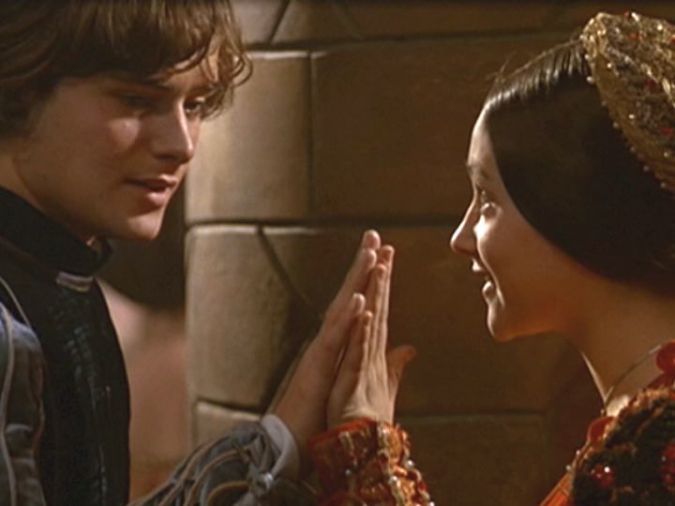
Clearly I remember at sixteen going with my friend David to see Franco Zeffirelli’s movie “Romeo and Juliet”. My young heart swooned at what I then thought was a magnificent love to be admired. Heartbreak, grief, contentment and joy have conspired together to teach me how foolish Shakespeare’s characters would have been in real life.

Love should be a bit foolish, irrational and even unwise, but not simplistically childish like I now perceive Romeo and Juliet in the story told of them. Beautiful tale, but a horrible example of love in real life. I still believe in the magic more than ever but not how portrayed in the Shakespearean story. In coming to my present point of view, I am grateful for every heartache and beautiful moment loving ever brought me. Such feelings have been my tutors of the truths of love.

It is having once believed in fairy tales, then seeing beyond them while retaining their essence that has given my heart its ability to love best in the real world.

The fairy tale is not the conclusion,
but the doorway to a more brilliant reality.
Pushed onto a pedestal as the final answer
their worth is misshapen and distorted.
Natalie Nyquist

A Baker’s Dozen

186237304_7bdef3a3a8_b

Here’s my list of thirteen thoughts to start another wondrous day filled with adventure, intrigue, reward and struggle.

~ We are always too busy!

~ Kindness multiplies back to the giver.

~ Being allowed to often get dirty makes a child grow up more healthy.

~ You have to get hurt. That’s how you learn.

~ To truly appreciate what you’ve got, at some point you need to have had nothing.

~ The average person hasn’t smelled a flower in months or noticed the moon for weeks.

~ The longer you carry a worry, the heavier it gets.

~ The future is an illusion; the past a delusion. Neither is even close to reality.

~ The kindest people have fought the toughest personal battles.

~ Running in sprinklers or playing in water makes a sad child feel better (adults too!).

~ We’re usually most creative near 18 months old. By twenty-one 90% of that is gone.

~ People who usually arrive very early or quite late are often the controlling type.

~ Within every person are many questions and even more answers.

And there you have it; a random baker’s dozen of simple wisdom I have chosen for my day; extras for my mental ‘toolkit’ for living. All won’t stick well and some will not fit today’s situations encountered. However, I am grateful my day will be better by filing these thoughts away. Sooner or later all will be useful, if not today, then before long.

“We’ve got facts,” they say.
But facts aren’t everything;
at least half the battle consists
in how one makes use of them!
Fydor Dostoyevsky

Trying to Grow Flowers in Sand.

a_spring_lane_walk_by_jchanders-d55jid8

Money, amazingly, is losing its power…
Our economy is rapidly changing from a money economy to a satisfaction economy.
Martin Seligman

It is considered by many to be almost un-American to admit that one is “not happy”. At the least such a state is viewed as unfortunate and one a person should recover from soon. Otherwise, one is told to “get some help”. The shame of not feeling readily happy ends up making many people feel “less than” which only worsens the state he or she is in.

Unhappiness is necessary in order to know what happiness is. It is contrast that gives greater strength to any feeling. The depth of one makes way for the fuller weight of the other. Without having known discontentment, happy has a shallow meaning at best. Discontent can come from many sources: grief, sadness, lack of fulfillment, bad relationship situations and a long list that can keep a person from feeling their “happy cup” contains enough. Contentment, peace and happiness flourish when the viewpoint of “what is good” is far greater than “what is wrong”. Otherwise, trying to be happy is like trying to grow flowers in sand.

“Promise Yourself”

To be so strong that nothing
can disturb your peace of mind.
To talk health, happiness, and prosperity
to every person you meet.

To make all your friends feel
that there is something special in them
To look at the sunny side of everything
and make your optimism come true.

To think only the best, to work only for the best,
and to expect only the best.
To be just as enthusiastic about the success of others
as you are about your own.

To forget the mistakes of the past
and press on to the greater achievements of the future.
To wear a cheerful countenance at all times
and give every living creature you meet a smile.

To give so much time to the improvement of yourself
that you have no time to criticize others.
To be too large for worry, too noble for anger, too strong for fear,
and too happy to permit the presence of trouble.

To think well of yourself and to proclaim this fact to the world,
not in loud words but great deeds.
To live in faith that the whole world is on your side
so long as you are true to the best that is in you.
From “Your Forces and How to Use Them” by Christian D. Larson

I used to think that happiness was about everything being exactly the way I wanted. I felt I would be happy when this happened or that happened that would make my life wholly fulfilling. What I have learned is happiness is NOT about the state of things, but about my view of them. Granted there are times of sadness, grief and even depression when those feelings keep me from feeling at peace and contented. But it is those times that give my happiness its depth of meaning and cause me to cherish it even more. The quality of my life is ALL about my attitude toward living. I am grateful for the well-learned lesson.

Success is getting what you want,
happiness is wanting what you get.
W.P. Kinsella

Soft, Spongy, Rigid or Flexible?

really stop enhanced2

Life is change, but it’s common to think otherwise until jolted out of a comfort zone. Right now emotions are pulling me to extremes. At one end, at a considerably younger age than most I will be semi-retired in thirty days and completely in six months . What’s ahead for me is invigorating and exciting. At the other extreme, where I work is being sold and the vast majority of employees are being let go. Inwardly I feel good. My future is bright. Outwardly I am surrounded by fear, uncertainty and disappointment, even anger in some of those I work with.

All I can do is be compassionate and sensitive to my co-workers even though I am not going through what they are going through. It’s hard. So easily it is to commiserate and fall into thinking that mirrors theirs in an attempt to be empathetic. Using what I have learned about keeping good boundaries is saving me a great deal of anguish, yet allowing me to kind and thoughtful to others.

Personal boundaries are guidelines, rules or limits that a person creates to identify for him or herself what are reasonable, safe and permissible ways for other people to behave around him or her and how he or she will respond when someone steps outside those limits. Wikipedia

Dr. Nina W. Brown is a professor in the Department of Counseling and Human Services at Old Dominion University. She believes there are four types of boundaries:

Soft – A person with soft boundaries merges with other people’s boundaries. Someone with a soft boundary is easily manipulated.

Spongy – A person with spongy boundaries is like a combination of having soft and rigid boundaries. They permit less emotional contagion than soft boundaries but more than rigid. People with spongy boundaries are unsure of what to let in and what to keep out.

Rigid – A person with rigid boundaries is closed or walled off so nobody can get close to him/her either physically or emotionally. This is often the case if someone has been physically, emotionally, psychologically or sexually abused. Rigid boundaries can be selective which depend on time, place or circumstances and are usually based on a bad previous experience in a similar situation.

Flexible – Similar to selective rigid boundaries but the person has more control. The person decides what to let in and what to keep out, is resistant to emotional contagion and manipulation, and is difficult to exploit.

Once upon a time my boundaries were definitely somewhere between ‘Soft’ and ‘Spongy’ although I hid my feelings behind a stoically ‘Rigid’ wall most of the time. Often then a boundary would be violated while I gritted my teeth and did not allow the hurt and discomfort to show.

Today I take good care of me. I step away quickly from most hurtful situations and encounters. I speak up for myself with all the kindness I can muster when someone steps over the line and into my ‘space’ with their words or actions. And I am quick to apologize and make amends when I find myself in violation of someone’s boundaries. Gratefully, now I can best be described as having healthy ‘Flexible’ boundaries. For my friends, peers and teachers who helped me learn this way of being I will be eternally grateful.

People who violate
your boundaries
are thieves.
They steal time
that doesn’t belong to them.
Elizabeth Grace Saunders

You Are Unique, Not Special

unique!!

Specialness is all about the idea that somehow the rules of the world apply to me differently than they apply to everyone else. Specialness is the belief that it is OK if bad things happen to the other 6.5 billion people that live on the planet, but if anything bad happens to me, it is the worst, most awful thing in the entire world and I cannot handle it because I am special.

To introduce the idea of specialness to my patients, I ask them to do the following exercise: I tell them to spend the entire day treating themselves as if they were their best friends in the entire world. If anything goes well, they are to tell themselves how awesome they are, and that they are totally cool, and that everyone is proud of them. If anything goes wrong, they are to tell themselves that no one noticed or really cared and that it was really no big deal.

I tell people to do this because that is how most of us talk to the people we love – we tell them that we are proud of them and their work. Yet, almost no one actually talks to themselves in this way. We are actually more likely to remind ourselves of every dumb thing that we have ever done instead of telling ourselves how well we just did. And, even if we just did something really well, we will almost always still find a way to criticize ourselves or beat ourselves up about something that “should” have been better.

Then, the following day, I want you to treat everyone you know like you normally treat yourself. Anytime anyone does something wrong, be sure to tell them how stupid they are and that they are one big failure. Further, anytime anyone does something well, tell them that it was just luck and that they did not actually deserve what they just got, and then see if anyone will ever speak to you again.

Now, I am betting that you would not be willing to do this, so let me ask you a basic question – why is it OK to treat everyone else wonderfully as a way to motivate them, but you need to beat yourself down in order to get yourself to behave better? And the answer is: You do not need to. You could actually be very nice to yourself and motivate yourself positively.

If you want to start to feel less stress, go into situations with a positive attitude and motivate yourself the same way that you would motivate others – build yourself up and stop beating yourself down. From “You Are Unique, Not Special” by Patrick B. McGrath, Ph.D. http://www.psychologytoday.com/blog/dont-try-harder-try-different/201108/you-are-unique-not-special

About ten years ago I adopted a particular attitude entitled “disputing my own BS”. When negative thoughts about myself came up that I would certainly dispute if anyone said them to me, I learned to argue for myself and set my thinking straight. It does not always work, but most of the time it does. Simply by taking the time to examine what I am telling myself is an effective weapon in disputing the lies, partial truths and exaggerations I tell myself. I am grateful for this insight and how it has improved the quality of my life experience.

If you are determined to succeed you will,
if you are determined to fail you will,
it is only through determination
that we began to see our true selves.
Frederica Ehimen

Invented Self vs. Real Self

who-am-i-002

Western philosophers have sought some pure and enduring touchstone of “I-ness” ever since Socrates began interrogating the citizens of Athens. He famously asserted that the unexamined life is not worth living—but left vague exactly what insights and actions such inquiry might yield. Aristotle later connected the fruits of self-reflection with a theory of authentic behavior that was not so much about letting your freak flag fly as about acting in accord with the “higher good,” which he regarded as the ultimate expression of self-hood.

Spiritual and religious traditions similarly equated authenticity and morality. Enlightenment philosophers secularized ideas of selfhood, but it took the 20th century’s existentialists to question the idea that some original, actual, ultimate self resides within. To them, the self was not so much born as made.

“The philosophical question is, do we invent this authentic self?” says [ethicist John Portmann of the University of Virginia]. “Or do we discover it?” Socrates believed we discover it; the existentialists say we invent it.

“There isn’t a self to know,” decrees social psychologist Roy Baumeister of the University of Florida. Today’s psychologists no longer regard the self as a singular entity with a solid core. What they see instead is an array of often conflicting impressions, sensations, and behaviors. Our headspace is messier than we pretend, they say, and the search for authenticity is doomed if it’s aimed at tidying up the sense of self, restricting our identities to what we want to be or who we think we should be.

Increasingly, psychologists believe that our notion of selfhood needs to expand… An expansive vision of selfhood includes not just the parts of ourselves that we like and understand but also those that we don’t. There’s room to be a loving mother who sometimes yells at her kids, a diffident cleric who laughs too loud, or a punctilious boss with a flask of gin in his desk. The authentic self isn’t always pretty. It’s just real.

We all have multiple layers of self and ever-shifting perspectives, contends psychiatrist Peter Kramer. Most of us would describe ourselves as either an introvert or extrovert. Research shows that although we think of ourselves as one or the other (with a few exceptions), we are actually both, in different contexts. Which face we show depends on the situation.

“Whether there is a core self or not, we certainly believe that there is,” says social psychologist Mark Leary of Duke University. And the longing to live from that self is real, as is the suffering of those who feel they aren’t being true to themselves.

Inauthenticity might also be experienced on a deeper level as a loss of engagement in some—or many—aspects of your life. At the Kripalu Center for Yoga and Health in Lenox, Massachusetts, where he often teaches, Stephen Cope opens his programs by asking attendees to reveal their deepest reason for being there. “Eighty percent of the time, people say some variation of: ‘I’m here to find my true self, to come home to my true self,’ ” he reports. That response is as likely to come from young adults struggling to build careers and relationships as from people in midlife reevaluating their choices. “They say, ‘Who am I? Now that I’ve had a decent career and bought a house and had a marriage, I’m still feeling profoundly unfulfilled.’ by Karen Wright http://www.psychologytoday.com/articles/200804/dare-be-yourself

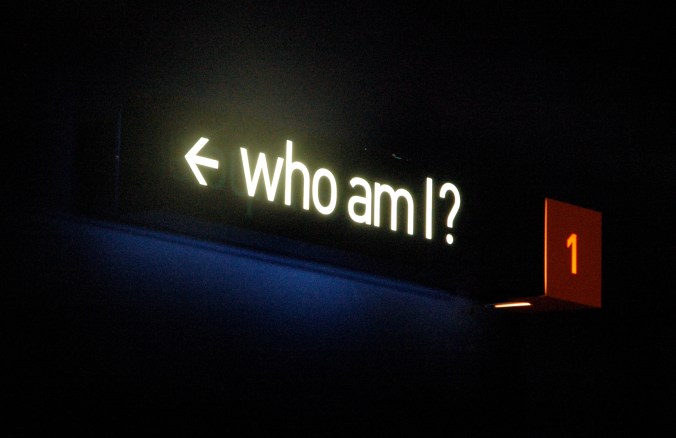
Such a thoughts as “who am I? and “what is the real me?” used to spin in my head like 10 peopleall talking all at once. That experience is not completely gone, but the ongoing inner dialogue is not constant and down to a voice or two. To wonder “what and why” is dependably human but any more I don’t ask such things of myself a great deal. My conclusion? Allowing me to mostly just be as I am is probably the best practice I ever began. As the “real me” has shown through, my discovery has been I like most of what I have found. I am grateful for those life changing insights.

Knowing yourself
is the beginning of
all wisdom.
Aristotle