I Have Arrived

Dirt Road Africatw2011

I want to grow old without facelifts…
I want to have the courage to be loyal to the face I’ve made.
Sometimes I think it would be easier to avoid old age, to die young,
but then you’d never complete your life, would you?
You’d never wholly know you.
Marilyn Monroe

T-minus four days and counting… In less than a hundred hours I will officially be sixty years old. It’s interesting that internally I feel about half that age, but am reminded in the mirror that in reality is I am entering the outer boundaries of old age.

For at least fifteen years I have tried to sneak up on birthdays. Within three or four months of the anniversary of my birth I’d answer the question “how old are you?” with the age I was about to be, not what I presently was. In some off-beat way that helped me acclimate to being another year older. Just realizing this year I did not do that the previous practice fells silly to me. Yeah for me! I’m finally growing up and accepting of the present chapter of life just ahead.

Pew Research Center Social & Demographic Trends did a survey in 2009 of close to three thousand people and asked different demographic groups “What age does the average person become old?” In their data respondents from 18-29 years of age said 60 was old. Gulp! No wonder so many people in that age group refer to me as “Sir”. The perception of ‘old’ changes with age: 30-49 year-olds see 69 as old; 50-64 year-old folks see 72 as old while 65+ thought 74 was old. Whew! That means to anyone thirty or older I won’t be ‘old’ for at least another ten years!

Back to being called “Sir” by younger people; I have to admit it really bothered me when it began happening with greater and greater frequency about ten years. I thought “Oh, no. He/she thinks I’m an old fart”. I have grown up some though, and now take the reference as respect. Once past the shock of being a “Sir” and becoming accustomed to it, I accepted that people were simply being respectful. None of us gets too much respect at any age.

Another finding in the Pew Research Center survey was the older people get, the younger they feel–relatively speaking. Among 18 to 29 year-olds, about half say they feel their age, while about quarter say they feel older than their age and another quarter say they feel younger. By contrast, among adults 65 and older, fully 60% say they feel younger than their age, compared with 32% who say they feel exactly their age and just 3% who say they feel older than their age.

And one of the best parts for me in the Pew survey was nearly half (45%) of adults ages 75 and older say their life has turned out better than they expected, while just 5% say it has turned out worse (the remainder say things have turned out the way they expected or have no opinion). All other age groups also tilt positive, but considerably less so, when asked to assess their lives so far against their own expectations. I agree completely. My life so far has turned out to be far more interesting, rewarding and fulfilling that I could have ever imagined when younger.

It seems I have arrived at the place I have long needed to be. About to finish my 6th decade on Earth by retiring from professional life and moving into a phase filled with a list of “always wanted to-dos”, I am genuinely excited at the prospect of experiences to come; exhilarated actually!

Everything is not exactly what I hoped for or dreamed of, but my life is rich and rewarding in a myriad of ways. It humbles me when I let the life possibilities ahead take shape in my thoughts. Finally, I have arrived at where I have been headed all my life. I am grateful to be here.

Wrinkles should merely indicate
where the smiles have been.
Mark Twain
It’s Today; Only Now

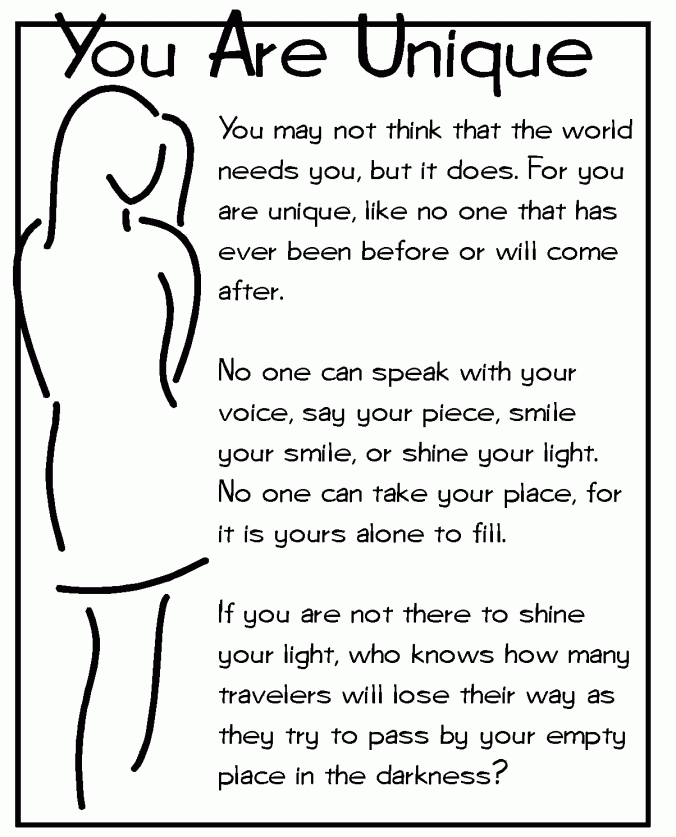
you are unique

I don’t want to be anyone else any more;
Trying to find things outside me to stand for.
Being someone else is an exhausting chore;
’causes too much confusion; a mental war.
It’s only “I” that I answer for.
Wishing otherwise time to ignore
Make peace, stop keeping score,
And be who I am at my core.
No more pretend, it’s time to soar.
Less yesterday; the past and before,
Less thought about tomorrow’s shore,
It’s today; only now that I need anymore.
James Browning

Yearning of My Soul

52689136Well….. here it comes! My birthday in a week signals my long-awaited ‘retirement’ at month’s end from a profession of decades. I am doing this not to rest and sit on my butt, but rather to do things a ‘regular’ job prohibits. There are longings that have to be sated; an old me that needs a make-over. My choice to close one door is so the entrance to many other possibilities can open to me.

Master the “art of possibility,” says Sills, author of The Comfort Trap, by projecting a new you on the big screen of your mind’s eye. “There are two poles related to change,” Sills says. “One pole is being unsatisfied and uncomfortable where you are. The other is a compelling vision.” If you’re so miserable you’re crawling out of your skin, you may not need a fantasy to push you out the door. Most of us are in situations that may not be great, but are nevertheless stable—which means we need something to run toward, not just an excuse to run away.

The first step to conjuring this vision, says Sills, is to tune into your discontent rather than numb it: “After two bags of Doritos, some TV shows, and maybe even a scotch, you don’t remember how bad the job is, and soon you’re overweight and you think that’s the source of your unhappiness.”

Once you’ve figured out why you’re unhappy, try to trace any hint of interest or passion that flutters up during the day. Think back: “As a child, how did I envision myself as an adult?” If you can’t pull a dream scenario out of your head, ask, “Which of my friends’ lives would I most like to live?” And “If I had to stay in this job or relationship, what would I want to change about it and what would I want to keep?”

The image may prime you to act, but taking the first steps will still be difficult. It’s easy to tell your mother, “Can you believe he got drunk on my birthday?” But it’s hard to say to him, “We’re done. Don’t ever call me again.” Make it easier by thinking through the small consequences first. For instance, you can rehearse what you’ll say to your friends when you ask them to set you up on dates.

Once you start realizing your fantasy, keep altering it to match reality. Otherwise, the vision could remain dangerously intangible.

Prepare yourself by imagining scenes full of misgivings, too. “In the last two weeks of your job,” says Sills, “all of a sudden you’ll fall in love with all of those coworkers who annoyed you.” Change equals loss, but if you don’t have a series of things you’ve walked away from, adds Lubetkin, you’re probably not leading a rich life. By Carlin Flora http://www.psychologytoday.com/articles/200611/you-20

After giving my resignation early in the new year, I felt freed in a way never before felt. With some coaxing I agreed to stay on in a limited part-time capacity for the remainder of the year and for a while regretted it. Now I realize that regrouping over a few months will be better than trying to start a different life all at once.

I am grateful to feel little fear or apprehension about what is to be, although where I’m headed is anything but clear. What I am certain of is ‘retiring’ from one path so that another can begin is absolutely the correct thing. I am pulled, compelled really, into the unknown and find the uncertainty exhilarating. Beyond extended travel, finishing my first book and spending time with people I care about there is no grand design for my future. By following the yearning of my soul I will no longer be an obstacle to my destiny. I am grateful to have the courage and determination to make this leap of faith.

Love what you do and do what you love.
Don’t listen to anyone else who tells you not to do it.
You do what you want, what you love.
Imagination should be the center of your life.
Ray Bradbury

Life In Our Own Image

hammer_computer edit

I have not understood computers since the days of Windows 3.11 in the early 90’s. Honestly, I did not understand them then, but they were simple enough that I could work around, fix, repair or replace the source of most problems. Then came the Windows versions named after years they were supposed to be, but weren’t always, released within their name sake year: Windows 95, windows 98 and Windows 2000.

When Windows XP arrived things seem to settle down for while. And I had less computing issues. Then I met Windows 7 which is what is on the computer at work I am tying this on.  It’s okay but wants to do everything for me, often not in the way I want it to. Now my home computer with “7” is down, for a reason I am still trying to sort out. Drat! It’s less than a year old.

Now my rant. Sometimes like today, I hate my computer. Something is wrong. Is it a virus? A hard drive failure? Corrupt registry? I think the issue is a VIRUS, but could it be human error on my part? Some website I visited may have messed me up. All in all I take this in stride. It’s not my first computer problem and certainly won’t be my last. It’s does give me a slightly altered perspective today.

Sitting in front of a computer screen for five hours a day can dramatically increase the risk of depression and insomnia, new research suggests. Previous studies have focused on how too much screen time can cause physical afflictions, such as headaches, eye strain, and backache. Now one of the biggest ever investigations into the hazards of computers in the workplace has concluded that they can also damage mental health.

In a three-year survey of 25,000 workers, many complained of feeling depressed, anxious and reluctant to get up for work in the mornings. They were also plagued by broken sleep and reported problems getting along with fellow employees. The study by researchers at Chiba University in Japan, concluded that bosses should limit the time their staff spend on computers.

Lead researcher Dr Tetsuya Nakazawa said: ‘ This result suggests the prevention of mental disorders and sleep disorders requires the restriction of computer use to less than five hours a day.’ The results, published in the American Journal of Industrial Medicine, showed one in four staff spent at least five hours a day at their terminal. Once they crossed that threshold, the dangers of psychological disorders setting in appeared to increase dramatically. By Olinka Koster, http://www.dailymail.co.uk/health/article-153281/Why-using-cause-depression.html

It’s just a machine and is repairable or replaceable. My computer does not care if it causes me problems or if I am upset at it. Just writing that makes me realize I spend too much time online when I could have my nose in a book or be hanging out with friends. Living a life of gratitude allows me to find a silver lining in most anything, including a @&$#&^ computer problem! I am grateful for the hint that too much of anything is not good. (And a friend is coming over tonight instead of me fretting with my computer problem. It can wait until tomorrow).

I think computer viruses should count as life.
I think it says something about human nature
that the only form of life we have created
so far is purely destructive.
We’ve created life in our own image.
Stephen Hawking

Reminiscence Bump

96415446143348429a89b1491d26a91b_7

I remember days when I was fifteen or sixteen years old that occupy more memory space than some entire years of my adult life. There are teenage first experiences that I recall as vividly as if they happened two days ago, especially those I cherish most or regret a lot. I remember clearly my unaccompanied first airplane flight, making out with a girl all night long with our clothes on, the initial time I had my heart-broken and the earliest heart I hurt. The interior of my first car is memorized even today.

As we grow older, we tend to feel like the previous decade elapsed more rapidly, while the earlier decades of our lives seem to have lasted longer. Similarly, we tend to think of events that took place in the past 10 years as having happened more recently than they actually did.

… curiously, we are most likely to vividly remember experiences we had between the ages of 15 and 25. What the social sciences might simply call “nostalgia” psychologists have termed the “reminiscence bump”… The reminiscence bump involves not only the recall of incidents; we even remember more scenes from the films we saw and the books we read in our late teens and early twenties. … The bump can be broken down even further — the big news events that we remember best tend to have happened earlier in the bump, while our most memorable personal experiences are in the second half.

The key to the reminiscence bump is novelty. The reason we remember our youth so well is that it is a period where we have more new experiences than in our thirties or forties. It’s a time for firsts — first sexual relationships, first jobs, first travel without parents, first experience of living away from home, the first time we get much real choice over the way we spend our days. Novelty has such a strong impact on memory that even within the bump we remember more from the start of each new experience.

Most fascinating of all, however, is the reason the “reminiscence bump” happens in the first place: Hammond argues that because memory and identity are so closely intertwined, it is in those formative years, when we’re constructing our identity and finding our place in the world, that our memory latches onto particularly vivid details in order to use them later in reinforcing that identity. Interestingly, Hammond points out, people who undergo a major transformation of identity later in life — say, changing careers or coming out — tend to experience a second identity bump, which helps them reconcile and consolidate their new identity. From “Why Time Slows Down When We’re Afraid, Speeds Up as We Age, and Gets Warped on Vacation” by Maria Popova http://www.brainpickings.org/index.php/2013/07/15/time-warped-claudia-hammond/

Memory is a tricky thing. I have realized over time I tend to unconsciously make adjustments to what I recall. Memories that come to mind most become the most indelibly stamped on my brain. My greatest joys are made grander and the most painful memories are mentally sculpted to be more distressing. The primitive part of my mind dedicated to survival makes an over-sized issue of the latter. I am grateful to be reminded that pain tries to remembered far more than joy. In making my way forward it’s important tto reverse that tendency as much as I can; focus on the joyful memories and think less about the painful ones.

I don’t want to repeat my innocence.
I want the pleasure of losing it again.
From “This Side of Paradise”
by F. Scott Fitzgerald

My Lost Years

11b

The piece below is a perspective written generally about being a the late teens or 20-something. Yet, “lost years” can be any age. For many in recovery, what began in those young years became bad habits that matured well into middle age. Some never “recover”.

You’re missing something. You’re watching everything pass you by and it’s making you anxious but you’re not quite sure how to catch up. A small part of you doesn’t even want to catch up. You’ve become comfortable in your complacency, comfortable in your own mistakes. Your slip ups have become some kind of solace. They’re yours to keep. Flaws have become some sick substitute for a relationship and you take them to bed with you.

You’re too young to be completely happy. You’re currently living your lost years and even though it’s taking you down, you’re not ready for the alternative. Something that no one likes to admit is that it sort of feels good to screw up. You don’t think you know exactly what you’re doing? You can pretend to be naive to spare everyone else’s feelings but let’s not get confused: you’re in control here. Every step of the way.

That is, until you’re not. The thing about being a mess is that you eventually do lose control. The self-destructive spiral you’ve been orchestrating gets ripped away from you and put in the hands of something much bigger. Then you’re screwed. Then you’re going to be saying “…Take me back to the land of stability and normalcy! I’m done living my lost years. Now I just would like to be found!”

Your life is precarious. When you were in high school and college, you treated your mortality like it was a crappy purse. You stomped on it, broke a strap, let a vodka bottle spill out and ruin the leather. You did all of this believing it would all be repaired while you were sleeping, and it usually was. You reach a point, however, when the leather stays torn, when the piece of crap bag becomes beaten beyond repair. Simply put, you have to take a more proactive role in maintaining your happiness and well-being. You’re not just someone watching their own life from afar. You’re in it now. And if you don’t take care of it, it will fall to pieces.

This is how someone becomes the person they want to be. They make changes. They stop taking those pills, clutching those drinks, and start deleting those numbers in their phone that might as well be daggers. They take responsibility for themselves. This might sound so minor but something you all must know by now is that we’re often our own worst enemy. We can’t blame something on a lack of self-awareness. We’re all aware, which makes it that much harder when we see ourselves making the same mistakes. We often wonder why we do the things we do. But we already know why. Knowing and doing are two different things though. I know that x, y, and z make me unhappy but I guess, in the end, I just don’t care enough to make changes. You can’t force yourself to care. You need to reach a point where you DO care which can take a long time.

But once you do reach it, there’s no going back. Being a broken mess is a blast at 19 but once you’re old enough to know better and start to make those necessary changes, returning to that state will feel awful. That’s something to actually mourn. There’s a certain kind of beauty with being reckless with your body and mind. Closing the chapter on that and actively becoming the person you’re going to be feels great but it’s also a tad bittersweet. Sometimes you want to go back to being the person you were before all the bad stuff happened, but you know that’s impossible. So you just bid adieu to that time and look towards your future. (FYI, it looks super bright.) By Ryan O’Connell http://thoughtcatalog.com/2012/how-to-become-the-person-you-want-to-be/

When I compare where I am today to just ten years ago it amazes me who much has happened. Old deeply ingrained habits seem distant now and boy, am I grateful. While I never had to fight off substance abuse, my compulsions were still just as damaging, if not to me, certainly to some of those around me. I regret that, but am grateful I am no longer leaving a path filled with regrets.

Never look back unless
you are planning to go that way.
Henry David Thoreau

Slow Down… Stop… See…

65221_646830012011361_621572366_n

Everything has beauty,  but not everyone sees it.
Confucius

Beauty can be found everywhere. In a plant, a smile or quite differently.. in someone’s tears. Yet we tend to look away from it, for most of the time it does not represent our current state of mind. Beauty is not something which you can lay your hands on, so for our mostly materialistically orientated minds it is easier to dismiss than to investigate beauty. It is something intangible to our mind, yet it is very tangible to our heart and being. If we allow ourselves to look beyond our mind, we can see that there is so much more to explore. It is like eternity is knocking at the door, but you are always refusing to open the door. And yet we always know when we are touched by beauty. Funny to notice that everyone has this feeling and thus everyone knows what is meant by beauty.

But it takes courage to open yourself up to beauty completely, because it means you have to be vulnerable. You need to open yourself completely; there can be no defense mechanism left in place – only a true and open state of mind and body will allow you to open yourself to beauty. It is like meditating. No longer paying attention to your thoughts the way you normally do – you respond or react to them in any of infinite ways – you begin to feel the person behind the thoughts. You can now see yourself behind your thoughts and emotion and make the conscious realization that you are not your thoughts. You are aware of the thoughts, so this means you can not be your thoughts.

If we can realize this on any level, it will bring considerable change to your life, because you are conscious of a bigger part of you. …we as human beings are by our very nature very vulnerable which allows us to be very curious, sensitive and conscious when it comes to using our senses in the best way. Beauty can guide us along the way to a better understanding of our true selves. Since beauty is an essential building block for life, it holds deeper meaning to what it means to be a human being. Animals can not feel or respond to beauty the way we do, for they are not aware of the concept of beauty – they only embody it. As a human you have the possibility to touch and feel the beauty in your own being. When you start learning new things at first it will seem overwhelming and unbearable to cope with, but eventually you will pick up with the pace and learn to integrate this new way of being into your daily life.

With beauty come various other features of being, such as compassion and love. Each aspect has something to offer, every aspect contains a valuable lesson on how to be more authentic and learn to live life in the simplest of ways yet discovering a way of being beyond our wildest imagination. It is there waiting for us, if we can just let go of our old way of living, in which we are controlled by our past and are never really capable of living in the present moment. Beauty can only be found in the present moment, for it needs us to be active as aware observers. It wants to play with us and enjoy life in the simple way of doing. From “What is Beauty?” by Peter Navis  http://www.collective-evolution.com/2013/04/15/what-is-beauty/#_

Living in a society that reveres man-made beauty, even fakes, can make it difficult to see natural splendor. Most of the time we’re near blind about the present where all things real exist. We’re just so darn busy running away from one thing and racing toward another; rarely centered in the ‘now’. While I am no exception, willful intention has helped me, at least at times, to see bits of true beauty around me. Sometimes it is so obvious that anyone looking could observe it. At others, it is far more subtle and at a deeper level that magnificence shows itself. “The real story is inside a book on its pages and not to be found on its cover.’

Beauty is a feeling, not an image. When I look, it is not so much what I see that moves me but instead what emotions the sight awakens. Being able to look past first impressions and initial glances with increasing frequency has added much to my life to be grateful for. All I have to do is slow down… stop… see.

People often say that
“beauty is in the eye of the beholder,”
and I say that the most liberating thing
about beauty is realizing that you
are the beholder. This empowers us
to find beauty in places where
others have not dared to look
including inside ourselves.
Slama Hayek

Paid In Full

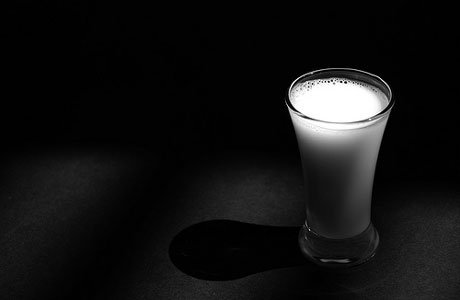
paid2bby2ba2bglass2bof2bmilkOne day, a poor boy who was selling goods from door to door to pay his way through school, found he had only one thin dime left, and he was hungry. He decided he would ask for a meal at the next house.
However, he lost his nerve when a lovely young woman opened the door. Instead of a meal he asked for a drink of water. She thought he looked hungry so brought him a large glass of milk He drank it slowly, and then asked, “How much do I owe you?”

“You don’t owe me anything,” she replied “Mother has taught us never to accept payment for a kindness.” He said… “Then I thank you from my heart.”

As Howard Kelly left that house, he not only felt; stronger physically, but his faith in God and man was strong also. He had been ready to give up and quit.

Years later that young woman became critically ill. The local doctors were baffled. They finally sent her to the big city, where they called in specialists to study her rare disease. Dr. Howard Kelly was called in for the consultation.

When he heard the name of the town she came from, a strange light filled his eyes. Immediately he rose and went down the hall of the hospital to her room. Dressed in his doctor’s gown he went in to see her.

He recognized her at once. He went back to the consultation room determined to do his best to save her life. From that day he gave special attention to the case. After a long struggle, the battle was won. Dr. Kelly requested the business office to pass the final bill to him for approval.

He looked at it, then wrote something on the edge and the bill was sent to her room. She feared to open it, for she was sure it would take the rest of her life to pay for it all. Finally, she looked, and something caught her attention on the side as she read these words…… “Paid in full with one glass of milk.” (Signed) Dr. Howard Kelly.

On-line sources say the essential parts of the story are materially true. There really was a Dr. Kelly who actually did return the kindness many times over for a glass of milk. That act resonates with me in a deeply emotional way. There have been many kindnesses shown me that given the chance I would repay a hundred, even a thousand fold. I am thankful for my grateful spirit and all the compassion many have shown me.

Guard well within yourself
that treasure, kindness.
Know how to give without hesitation,
how to lose without regret,
how to acquire without meanness.
George Sand

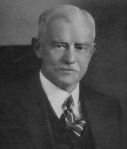
howard atwood kelly

Howard Atwood Kelly, M.D.
(February 20, 1858 – January 12, 1943)
A founding professor at the
Johns Hopkins Hospital in Baltimore, Maryland

Fewer Words

2586027821_d30d0ccc79

Fewer words often say far more than quantity, hence, three sincere thoughts this morning about the art of being grateful.

As the years pass, I am coming more and more to understand that it is the common, everyday blessings of our common everyday lives for which we should be particularly grateful. They are the things that fill our lives with comfort and our hearts with gladness — just the pure air to breathe and the strength to breathe it; just warmth and shelter and home folks; just plain food that gives us strength; the bright sunshine on a cold day; and a cool breeze when the day is warm. Laura Ingalls Wilder

Embracing an attitude of gratitude is nourishing to the soul. When we allow ourselves to be engulfed in gratitude, this abundant soul nourishment overflows to your relationships, careers, and day-to-day lives. Act in gratitude today… If you are grateful to those you love, show them. If you are grateful to those who have helped you, show them. If you are grateful to your creator, to your family, to your friends, and you want it to be known, let it be shown! Steve Maraboli

Woke up today feeling appreciative of being alive and the comfort I live within. I spent time with a friend last night that made hours evaporate quickly. Special people add bright colors and flair to living. I am grateful for every caring soul that has been and is a part of my life.

The invariable mark of wisdom
is to see the miraculous in the common.
Ralph Waldo Emerson

Even Longer…

Pooh-and-Piglet

If nobody smiled and nobody cheered and nobody helped us along,
If each every minute looked after himself and good things all went to the strong,
If nobody cared just a little for you, and nobody thought about me,
And we stood all alone to the battle of life, what a dreary old world it would be!

If there were no such a thing as a flag in the sky as a symbol of comradeship here,
If we lived as the animals live in the woods, with nothing held sacred or dear,
And selfishness ruled us from birth to the end, and never a neighbor had we,
And never we gave to another in need, what a dreary old world it would be!

Oh, if we were rich as the richest on earth and strong as the strongest that lives,
Yet never we knew the delight and the charm of the smile which the other man gives,
If kindness were never a part of ourselves, though we owned all the land we could see,
And friendship meant nothing at all to us here, what a dreary old world it would be!

Life is sweet just because of the friends we have made
and the things which in common we share;
We want to live on not because of ourselves, but because of the people who care;
It’s giving and doing for somebody else–on that all life’s splendor depends,
And the joy of this world, when you’ve summed it all up, is found in the making of friends.
“The Making Of Friends” by Edgar A. Guest

Yesterday morning I woke with a realization that brought almost instant regret. Several times through the previous day, I tried to make a mental note to call a dear friend who was about to have surgery. My intention was simple; to say I hope all goes as planned, to wish her well and say I care.

The dreadful feeling of my first thoughts of yesterday were akin to, “What if something should happen and I never get to see her again.” And there was some self-bashing going on like “How could I be so insensitive and forget to touch base with her.”

The good news is my friend came through the surgery just fine. She is suffering some with pain and discomfort, but should be just fine given time. I know she will tell me it’s okay that I had a mental slip and didn’t call. And she will mean it because she truly is my friend.

Once middle-age arrives one has been given repeated reminders to express feelings to someone while you can. All too often a person who was just fine today is gone tomorrow. The chance evaporates and regret becomes something carried forward.

When we honestly ask ourselves which people in our lives mean the most to us, we often find that it is those who, instead of giving advice, solutions, or cures, have chosen rather to share our pain and touch our wounds with a warm and tender hand. The friend who can be silent with us in a moment of despair or confusion, who can stay with us in an hour of grief and bereavement, who can tolerate not knowing, not curing, not healing and face with us the reality of our powerlessness, that is a friend who cares. Henri J.M. Mouwen

So P., my dear friend, I am sorry I did not talk to you before your surgery. I apologize and thank you for your understanding. Please know you have a special place in my heart and I am grateful that we stumbled into each other’s life and became friends.

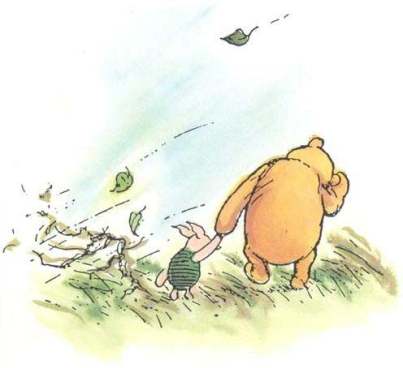
“We’ll be Friends Forever,
won’t we, Pooh?’ asked Piglet.
“Even longer”, Pooh answered.
From “Winnie-the-Pooh”
by A.A. Milne,