More Profound than Truth

English romantic poet John Keats wrote “Beauty is truth, truth beauty; that is all”. While the statement is easily understood it actually says a great deal while saying very little. Anatole France thought beauty was “more profound than truth itself.”

If you look up definitions of beauty what is found are descriptions such as:

* Quality perceived which gives intense pleasure or deep satisfaction to the mind arising from sensory manifestations such as harmony of form, gracefulness, pleasing shape, meaningful design or pattern.

* A combination of qualities that pleases the aesthetic senses, the intellect, or moral sense; preceptions which pleasurably exalt the mind or spirit; sensing excellence of artistry, truthfulness, and originality.

In an article in National Geographic Cathy Newman wrote: Define beauty? One may as well dissect a soap bubble. We know it when we see it or so we think. Philosophers frame it as a moral equation. What is beautiful is good, said Plato. Poets reach for the lofty such as Kahlil Gibran who said “beauty is not in the face; beauty is a light in the heart”. 

Blogger Janiel928 made a list of fifteen things she considered beautiful: my husband’s laugh, butterflies, sunsets, music, snow, baby animals, fireworks, flowers, good food, the beach, sound of owls, night sky, hummingbirds, books, and cats. Another wrote the five most beautiful things in the world are “falling in love, the ocean, sky filled with stars, laughing and peace.

A writer’s list on-line of the most beautiful places in the world included sunset at the Taj Mahal, Skywalk at the Grand Canyon, the Matterhorn, the Northern Lights, view of New York from the Empire State Building and Antarctic glaciers.

It’s impossible to pick just one most beautiful work of art. While Michelangelo’s Sistine Chapel or statue of David could certainly be in the running, so could De Vinci’s “Mona Lisa” or any number of Rembrandt’s work. Then there’s Renoir, Gauguin, Warhol, Dali, Monet, Matisse, Picasso or even Rockwell and Remington. Van Gogh said, “The most beautiful paintings are those which you dream about… but which you never paint”.

In conversation of a group of people there will never be full agreement on who wrote the most beautiful music whether it was created by Mozart or Brahms, The Beatles or the Moody Blues, Frank Sinatra or Dean Martin, Garth Brooks or Reba McEntire, Henry Mancini or Duke Ellington, Nirvana or REM, Charlie Parker or Billie Holiday or many others. What’s beautiful in music is no different than any other art form: it’s a uniquely personal thing.

Who is the most beautiful man or woman living today? …that has ever lived? From a spiritual sense some would say Jesus while others say Mohaummed and still other’s response would be Buddha or another. 

Whatever the criteria, it is impossible to answer universally who/what is most beautiful because the answer varies with the person doing the choosing. Carole Bayer Sager asked the question “What is the most beautiful flower? the most beautiful song, voice, etc?” She then answered “Beauty is in the eyes of the beholder; there is no one answer”.

I am grateful for the great beauty in my life in all forms and shapes in comes in. There is so much of it even while my vision of what is beautiful is different from anyone else’s.  I have grown to appreciate more and more what I preceive as having beauty, but I still don’t appreciate it enough.

About ten years ago I vowed to at least once each day to stop down for a few seconds to truly notice something beautiful and really “see” it. I am grateful for the reminder to restore my habit to consistency.  It well known to me that doing so makes a sizeable different in the quality of my life!

The best and most beautiful things in the world
cannot be seen or even touched.
They must be felt with the heart.
Helen Keller
Much Remains the Same

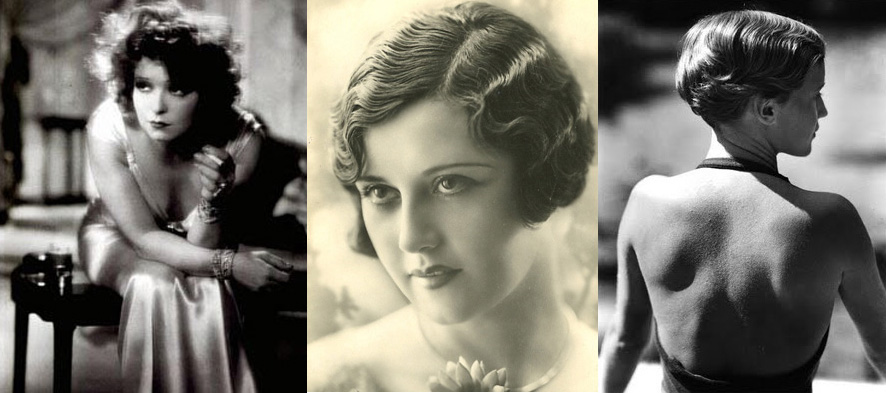
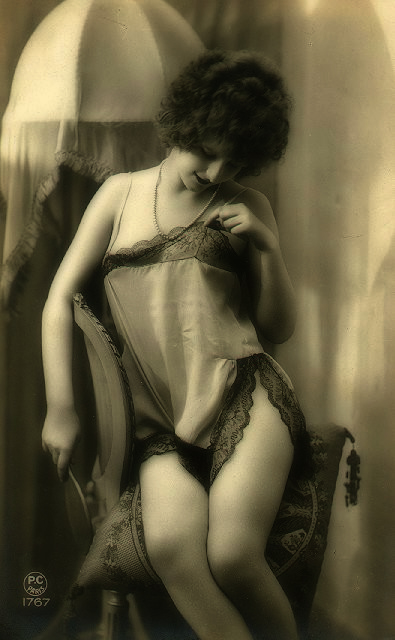
Stumbling across a site of early 20th century vintage glamour photography, I became mesmerized looking back through time. Letting it soak in that the image was captured about ninety-two years ago was a bit mind-boggling.   The twenty something woman glamorized in the photograph above taken around 1920 would be a hundred and ten years plus if she was still among us.  Much has changed.  Many things remain the same. 

The appearance of photographic images was different a hundred years ago. The quality of equipment and techniques in practice then gave most images a dreamy, misty and somewhat surreal look. The sense of seeing through to another time is enhanced by clothing, props and styles that appear rarely antique in an appealingly beautiful way. All together the methods and attributes of a hundred years ago cause the photographs to appear characteristically artful, much like a painting of long ago.

There’s something about seeing an image of someone who lived long ago that conjures intrigue.  Questions come to mind such as “who were you”; “what was your life like?”; “were you happy?”; “what were you thinking when the photo was taken?”; “what did your voice sound like?”.

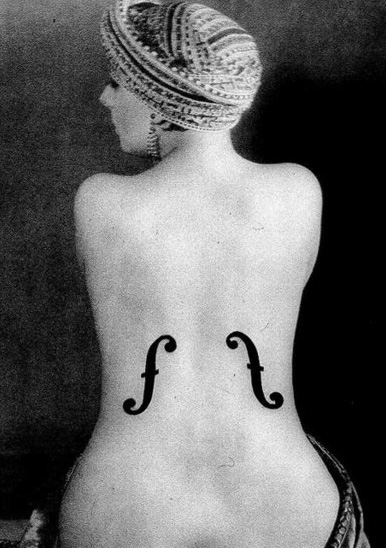
Of course, there was plenty of ‘naughty French postcard” type photography of women taken in the early 20th century era that was exploitive. It was nudity simply for the sake of the nakedness done without any artistic bent. At the same time that sort of unappealing photography was being done in Paris, there were people like Man Ray who was making inventive and original works of art with a camera featuring the female form. His photographic work has been copied for a hundred years, but like that of his contemporaries like Dali, in their day the work was completely original, inspired and quite controversial. A good example is Man Ray’s ‘cello back woman’:

It’s interesting how today’s fashion appears contemporary while that of just forty years ago frequently appears old and out of style. However, go back a hundred years and old fashion and style appears “classic”. Clara Bow and her contemporaries emerge from photographs to have had their own unique class when viewed today.

Modern snobbery often gives the impression that fashionable beauty comes only from “now”. For hundreds of years every age has had its fashion of the day, current perceptions of beauty, preferred types of entertainment and ways of perceiving things. Ranging from what now appears elegant and classy to the laughable and near ridiculous, all ages of the past have their own “thing”.

All I have to do is see old photographs of myself in a 70’s wide lapel, baby blue tux with platform shoes on to have a good laugh on my self.  I wonder if in a hundred such a photo will be consider that of a classic gentleman. I am grateful for the smile remembering ‘my time’ brings. I am thankful for the slant of perspective that allows me to see into the past and respect what long ago was.  

Clocks slay time…
time is dead as long as it is being clicked off by little wheels;
only when the clock stops does time come to life.
William Faulkner

Letting Go and Letting Life

“If it is to be, it’s up to me” was my motto for a long time. However experience helped me to discover that simply letting go and letting life unfold is a key ingredient to a good life. Instead of trying to force every step I take into a self-fixed direction quite frequently the best course to take is to give up control. Some would label it intellectual blindness. Others could call it spiritual naiveté. There are those who might say I am childishly not being responsible. To them my response is, “you just don’t know yet what I know”.

For me it comes to this: When I don’t know what else to do, the ‘secret’ learned has been to simply let go; give it up; release controlling; and let things turn out as they naturally do.  Allowing the forces that exist in the universe and the power of something beyond me lend help when I am at wit’s end is one of the greatest pieces of wisdom garnered so far.

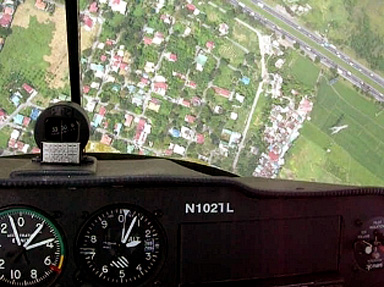
When I was learning to be a private pilot one of the more challenging parts was going through spin training. No matter how much my trusted instructor told me the aircraft would recover from a spin on its own if I would let go of the controls, it was impossible to do at first. Nothing he said could get me away from my instinctive feeling that the only way out of a frightening spin was doing it myself. Little by little I began believe my teacher when he talked ‘inherent stability”. He said ‘it’ was built into modern small airplanes and caused them to recover from a spin on their own as long as you were high enough when spinning begins.  It took MANY tries before he got me to let go my need to control. When I did, recovery worked just like he said. I let go of the controls and within less than two spins the aircraft always recovered. Things turned out far better WITHOUT my control!

It’s that place in our lives where what we’ve been hanging onto . . . clinging to for dear life . . . is stripped away. It’s that place in us where we let go of what we know, what we think we know, and what we want and surrender to the unknown. It is the place of saying and meaning, ‘I don’t know.’

It means standing there with our hands empty for a while, sometimes watching everything we wanted disappear; our self-image, our definition of who we thought we should be, the clones we’ve created of ourselves, the people we thought we had to have, the things we thought were so important to collect and surround ourselves with, the job we were certain was ours, the place we thought we’d live in all our lives. . .

Surrender control to the supreme wisdom… the Divine in your soul. Step into the void with courage. Learn to say, I don’t know. That’s not blind faith. It’s pure faith that will allow… your spirit to lead you wherever your soul wants and needs to go. (from Melody Beattie’s “Finding Your Way Home”)

When I know of nothing else do to and have tried all I know to try, letting go of control and the outcome always seems to allow things to turn out OK. At the very least resolution comes. Such occurrences are good lessons for my big ego that always tries to run everything.  It does not know it all like my ego tries to always convince me. I am grateful to know that with regularity things turn out best when I muster the strength to leave them alone.

All the art of living lies in a fine mingling of letting go and holding on.
Havelock Ellis

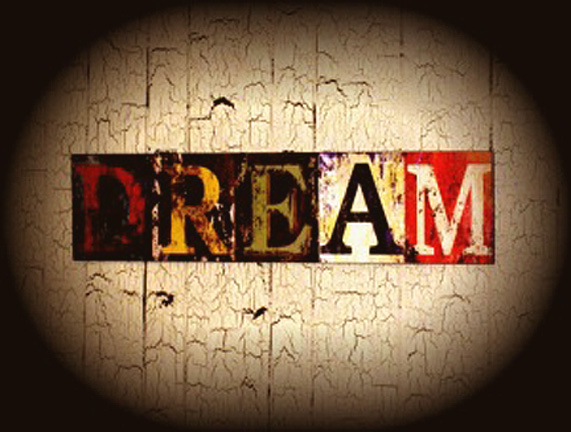
Dreams That Need Completion

What are three things that burn at you to do before time runs out?

Having had a successful career, raised a son who is making his own way in life well, knowing the love of those close and many other wonderful experiences all combine together into a good life.  There have been many adventures and I’ve been able to indulge keen interests seriously, ranging from photography to piloting airplanes. Far more has come to me that I could have ever dreamed or imagined when I was young. There is humble gratitude for all my benefits and blessings. However, here in my late 50’s I am not done!

What are the three things that come to mind I want yet to experience?

To romantically love and be loved, passionately, gently, tenderly, thoroughly through the ups and downs with my last true love.  To bravely hold hands into old age in spite of fear of demise and death. To share the ultimate adventure of fading into the winter of life.

To write and make a difference; to express my thoughts and feelings and have others find them worthy of their time to read. Ultimately I hope to have what began here as a blog to be the building blocks of a published non-fiction book (self published is fine with me). I also want to finish the great fictional love story I began several years ago titled “A Year From Wednesday”.

To travel; I mean really travel. Go places and stay long enough to fit in and know my way around. A week or two there, a month or two in another place; far away places. The more untarnished the better. There’s a whole world out there that I want to see, smell, taste, feel and hear in its variety.

The beginning of making big dreams come true is to tell others about them… and then tell them again and again. I am grateful for the impetus that sharing my dreams here gives me. 

What three things do you want most to yet accomplish in your life?

When we are motivated by goals
that have deep meaning,
by dreams that need completion,
by pure love that needs expressing,
then we truly live life.
Greg Anderson

Behind a Farting Camel

Hafez or Hafiz was a Persian poet who lived in the 1300’s. His work has been influential since that time even though little is actually known today about him and his life. His work made deep impressions on writers such as Thoreau, Goethe and Emerson with the latter referring to him as “a poet’s poet. Hafez has been a favorite since I became aware of his writing during my young “hippie days” (or was that “hippie daze”?)

In this piece, Hafez writes about depression and seemed knowledgeable about the subject hundreds of years before Jung and Freud. There are a few days per month I have to deal with “cycling depression” that brings a sort of dimness and lethargy into my life. Writing like the piece below from Hafez helps me understand I am far from alone. Many today suffer as I do and many did a hundred generations before me did too.

I know the voice of depression
Still calls to you.
I know those habits that can ruin your life
Still send their invitations.
But you are with the Friend now
And look so much stronger.
You can stay that way
And even bloom!
Learn to recognize the counterfeit coins
That may buy you just a moment of pleasure,
But then drag you for days
Like a broken man
Behind a farting camel…
O keep squeezing drops of the Sun
From your prayers and work and music
And from your companions’ beautiful laughter
And from the most insignificant movements
Of your own holy body.
Now, sweet one,
Be wise.
Cast all your votes for dancing!

In recent years the days of my depression usually pass like wind through a tree when limbs are moved by the passing but no damage is not done. Through counseling, support of peers and those who care about me, and reaching a level of understanding that “depression” is a ‘normal’ malady, I am much healthier today than ever before. Some deal with migraines; some throw their back out; I cope with depression. And I do it quite well these days and am grateful for all the love, support and insight that makes that possible.

If depression is creeping up and must be faced,
learn something about the nature of the beast:
You may escape without a mauling.
Dr. R. W. Shepherd

Three Sayings and a Poem

Some mornings my gratitude is of a general sort instead of being focused on specific things. Today is one of those days when I woke with good spirits about being alive and feeling grateful about many things but impossible to sort down to one or two.  There is just too much this morning I feel thankful for. So instead, here are three sayings about gratitude and a favorite poem about what to be thankful for that in total encompass my morning thoughts and sentiments.

Learn everything you can, anytime you can,
from anyone you can;
there will always come a time
when you will be grateful you did.
Sarah Caldwell

Two kinds of gratitude:
The sudden kind we feel for what we take;
the larger kind we feel for what we give.
Edwin Arlington Robinson

The world has enough beautiful mountains and meadows,
spectacular skies and serene lakes. It has enough lush forests,
flowered fields and sandy beaches. It has plenty of stars
and the promise of a new sunrise and sunset every day.
What the world needs more of is people to appreciate and enjoy it.
Michael Josephson

Much of the lack that plagued my thoughts for so long is now filled in by gratefulness toward what my life already contains. Now there is far less of each day spent longing for more. Instead, one by one I am discovering my many blessings. What a wonderful feeling. It feels like uncovering life itself.

Be grateful for the kindly friends that walk along your way;
Be grateful for the skies of blue that smile from day to day;
Be grateful for the health you own, the work you find to do,
For round about you there are men less fortunate than you.
Be grateful for the growing trees, the roses soon to bloom,
The tenderness of kindly hearts that shared your days of gloom;
Be grateful for the morning dew, the grass beneath your feet,
The soft caresses of your babes and all their laughter sweet.
Acquire the grateful habit, learn to see how blest you are,
How much there is to gladden life, how little life to mar.
And what if rain shall fall today and you with grief are sad;
Be grateful that you can recall the joys that you have had.
Edgar Guest

I Have Been a Fool

When one hears the word “lust” it’s common to conjure up sexual meaning. Certainly sex can be lust, but lust is many more things that just sex. In the realm of desire I have known sexual lust so strong it blinded me to almost everything else. But any such yearning compulsion pales in comparison to my greatest lust: the lust for perfection.

The dictionary defines “lust” as ” an intense longing; a passionate or overmastering desire or craving; an emotion or feeling of almost overpowering desire. My chasing of always elusive perfect people, perfect things and a perfect ‘me’ certainly qualifies. It has been the lust that plagued my life most.

Friday evening after work, a relaxing evening watching a movie was my chosen way of unwinding from the work week. Out of my stash of bargain used and closeout DVD’s, “Holy Smoke” was a near completely random pick. I had not seen it and knew nothing about the movie except it starred Harvey Keitel and Kate Winslet; both long time favorites.

Admittedly I have had an innocent boyish crush on Ms. Winslet since seeing Titanic almost fifteen years ago. Having seen the re-released “Titanic” on IMAX 3-D a few weeks ago, that sense about her had been refreshed. I’ve always thought she was attractive in an unaffected way and admired that she seemed never to try to be absolutely perfect. In the famous sketch scene in Titanic where DiCaprio’s character draws “Rose” laying naked on the sofa, Ms. Winslet looked sweetly innocent and lovely. As beautiful as she looked, if you pay attention you can see stretch marks on her breast in that scene that was admirably left un-retouched.

My Friday evening movie, “Holy Smoke” with Winslet and Keitel, turned out to be a quirky, but deeply revealing movie.  It touched me enough to cause a real shift in my perspective. It’s gritty realism hit hard in few spots in a manner that helped me see past some of my previous behavior and way of seeing others.

In the past I never felt I was “perfect enough”. The exactly ‘right’ shoes, car, home, vacation, suit, furniture, accomplishment, camera and so on always alluded me. Perfect was always just out of reach, but I kept reaching any way.

The “imperfectness” I saw and felt in myself also colored EVERYTHING and EVERYONE around me. No friend was quite good enough. No associate was talented enough.  No woman was ever perfect enough and accepting each one’s imperfections eluded me. Now I realize what I was perceiving was only hatred of my own lack of perfection and was layering it onto them.

In “Holy Smoke” Harvey Keitel is 50-something cult deprogrammer hired by the family of a mid-20’s Kate Winslet who has been mesmerized by an east Indian guru. There’s a night scene where Kate’s character sets on fire her clothing from the cult, a white sari, hanging outside on a tree. The flames wake up Harvey’s character who runs outside to find a completely naked Ruth (Kate’s character). That’s when my “changing” moment happened.

I sat on the couch stunned as I pressed pause for a few seconds looking at a naked Kate Winslet on the screen. That’s when for the first time I was able to truly see the beauty that is in a woman’s physical imperfection. I saw breasts that did not match nor were perfect in shape with irregular nipples. I saw bigger thighs and legs too large for me to have previously thought of as ‘perfect’. I saw a woman who wanted to be known just as she was and accepted in spite of any imperfection. That was the point of the scene of the movie and it worked. I accepted her openly and completely, seeing only the unique beauty that is 100% Kate Winslet. I will never be the same again.

The wrong of how I judged wives and girlfriends in the past is crystal clear to me now. Beauty is in the total package; the unique female each woman is. For those women who loved me who I judged about the shape of their body or any part of it, or I wished were more here and less there…I humbly apologize and ask your forgiveness. From butt to face, breasts to weight, height to hair, posture to stomach, from scar to skin tone I judged wrongly and saw imperfection I then wished was different. Even if you never know of my feelings now, I am still very sorry for being judgmental. It was my loss I could not see the unique beauty that each woman was. When Friday’s epiphany came over me while watching “Holy Smoke” I said aloud “I have been a fool. I have been blind. Why could I not see like this before?” Tears followed as the weight of my misguided view of the past began to evaporate.

Thank you Kate Winslet for your courage to be so fully seen in an uncensored and honest way. You’re imperfectly perfect and changed my life in a single movie scene! Substantial and deep gratitude is within me for this wake up call. I have let go of a way of perceiving that no longer works for me. Short or tall, skinny or full-figured, big breasted or small, little butt or big butt… the female form in all shapes and variety has become more beautiful to me in a way I have never seen before. True beauty is in the uniqueness of every one.

Beauty is an experience, nothing else.
It is not a fixed pattern or an arrangement of features.
It is something felt, a glow or a communicated sense of fineness.
What ails us is that our sense of beauty is so bruised and blunted,
we miss all the best.
D. H. Lawrence

Often a Sign of Love

Saying “NO” is one of the greatest gifts I can give myself!  That was brought to the forefront of my attention through reading a couple of meaningful on-line articles this morning. I want to share what I came across.

A starter list of the benefits of “no” put together by Ron Edmondson points to just some of the advantages:

  • Saying “no” is the power to help resist temptation…
  • Saying “no” keeps you from the stress of overcommitting…
  • Saying “no” protects family life…
  • Saying “no” provides adequate time for what matters most…
  • Saying “no” preserves energy levels for prioritized work…
  • Saying “no” allows others opportunities they wouldn’t have if you always say yes…
  • Saying “no” permits you to control your schedule for an ultimate good…
  • The value of learning when to say no, and actually practicing it, is immeasurable!

In the “Health and Wellness” section on the website http://www.sheknows.com John Khoury made another list of benefits of saying “no” appropriately:

  • More energy. Not only will you be saving energy, the fact that you are now in conscious control will add extra energy.
  • More time. There are only 24 hours in a day, but from now on, more of them are for you.
  • More confidence. Saying “no” to others can often amount to saying “yes” to yourself. This is a back-handed “I love you” to the most important person in your life. Take it as a compliment and feel good about it.
  • More control. Saying “no” means you are behind the steering wheel and can go wherever you want.
  • More respect. You’ll respect yourself more and so will others. They might not like you as much, but if they were trying to step over your boundaries before, they probably didn’t like you much anyway – not really. At least you’ll have their respect when you show them your clear, no-discussion limits.
  • More fun. Yes, life is here to be enjoyed. When you stop working for others, you start working for yourself and start fitting in the fun.

What I need seems to appear on its own a good bit of the time. All I need to do it remain open and pay attention to what is brought into my path by a power beyond me. I feel no need to quantify that source. It is sufficient to me to instead express my gratitude. Today the message I received was saying “no” is frequently best and often a sign of love.

…there are often many things we feel we should do that,
in fact, we don’t really have to do.
Getting to the point where we can tell the difference is a major milestone…
Elaine St. James

The Road Not Taken

When the great American poet, Robert Frost died I was not out of grade school. While his work went over the heads of most my age when it was brought to our attention at the time of his death, the work touched me. The questioning manner of a good deal of Mr. Frost’s work suited me then during a troubled childhood. Even though his realistic depictions of rural living were about country life in New England the words also seemed a perfect fit for my growing up in the rural south. I adopted him as my “favorite” poet for most of my school years. His work was a good companion during my brooding teen years.

The Frost poem that wrote itself on my psyche most and has never left was “The Road Not Taken”. I resolved as a young man to make good choices and choose the best ‘road’ for my life. It’s  easy to read Robert Frost’s poem now and slide into thoughts of “I could have/should have” taken several different roads all my way.

Two roads diverged in a yellow wood,
And sorry I could not travel both
And be one traveler, long I stood
And looked down one as far as I could
To where it bent in the undergrowth;

Then took the other, as just as fair,
And having perhaps the better claim
Because it was grassy and wanted wear,
Though as for that the passing there
Had worn them really about the same,

And both that morning equally lay
In leaves no step had trodden black.
Oh, I marked the first for another day!
Yet knowing how way leads on to way
I doubted if I should ever come back.

I shall be telling this with a sigh
Somewhere ages and ages hence:
Two roads diverged in a wood, and I,
I took the one less traveled by,
And that has made all the difference.

Recently I found an answer echoing back to my lamenting about what life paths I have taken. William Kite’s sixteen lines came to me as a sort of answer poem to Robert Frost’s original “The Road Not Taken”.

Would things have really been so different?
Would the world really have been so shaken
If when I were a much younger man
I had chosen the road not taken?

Would the days have been any the brighter
Or the nights darker than they are?
Would I still have lived in such obscurity
Or shined brighter than any star?

It does little good to wonder
Of things that might have been
For who, and what I have become
I must live with in the end.

Though life could have been much better
All in all I do not feel forsaken.
I count the blessings that I have
And cry not of the road not taken.

I needed that! It is gratitude for what my living has actually encompassed that matters most and not whether the actual steps, chapters and roads seem now like the ‘best ones’. All of them taken in total “are my life”. Time is wasted by any thought of wishing my past to be different; it can not be rewritten. What is, “IS”.

By counting the blessings in every adventure from the difficult and grievous to the joyful and glad a colorful mosaic of life comes into view: my life. For all it has contained and yet will, I am grateful.

The past cannot be changed,
and we carry our choices with us,
forward, into the unknown.
We can only move on.
Libba Bray

Two Ears and One Mouth

Oliver Wendell Holmes wrote, Talking is like playing on the harp; there is as much in laying the hand on the strings to stop their vibration as in twanging them to bring out their music.

My translation: it’s just as important to stop talking as it is to talk. I already know what I think and there’s little new going to come to me by talking about it. Different perspectives from others will often benefit me but is only possible by being a good listener.

I say all that to say, I am not a particularly good listener. I’m working on that though. Awareness helps and by keeping it forefront mentally growth is noticeable, but doesn’t come rapidly. Ingrained habits change slowly.

A question each person silently asks when meeting someone else is “Do you care about me”.  There are few things that show I care like paying attention to what someone else has to say. At that moment I am making that person one of the most important elements of my life and giving a meaningful gift that rarely goes appreciated.

An old axiom says if you spend a half hour with someone you’ve just met and let them talk for 25 minutes of the time, their impression will be you are an amusing and interesting person to talk to; someone they hope to see again soon.

To listen fully means to pay close attention to what is being said beneath the words. You listen not only to the ‘music,’ but to the essence of the person speaking. You listen not only for what someone knows, but for what he or she is. Ears operate at the speed of sound, which is far slower than the speed of light the eyes take in. Generative listening is the art of developing deeper silences in yourself, so you can slow your mind’s hearing to your ears’ natural speed, and hear beneath the words to their meaning. (Peter Senge)

A personal big step forward came when I began to stop myself from thinking about I am going to say next while another was talking. When my attention is inside my own head focused on my own thoughts while another talks I always miss a fair amount of what was being said.  I am grateful for the reminder that listening is one of the most valuable gifts I can grant to another.

We have two ears and one mouth
so that we can listen twice as much as we speak.
Epictetus