A Shuttered Heart Flung Open

Dear Heart,

You were an undeveloped child when the inaccurate realization came that love cripples.  That false knowing left you emotionally lame and wounded. Life was a mistaken tutor when it taught that, but you were too immature to do anything except accept the teaching as truth. That was the very reason you began a life-long search for the very thing which brought such anguish for so long.  Like a flame seeking fire to join with your pursuit of affection has been relentless.  Dear heart, don’t stop trying.

When the strength of childhood should have been yours you were already fatigued and exhausted by love.  It is not your fault that you became a near beggar for the warmth of the love of others.  You needed only to be needed.  You wanted only to be wanted.  Dear heart, don’t ever give up.

Shattered first by this one and then by another; family, lover and friend.  This has been your path.  Like one lost in a blinding snow storm your steps have been slow and labored, but you still have found your way toward what you yearned for.  Dear heart, don’t stop moving onward.

Flawed by your own faults and damaged by the defects of others, the imperfection of love grew within you.  In childhood dreams of love were found in fairy tales and movies.  Those were the only dependable reference point you had, but the fantasy of one and make-believe of the other taught little about how one loves.  Dear heart, don’t lose that knowing.

What one does not have is impossible to give another.  As your parents were and extended family was, you became.  No matter how much you allowed yourself to travel in the direction of love, it was a destination you never arrived at because you did not even know it when it was nearby.  Like a train that missed its stop, you ran by love when it was before you only realizing the mistake too late.  Dear heart, don’t cease using what has been learned.

In your untamed need and flailing pursuit, you have hurt many people.  So self-absorbed and singled-minded with your sense of purpose, the pain caused was barely noticed by you usually.  Only later with mind turned backward could your past deeds be seen for what they were.  It was not your fault.  You did not know better then.  You do now.  Dear heart, don’t forget to forgive yourself.

Others were to blame for you being orphaned of healthy love and emotion when you were a child.  It was not your fault.  You simply knew no better.  That was a good explanation for your behavior when you knew nothing more.  Now the ‘university of life’  has given you a degree in knowledge and experience.  Dear heart, don’t forget to use that education.    

Today: you are like the heart of a young man who feels love openly and expresses it freely; a child formed into an adult.  Expressing your love to others will never be a mistake.  Dear heart, tell of your self truly

Today:  One who has known true pain and heartache knows best what joy and love feel like.  Each is but the mirror reflection of the other amplified by familiarity and practice.  It is in facing fear and continuing in spite of it that the heart triumphs.  Dear heart, be brave and give all of yourself without expectation.

Today:  Living long without being fed the emotional sustenance you needed means you have more to give than most.  Those who have suffered long at the hand of life, of others and of their own doing can understand you.  The best chance of being loved as you need to be is with those whose days adrift from love are a close parallels to yours.  People with common life experience will best “get you” and you them.  Dear heart, open yourself to those who love you.

So dear heart, do you understand that this is a love letter to you? 

I feel you pumping in my chest every minute of every day.  What feelings you bring forth for this body to know get expanded and felt in every cell of your/my/our being.  A therapist said to ‘us’ a few years ago, “I am surprised you made it”.  But dear heart, ‘we’ did make it!  ‘We’ are alive, well and able to love like few can.  The peril and hazard of the past have today become ‘our’ reward:  the ability to love deeply, fully and completely. ‘Our’ gratefulness overflows and falls in tears down the face to settle above a long shuttered heart that is flung willingly open.

The hunger for love is much more difficult
to remove than the hunger for bread.
  Mother Teresa
Where Smiles Have Been

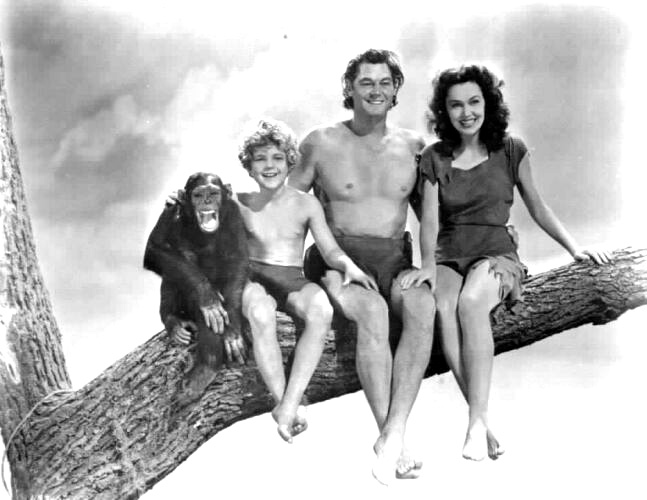
Back around Christmas I read about Cheetah, the chimpanzee thought by many to be Tarzan’s movie sidekick, had died.  He was 80 years old!  The story goes that this particular chimp was Johnny Weissmuller’s comic relief in a bunch of old Tarzan movies.  Some say this specific chimpanzee while owned by Weissmuller was never actually in any of his movies.  Others say the recently deceased was the “real Cheetah”. 

All those old Tarzan movies were rerun often on TV during my growing up years and I loved them. The films were decades “old” before I saw any of them for the first time and were in constant reruns on the tube  As an adult realizing how hokey those old B&W Tarzan movies were is clear, but as a kid they were spellbinding and heart pounding adventures. 

The famous Tarzan yell everyone knows actually was done by Johnny Weissmuller, the most famous of those to play the Lord of the Apes.  No one was ever able to duplicate Weissmuller’s call to the wild which is why it was used for other actors in many Tarzan movies.

In reading about the demise of Cheetah, it led me to some material about the life of Johnny Weissmuller.  As a champion swimmer, he won five Olympic gold medals and a Bronze.  He was victorious at fifty-two US National Championships and set sixty-seven world records.  Then he became a movie star with a face recognized around the world.  You’d think all that would have set him up for life.    

Weissmuller was married five times and seemed to have a penchant for making bad choices.  He repeatedly put his money into endeavors that never panned out.  Things were bad enough that as an old man in the 1970’s he worked as a “greeter” at the MGM Grand Hotel in Las Vegas.  How sad to learn that a famous childhood hero of mine had to do something like that to provide for himself.   But a man does what he has to do.

No matter how much a person schemes and plans there is no certainty that he or she won’t someday lose nearly everything long before death takes it all.  Stories of one year rich, the next year a beggar are commonplace.  Rooted in growing up poor, I have a higher than average fear of “losing it all” to the point my apprehension defies logic. 

While my family had little when I was growing up, a lot of people had less.  Destitute old people were not uncommon sights then.  If not for family taking them in and providing care I don’t know what would have happened to those elders.   There is a distinct thread of dread in me about ending up old like that or on the street with nothing.  While the strength I sense the discomfort with is illogical, the feeling remains real to me just the same.  

Life has taught always playing it safe does not work.  It does nothing to insulate me from my mild phobia of having nothing.  There have been a lot of acceptable risks taken in my life and a good number have paid off.  So logic tells me I can lose it all and rebuild again enough to support and take care of myself assuming I still have good health. Fear does not easily submit to reason.  Need be, you will find me as a “greeter” like the man who was Tarzan to me.

Damn! That is thinking like an “old person” and I am not one of those… yet!  I have always been and will always be a risk taker.  Few times was a chance ever taken when being somewhat afraid was not present.  I was able to move forward in spite of fear then and will do so now as well.

My late middle years have arrived and old age is less faintly visible on the not so distant horizon.  In spite of my anxiety about not having enough money or losing good health at too young of an age, I am highly hopeful for the full and long ride of life.  There is a lot of optimism that I will live to experience the greatest mystery of all: old age. 

My gratitude is large to be alive today.  Outliving my father was a milestone accomplished last year.  There is deep thankfulness to have the amount of love present in my life:  of family, of friends, of loved ones and of a special woman.  All research points to loving and being loved as one of the necessary ingredients for a long life.  In that regard I am in great shape!

There is so much in my hopes to yet accomplish.  For example:  Peace Corps someday?  Probably.  Living in a foreign country again?  Likely.  Hiking the Inca trail?  Not sure about that one.  Publish a book?  You can bet on that one.  Visit the two states I have yet to set foot in?  Yes!   Growing gracefully old?  Absolutely and with immense gratitude.

My thankfulness is wide, deep and sincere for the richness bestowed on me.  As long as I am alive, life is filled with possibility. 

Wrinkles should merely indicate where smiles have been.  Mark Twain

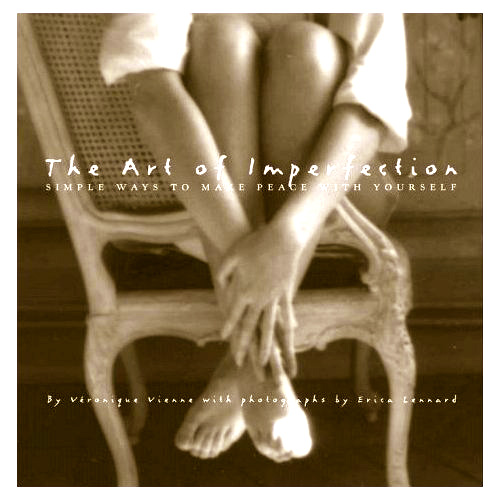
The Art of Imperfection

In art and architecture, what looks like a mistake is often a deliberate signal meant to attract the attention of insiders to a particular aspect of the work.

  • In the Zen tradition, “wabi-sabi” objects, carefully crafted to be intentionally imperfect, impermanent, or incomplete, are considered most beautiful – their humble elegance transcending fads and fashion.
  • In music, notes that deviate from an established pattern are often used to create emotional tension.  Beethoven was fond of this technique.  In the Third Symphony’s “Funeral March”, for example, he replaced sounds with silences to express the mounting sense of sorrow in the piece.

I imagine a different world, one in which people do not spend an inordinate amount of energy fuming against their fate each time they made a mistake.  A world in which one takes for granted that if things go wrong, they probably will.

It would be so civilized.  Folks would bump into furniture, miss deadlines, get lost on the way to the airport, forget to return phone calls, and show up at parties a day early, without getting unduly annoyed with themselves.

You and I would not be personally insulted when we dropped the sugar bowl on the floor, back the car into the mailbox, burned the dinner while on the phone or failed to meet our quarterly projections. 

We are convinced that getting it right is a matter of survival. Surrounded as we are by machines, we feel that we must perform flawlessly to stay ahead of the game.  An industrial-age mentality keeps us all on the steep and narrow path of productivity. 

Unfortunately, thinking that being right will save us from being wrong is a misapprehension.  While, in the last decade, we have labored to be as accurate as our machines, these same machines have been redesigned to be as impulsive as we are.  Today, some of the most advanced electronic devices, from satellites to pacemakers, are engineered to be partly inconsistent, in accordance with the dramatic finds of “chaos scientists.”

Today, in various fiends, from space exploration to stock market predictions, computers are programmed to be quirky on purpose… A case in point is an energy-efficient Japanese dishwasher, designed to be “chaotic.” That gets china, glass, and silverware cleaner by using two rotating arms that spin erratically.

In our day and age, the irrational is on the cutting edge. More and more, you are likely to run into people who will explain to you that… progress is knowing less and less about more and more. 

What a bummer?  Not at all.  Letting of basic assumptions is as exciting as looking at earth from space.  You feel something like a delicious vertigo, a sense of weightlessness.

Next time you break a plate or lose your keys, or jump to false conclusions, why not take it in stride?  Consider the possibility that there is a hidden pattern behind your random acts of blunderism.

Until this paragraph, words here today are those of another sharedbecause the thoughts are better than any original ones I have this morning.  It is rare to open up a book that grabs my attention so quickly and completely as “The Art of Imperfection” did.  It is even rarer for me to include so much of another writer’s material as I have today.  The borrowed words that fill this blog come directly from the first chapter of the book because I was moved to share what touched me so deeply.   With these thoughts once again I am reminded imperfections are perfect as they are.  They make me who I am; no less; no more.  I am grateful for my “perfectly imperfect” self.  

Kudos go to Veronique Vienne for her meaningful words
and Erica Lennard for her remarkable photography that fill their little,
but very meaningful book titled “The Art of Imperfection”.  

It is as hard to see one’s self
as to look backward without turning around. 
Henry David Thoreau

Not Everyone is Meant to Stay

Sometimes you have to give up on people. Everyone that is in your journey is meant to be in your journey, but not everyone is meant to stay there. 
Anonymous

Deep down inside me is a strong wish to have grasped the meaning of that statement long before understanding came.  Previously my long-term theory of living was simply if I love someone, somehow, someway it was going to work out.  Otherwise, why would love have found me if not for an intention of becoming something lasting?  

Such a view was one of a child carried into adult hood; a child not loved enough hidden inside an adult who grabbed at any scrap of affection that came his way.  The need to be adored was irresistible.  It did not matter that what I perceived was not genuine or what another expressed to me was feigned, disposable or temporary.  So eager for love, my heart openly accepted what it identified as affection from whatever source it came.  So hungry to be noticed and appreciated, I became involved with almost any woman who showed interest in me.  

With time I came to know that frequently people love what is not good for them.  An alcoholic loves a drink.  A drug addict loves a fix.  A gambler loves risking every dime.  An adrenaline junky loves the rush of risking life.  And so on it goes when there is emptiness on the inside that one tries to fill from outside the self.  With women I either loved ones too much who were not good for me or else did not love enough those who were.    

In more youthful years I claimed to date ‘crazy bitches’ because they were more fascinating and exciting.  In more mature years now, the realization is clear that ‘like attracts like’.  It was only because I was ‘just as crazy’ that my attraction was so strong to such women.  More thrills and spills than a roller coaster ride , but like any amusement, such extreme relationships eventually got old.  They exhausted me.  

There is this notion within those similar to me who have spent much of their lives feeling “less than” that if we can save another person they will in turn save us. Rarely does it work because such a scenario is an attempt to get esteem from outside one’s self instead of nurturing it internally.  A person then becomes a sort of emotional vampire, always on the hurt to ‘feed” on another’s feelings but sated each time only for a while.  One can only save them self from the inside out and no one else can do the work.  No amount of basking in another’s emotions made me better.  No amount of trying to be a ‘savior of women’ actually saved anyone.  In reality the attempts usually caused me (and those I was involved with) to be worse off emotionally than before we knew each other. 

Once upon a time nothing pleased me for long.  Whatever I achieved seemed hollow quickly.  Whoever I was involved with in time felt too imperfect.  Never was there contentment for long with what was in front of me.  I always either wanted more or continually asked myself if there was more.  More money, more sleep, more success, more sex, more time, more attention, more love.  Enough was never enough. 

My insecurities caused me to attempt to collect love by alway trying to hold on in some way to every woman I was ever involved with.  Whether maintaining some occasional contact, keeping mementos and photos stashed away in a box or keeping thoughts of them alive, I held on.  There was no questioning if this was healthy.  Constantly my ego yelled “you’re not good enough” through a screaming bullhorn in my brain.  The only way to quiet the noise even temporarily was to allow myself to be filled with the thrills of someone new.  

To actually see my own life clearly and become grateful for all that led me to this here and now took aligning myself with some measure of peace and truth. To learn to look at my present circumstances through gentle, kind and loving eyes required years to learn.  Even longer was needed to realize I was living a wonderful destiny that was uniquely mine.  

Peace is loving what is…what exists now in this moment here.  In her book “Loving What Is” Byron Katie wrote the only time we suffer is when we believe a thought that argues with what is. When the mind is perfectly clear, what is, is what we want. If you want reality to be different than it is, you might as well try to teach a cat to bark. You can try and try, and in the end the cat will look up at you and say, “Meow.” Wanting reality to be different than it is, is hopeless. 

So here I am in late middle age with all my flaws, scars, and blemishes but wiser and happier than I have ever been. Getting here took establishing good boundaries for myself and others.  I had to let go of a lot of things and people:  my Mother, two ex-wives, several friends, a handful of ex-lovers and girlfriends, a comfy long-term job, the big house, over half my savings and more.  Only through the letting go was therespace in my life for what I truly needed.  My gratefulness to be in this here and now is beyond my command of written language to express fully.  So I will just say “thank you” with sincere thankfulness. 

No one can give you freedom but you.
Byron Katie

I’ve Learned…

I’ve learned I can do something that only takes a moment that will give me heartache for years.

I’ve learned being the person I want to be is not automatic and is a lot of work.

I’ve learned to try always part from those I care about with loving words.  It may be the last time I see them.

I’ve learned that I can keep going long after I don’t think I can.

I’ve learned that I am responsible for whatever I do and must bear the consequences.

I’ve learned that either I control my attitude and thoughts or they control me.

I’ve learned that the heroes I look up to most are people who live ordinary, everyday lives very well.

I’ve learned that money is a lousy way of keeping score and it will not make me happy.

I’ve learned that just because a person is a family member does not mean I have to allow them in my life.    

I’ve learned that one of the great gifts in life is having a best friend.

I’ve learned that people will surprise me.  Sometimes the ones I thought would help during a bad time don’t and the ones I thought would kick me when I was down will help me.

I’ve learned that is OK to be angry when I feel anger, but that does not give me the right to be mean or cruel.

I’ve learned that true friendship can continue to grow, even over long distance, with just a little care and attention.  Same is true for love.

I’ve learned that someone can love me even though they don’t want to be with me.

I’ve learned that I can love someone even when I don’t want to be with them.

I’ve learned that maturity is mostly about learning from life experiences and has little to do with the number of birthdays I have had.

I’ve learned the hardest person to be forgiven by is my self.

I’ve learned that no matter how much pain I am in or how deeply my grief may be, the world does not stop for me.

I’ve learned that my childhood may influence who I am, but I am responsible for who I allow myself to be.

I’ve learned that I can’t directly change other people, no matter how much I try or want to.  All I can do is be a good example and hope they might want to follow.

I’ve learned that telling someone’s secret to another in confidence is not keeping the first person’s secret.  

I learned that I can see something that other people see and see it totally differently.

I’ve learned that my life can be changed for the better or worse in a matter of moments.

I’ve learned that I can not make someone love me.  

I’ve learned that trust that took years to build can be destroyed in seconds.

I’ve learned that comparing my self too much to others is a good way to forget who I am.

I’ve learned it is not what happens to me that is most important.  It’s what I do with it that matters.

I’ve learned that forgiving others is more for me than them.

I’ve learned that money is a lousy way of keeping score.

I have learned in a divorce friends choose sides.

I’ve learned smart people do stupid things but that does not make them stupid.

I’ve have learned that falling in love is easy and staying in love is hard.

I’ve learned that there are few things more important than being honest with myself.

Above adapted, amended and interpreted from several lists
found on the Internet along with my own additions.

For all that has happened in my life, good or bad, I am grateful for each honed and shaped me into the man I am today.  I like who I am.  I am happy and glad to be alive.  I am very grateful! 

 “Move On” – Author Unknown

The past is the past for a reason
That is where it is supposed to stay
But some cannot let it go
In their head it eats away

Until all their focus becomes
The person that they used to be
The mistakes they made in their life
Oh if only they could see

That you cannot change what happened
No matter how hard you try
No matter how much you think about it
No matter how much you cry

What happens in your lifetime
Happens for reasons unknown
So you have to let the cards unfold
Let your story be shown

Don’t get wrapped up in the negative
Be happy with what you have been given
Live for today not tomorrow
Get up, get out and start living

Cos the past is the past for a reason
It’s been and now it is gone
So stop trying to think of ways to fix it
It’s done, it’s unchangeable, move on.

The Hard Way

The emperor moth is one of the most beautiful species of all the moths. Wings that are wide flap slowly and majestically when it flies.  A lot of growth and change is necessary before the emperor can take its first flight as a full-grown adult.  Much time has to be spent in a cocoon growing and evolving.  Then to emerge into the world the moth must pass through a very narrow opening in its protective covering.  It does this by struggling and squeezing itself slowly through a small hole in the cocoon with a great deal of effort.  

Once upon a time a young man came across the cocoon of a large beautiful emperor moth. He made the decision to take it home so the moth’s coming into the world could be witnessed.  The man waited for a day or two and in his excitement to see the month a decision was made to help it emerge.  He cut a small opening at the bottom of the cocoon and very slowly the moth struggled to force its body through the tiny hole.

It appeared to the young man when only part of the way out, the moth became stuck and stopped making progress.  Although it was just resting, he thought it couldn’t get any further out.  Thinking he was being kind and helpful, the man took scissors and snipped a much bigger hole in the cocoon.  Then it was no problem for the emperor to easily emerge.  It was then the young man noticed the moth’s swollen body with wrinkled and shriveled wings.

Continuing to watch the moth the man hoped that at any moment wings would enlarge and be spread, the body would shrink and a first flight would begin.  Instead the emperor spent the rest of its short life crawling about with its swollen body and shriveled wings.  It never flew.

In his desire to be helpful, the man did not grasp that the struggle for the moth to free itself through the original tiny hole in the cocoon was necessary.  The difficult tussle through a tiny opening was required to force fluid from the moth’s body into its wings so it would be able to fly.

For the moth, flight was only possible after a great struggle. By depriving the moth of the skirmish with the cocoon, with the best of intentions, the man deprived it of a good and productive life. Similarly, people need struggle to grow.  No one can do the work for us.  If life is free of obstacles, a person literally ends up crippled.  

Like most, initially I want to bury my hurt, grief, pain or fear deeply inside whenever challenge comes.  My flight or fight reflex kicks in and my first reaction is to do anything but experience the painful emotions in front of me. However, life has taught that before pain will subside, I have to face and deal with the adversity.  I have to struggle.  It is by moving through the feelings of discouragement, grief or pain allow me the complete range of emotions necessary before the pain will let go.

This has not been an easy lesson to learn.  When younger as struggle arrived the feeling was of something being “done to me”.  I usually played the “why me” game.  With trial and error a discovery was made:  when allowed to feel my emotions fully and openly I learned valuable life lessons.

Through such experiences resilience, strength and wisdom was uncovered.  As tough as life’s lessons have sometimes been, each difficulty struggled with has held the seed of an equal or greater benefit, a pathway to new growth as a human being.  That does always mean I absorbed the teaching the first time or even the second.  It took a while to come to know that what is not learned gets repeated.   Not infrequently I have been handed an equal or more difficult scenario of the same lesson again… and again… until I learned what life is trying to show me.  

It is also evident today that the more difficult the hardship, the more valuable the lesson being taught is. Without passing through the adversity of dysfunction, the adversity of heartbreak, the adversity of financial problems, the adversity of loneliness, of loss, of failure, of separation, of divorce… I would not be the man I am today.   

To be proficient at most anything, a price must first be paid.  Learning the hard way is the only way of paying.  I am grateful to know that little piece of wisdom and for all the lessons life has taught me.

Times of great calamity and confusion have ever been productive of the greatest minds. The purest ore is produced from the hottest furnace, and the brightest thunderbolt is elicited from the darkest storm.
Charles Caleb Colton

Nothing but a Mirror

All men should strive
to learn before they die
what they are running from, and to, and why.
James Thurber

“Good morning.  I’m James and I’m a codependent.” is how one begins a turn of sharing at a Codependents Anonymous meeting.  Twice a week for going on five years I have gathered with others in a small group of 6-10 people.  It is there I have found comfort, growth and safety to learn to be the “me” I really am.

The term “Codependence” is so misunderstood and often ill-defined.  It frequently ends up with a meaning to many that is not even close to its clinical definition.  To boil it down as far as I can in my own words, codependence is a loss of one’s self to where there is no clear sense of identity or positive self-esteem.  A codependent then defines them self largely by what is outside them through either being overly controlling or overly compliant.  Inside they feel at least partly empty and fear letting people see who they really are, what they feel and what they think.

Most of the time it is hard to spot a codependent as we become so good at projecting what we think others want to see.  Usually such people are successful in their working life as the controlling variety of codependents frequently make good managers.  The compliant variety make great employees.  It is in personal relationships where these natures cause problems.  Since what others see is only a projection, true emotionally intimacy is essentially impossible with one with moderate to high codependency.

Codependence often involves placing a lower priority on one’s own needs, while being excessively preoccupied with the needs of others.  Codependency may also be characterized by denial, low self-esteem, excessive compliance, or control patterns.  In a general sense being a Codependent means making things outside yourself far more important than you are to yourself.

Here’s a paragraph I found on-line that describes well the feeling of codependence:  So there’s a shell there, on the outside, and people look at the shell, and they talk to it and they act like it’s really you, but you know it isn’t. It’s just a mask. A cover. A defense mechanism carefully tweaked over years and decades, with razor-sharp antennae out, reading the signals, ready to react, ready to duck for cover, ready to be whatever it is that they want me to be today.

Everyone has some codependence in them, but for those of us in recovery that is excessively true.  If you are curious to know if you suffer from being a codependent, take the quiz at this link: CoDA Quiz Link  I will warn you though, one of the surest signs a person is codependent is to score as one and then deny that’s true.
The original poem is titles: “The Perfect Friend” By author Shannen Wrass.

The Perfect Friend
(By Shannen Wrass)

Today I found a friend
Who knew everything I felt
She knew my weakness
And the problems I have dealt.
She understood my wonders
And listened to my dreams,
She listened to how I felt about life and love
And knew what it all means.
Not once did she interrupt me
Or tell me I was wrong
She understood what I was going through
And promised she’d stay long.
I reached out to this friend,
To show her that I care
To pull her close and let her know
How much I need her there.
I went to hold her hand
To pull her a bit nearer
And I realized this perfect friend I found
Was nothing but a mirror.

Now days I live a mostly happy life and no longer need to show the world someone else other than who I am, at least most of the time with most people.  I am grateful beyond words to my therapist, The Meadows and all those I have attended a CoDA meeting with.  Without you all I simply don’t know where I would be today.

National Codependence Anonymous Organization link:  http://www.coda.org/

Another link that may be helpful:  http://www.mnwelldir.org/docs/mental_health/codependency.htm

1,000 Things You Don’t Know About Women

Almost exactly six months ago Esquire magazine published an articled on their website titled “1,000 Things You Don’t Know About Women”.  Last night I stumbled across it while doing some on-line research on another topic.  The description of the article on the website was: “We asked the women in our lives to share their secrets about sex, relationships, and what we’ve been doing wrong (and right) all these years. Four months after our special issue devoted to women — and with continuing help from you on Twitter —  we’ve reached a thousand pieces of wisdom.”

Most of the thousand comments hit me as interesting, even fascinating, certainly educational and at times humorous, while insightful.  I am appreciative of the women who responded so candidly.  Most remarks were reminders of what five decades of paying attention to the opposite sex has taught me, although it was helpful being prompted to practice consistently what I know.  

Some of the comments women were enlightening.  One I will remember always is how to answer the proverbial question:  “Does this dress make me look fat”.

No. 340: If that piece of clothing does indeed make us look fat, simply say, “It’s nice, but you don’t look comfortable in it.” Most of the time, it’s true. —Nicole Lee, 31, San Francisco

Another comment was a cue for men to remember to tell women we love how attractive they are to us, no matter how long we’ve been together.

No. 77: We want you to think we are pretty. Every now and then, when we get all fixed up, act for a minute like we make it hard for you to breathe. — Shannon Purvis, 45, Novato, California

I learned the hard way, that secrets almost always become known eventually and secrets are poison that given time harm or kill a loving relationship.  

No. 592: If you don’t want to tell us something, you probably should. We might find out from someone else, and that won’t be good. — Jenna Alice Loerop, 21, Chicago

Frequently I have tried to understand exactly where a woman I cared about was coming from when all I had to do was pay attention.  On that subject, here is good advice from the Esquire “1,000 Things You Don’t Know About Women”.

No. 518: Sometimes we don’t need you to solve the problem; we just want you to listen. — Nicole Semonis, 22, Encinitas, California

No. 940: Four words that will turn away our wrath: “How can I help?” —Judith Brodnicki, 50, Omaha

It is not unusual for men to forgot to treat the woman they love as well we once did (women do this do too by the way, so reversing the gender in the comment also makes sense).      

No. 23 We want you to never stop hunting us. Even if we married you. Remember why you got the gig. Don’t make the trailer the only fun in the whole production. That’s misleading. — Avril Dell, 46, Toronto

Here are six more comments from the Esquire article I randomly selected to include here:

No. 437: Even the most ardent feminist likes to be swept off her feet with an unplanned spontaneous romantic gesture. Trust me. —Jennifer Dewhirst Steshyn, 51, Lakeland, Florida

No. 69: When you play with my hair, you’re actually making love to me. Did you know that? —Babette Dickerson, 50, Shaker Heights, Ohio

No. 104: The girl who had a crush on you in the third grade probably still thinks about you once a week. Okay, twice. —Jennifer Smith, 34, Atlanta

No. 872: In regards to shirt buttons, here’s our advice: one open, you’re fine, two open, you’re cutting it close, three or more and you look like you belong on Tool Academy. — Aminata Dia, 22, San Jose, California

No. 50: No, it’s not all right that you didn’t plan anything for our birthday even though we told you not to. — Carla Michelle Coley, 24, Washington, D. C.

No. 40: We think you’re high maintenance, too. — Naomi Pabon-Figueroa, 25, Pittsburgh

I suppose the Esquire article leaned so heavily on comments by 20-something women due to that likely being the prime dating demographic. As I picked remarks to include today I intentionally leaned a bit toward women in their 30’s, 40’s and 50’s.  Being in my 5th decade I was especially interested to learn what “older” (defined as more mature/experienced/full-grown/wiser, etc) women had to say.  

The readers of this blog lean about 60% female and I am hopeful some of you will leave a comment here about “What Men Need to Know About Women” so I can post them.  Men, you are just as welcome to leave your insights about women as well.

After two marriages and too many failed relationships over the years, I appreciate any input you care to share. Being in a new wonderful love relationship of about six months now, all helpful insights will be greatly appreciated. 

Sometimes I wonder if men and women really suit each other.  Perhaps they should live next door and just visit now and then.  Katharine Hepburn

Here’s a link to the Esquire article “1,000 Things You Don’t Know About Women: http://www.esquire.com/women/women-issue/funny-facts-about-women-0510

I Can Do Anything


  1. Give up the quest for perfection and shoot for a good five minutes in a row.
  2. Remember what you love.
  3. If you want something to change, do something different.
  4. Let yourself re-graduate every four years. 

Those are the four “clues” about life offered by Cathy Guisewite, the creator of the syndicated cartoon strip “Cathy” as part of a graduation address she gave at the University of Michigan in the spring of 1994. 

I like the simplicity of her list.  So many  “suggestions for living” offered, while well written and though out, are usually too long and cumbersome for most people to adhere to for any length of time.  Cathy’s list of clues is simple, to the point and easy to understand and use.

About the first clue on her list Ms. Guisewite remarked you will not be graded for how dramatic your plans are but for what you actually sit down and do, slowly, deliberately for five minutes in a row.  If you can succeed for five minutes in a row, you can do anything.  To my way of thinking this is encouragement to stay in the present and live in the “now” where life actually goes on.

Clue number two “Remember what you love” is good advice without any explanation.  However, one of Cathy’s thoughts on this subject is so good; it has to be included.  She said When you remember what you love, you will remember who you are.  If you remember who you are, you can do anything.  Enough said!

When I look back and think about the things I could have done and should have done and wish I had said and wanted to try and thought of changing, time and time again I see the only brick walls that were ever really in my way were the ones I lovingly built myself, brick by brick, and then proceeded to smash my head against.  I just could not get out of my own way.  That is how Cathy Guisewite began explaining her third clue “If you want something to change, do something different”.

I find the third clue especially meaningful as it explains how my life moved from what it used to be to what it is.  In a word “change” is how it happened.  As Cathy continued talking about clue number three she included You have to take a stand when it is not convenient.  Say something in a relationship when it hurts to do it.  Work harder than you are used to working.  Try something nobody else has tried.  Defy your own group.  Rebel against yourself.  Knock down your walls and get out of your own way.  If you are brave enough to do something different, you can do anything.

“Let yourself re-graduate every four years” was Ms Guisewite’s forth “clue”.   The context of her statement was for a college graduating class and the way she explained clue four all one has to do is substitute “re-set” for “re-graduate” to make this point applicable to all ages.  She said Celebrate what you have done.  Admit what you are not doing.  Think about what is important to you and make some changes.  If you give yourself a chance to move on, you can accomplish anything.

The remarks made by Cathy Guisewite seventeen years ago are still just as meaningful today.  Near the end of her speech she said …you have to set standards for how you work how you treat others, how you let yourself be treated. You have to simultaneously celebrate yourself and rebel against yourself. You have to defy your group, knock down your walls, and get out of your own way. You have to separate yourself from the 10,000 things that are expected of you and concentrate on something one day at a time.

There is a consistent thread that runs through Ms. Guisewite’s comments and one she stated at least four times.  It was “…you can do anything”.  While I can’t be 25 again or fly by flapping my arms, there really is little else I can’t do.  At my age some endeavors will be more difficult, but still attainable if it is something I love and truly want to accomplish. Conversely, age plays in my favor due to the wisdom of years and knowledge from previous trial and error not in my possession when younger.  

I am grateful to be exactly who I am, at the age I am, the way I am.   And for anyone to be pleased with their overall lot is life is no small accomplishment.  But here I am filled with joy for living and excited about my future prospects.  I can do anything!

Most of the shadows of this life are caused by our standing in our own sunshine.
Ralph Waldo Emerson

The Lies I Tell Myself

Once in a while in hindsight I marvel at succeeding at so much while lacking belief in myself.  For so long an inability to give credit for my abilities and what I was capable of achieving robbed me of feeling positive about anything accomplished.  Nothing was ever good enough.  Everything could have been better.  “That did not measure up” or “there I fell short” was the manner my “internal judge” barked incessantly at me. 

Not only did I find myself falling short in just about every way, that viewpoint was also used for those in my life.  Lovers and partners seemed always to be too imperfect, friends fell short, and even family did not measure up.  The problem had nothing to do with them and all to do with me and how I viewed the world.  If “rose-colored glasses” enhance what is seen and gives a view of reality better than what exists, then I wore “gray-colored glasses” that robbed life of color and depth making my perspective far worse than what was true and real.

Our culture is overly performance based.  The desire to do things perfectly, if not inbred, is certainly brainwashed into us. Easily I slipped from a difficult childhood into being an overachiever professionally.  For a couple of decades my work was who I was.   Without my professional life there was little to me.  Yet no matter what I achieved, nothing was ever good enough and my dissatisfaction with life continued, grew and accumulated.

Growing up feeling ‘not good enough’ created a powerful limiting mechanism in my life:  the “voice of an internal judge” that reigned supreme in my consciousness.  While others helped me create it, the voice of the bully inside was/is all mine.  I fed it daily.  The thoughts articulated silently, but so strongly were those of an internal critic that ran rampant for years while I barely noticed. The ego, even a damaged one such as mine, is very, very clever at disguising things and transposing meaning for preservation of its viewpoint.  In other words, my ego is a liar!

It does not matter the internal judge was often completely wrong. Somewhere along the way I became accustomed to believing EVERYTHING my internal critic said.  Eventually my life became so hollow questions began that always started with “why”.  In time, I became highly dissatisfied with being so unsatisfied all the time.   

Years of questioning eventually lead me to seek help with my issues rooted in a long ago childhood.  It was then that I discovered “him”, that booming voice of self-judgment and self-criticism that roared louder than any word ever spoken to me by anyone else.  I was shocked and surprised not only by the discovery, but alarmed by the power the judge had over me.  

Part of what I discovered was this voice was constantly resetting the bar for my performance at the best I had ever achieved or higher (usually the latter).  No matter how well something was done, the bar got moved up so I continued to be “never good enough”.  Even with extraordinary achievements the voice told me I had somehow failed, did not measure up and never would on a consistent basis.  The best I could ever see in me then was mediocrity.  Criticism from others, whether accurate or not, was inflated by my inner critic… ALWAYS.   From the vantage point of today that all seems so crazy!

When the voice was “king” of my days and I was worn down, it took me down further. The critic still can in moments I feel overwhelmed or vulnerable – until I expose it as the small thing with little actual power.  Like a mouse can cast a giant shadow when seen from a particular angle, my “judge” can cast a huge shadow that when seen from a proper angle shows itself to be something actually small only seeming big.  What a life changing discovery that was.  In coming to the reality that a lot of what I was thinking was utter BS, I began to get healthier mentally.  

What are the signs today that the “voice” is talking and I am listening?  Sadness, unhappiness, melancholy, anger, listlessness, lack of motivation, feeling unloved and related emotions that manifest for very long and don’t get better. When ever I find myself stuck in such a way, I know the critic is lecturing again but I am not tuned in to notice it.    Once I spot it for what it is, I almost always win the battle and the voice retreats “with its tail between its legs”.  Sometimes the battles are waged for hours or even days and I get beat up in the fight.  That’s no problem because fighting is how my freedom was won in the first place from the bullying “voice” that misguided my life for so long. 

My gratitude is large to know the “judge and critic” for what it is and to realize I will win a battle with it the vast majority of the time.  All I have to do is dispute the lies I tell myself.

We tell lies when we are afraid… afraid of what we don’t know, afraid of what others will think, afraid of what will be found out about us.  But every time we tell a lie, the thing that we fear grows stronger.  Tad Williams