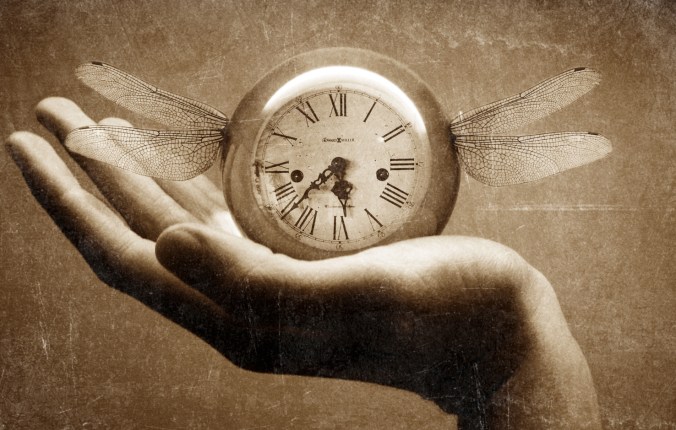
We All Have Twenty-Four Hour Days

habit0001

You can do anything,
but you can’t do everything.
David Allen

What has my attention at this moment? My thoughts are directed at words surfacing in my mind and typing them with a considerably lesser amount of awareness of music playing on Pandora. I’m vaguely aware of the surroundings of my home office, the art and posters on the wall and the noise of an occasional neighborhood car that drives by. That’s all my mind can take on at the moment.

People have a fixed amount that must be allocated according to need. To use a popular analogy, attention is like a bucket of water. People draw upon it as needed, but every dipper full and every teaspoon full leaves less for other purposes. Marc Green

Two interesting components have arisen with the increase of discretionary time I now have: 1) my perception of the world outside me has increased. I notice more, see things more deeply and generally feel good because of it. 2) With a richness of time, it is easy to let hours and days slip by with little to show for them. Some of that is good. Some of it is not so positive.

Zig Ziglar said, “Lack of direction, not lack of time, is the problem. We all have twenty-four hour days.” My conclusion is that expecting myself to settle into new routines within my first 60 days of semi-retirement was too much to ask. Already I feel better letting myself off the hook of that unrealistic expectation.

…the allocation of attention is largely automatic and occurs without awareness. As a result, it is not easily brought under conscious control. You may direct someone’s attention by saying “watch the step,” and temporarily cause a conscious allocation of attention to the step. However, there is a good chance that within a few minutes or even seconds, the memory trace will disappear and the next time the person will fail to notice the step. The same automatic factors that directed attention away from the step in the first instance have not changed. Marc Green

The paragraph from Marc Green helps me a good deal because it tells me that keeping a keen awareness of my desire to form new routines is a great start to having them. All I have to do is follow through on what I have concluded and stay aware with a sense of priority. Then new routines will simply fall into place. Whew. I am grateful to “get off my own case”.

I didn’t pay attention to time or distance,
instead focusing on how it felt just to be in motion,
knowing it wasn’t about the finish line
but how I got there that mattered.
Sarah Dessen
My Devil Called “Fear”

playing with fire imagesCADUG068EDIT

Unobtrusive music is usually playing when I write and a style of electronic music called ‘chill’ is my favorite to have in the background. Traveling in Europe I developed a taste for this ‘chillout’ music that is characterized by a mellow style and mid to very slow tempo. Today a song called “Hayling” by FC Kahuna (Jon and Dan Kahuna) caught my attention. The song contains only two lines of lyrics that are repeated several times:
Don’t think about all those things you fear
Just be glad to be here.
Those words got me thinking about my “Fear” and the battles I have fought with it (lots of successful ones I might add). Four thoughts that surfaced this morning were:

1) There has been nothing, and I repeat NOTHING, that has had a more negative impact on my life than FEAR. The underpinning of almost every one of my failures, mistakes or fiascos has been one of the family of fearful feelings: dread, worry, anxiety and shame. The realization alone that these are the greatest blocks to joy and happiness diminished their power over me.

Men go to far greater lengths to avoid what they fear than to obtain what they desire. Dan Brown

2) The essence of life boils down into two forces: Love and Fear. Those two emotions are like the ends of a see-saw. The quality of my life is determined by which end is currently tipped. Life is hell when “Fear” is the heaviest. Living is good when I can keep the see-saw balanced. “Joy” fills me when Love has the greater weight.

There are two basic motivating forces: fear and love. When we are afraid, we pull back from life. When we are in love, we open to all that life has to offer with passion, excitement, and acceptance.   John Lennon

3) Far too many of my fears, for FAR too long, were long based on what others thought of me. A “feeling of not being good enough” is fertile ground for fear to grow in and a sense of flaw and defect is water and fertilizer to enhance its growth and power.

The moment we begin to fear the opinions of others and hesitate to tell the truth that is in us… the divine floods of light and life no longer flow into our souls. Elizbeth Cady Stanton

4) My fears thrived in part because I long believed somehow, someway I could figure out ‘why’ things happen or are the way they are. The eventual realization that some things don’t make sense and never will was a giant step. It’s not the answering of ‘why’ that matters most. It’s in the search wisdom is found.

It’s the questions we can’t answer that teach us the most. They teach us how to think. If you give a man an answer, all he gains is a little fact. But give him a question and he’ll look for his own answers. Patrick Rothfuss

Bringing up the subject of “Fear” and writing about it is a bit like dancing with the Devil but hoping to not be burned. The good news for me is seeing/thinking/writing about “Fear” is now figuratively like blowing on coals that usually aren’t hot enough to burst back into flame.  I’m grateful for that. Fear is no longer the silent, hidden and disguised illness within it used to be. Exposure to the light of day makes my Devil called “Fear” smaller and the coals of fearfulness too cold to restart a fire.

I must not fear. Fear is the mind-killer.
Fear is the little-death that brings total obliteration.
I will face my fear.
I will permit it to pass over me and through me.
Frank Herbert

Promises, Promises

promises ave and realiry way

A promise kept is a healthy, living thing. A broken promise lives in the land of the dead.

Wikipedia explains a “promise” to be: commitment by someone to do or not do something. As a noun promise means a declaration assuring that one will or will not do something. As a verb it means to commit oneself by a promise to do or give.

Unfortunately I learned about promises as a child from parents and adults who made them easily and broke them with even less thought. The flimsy guarantees behind what the grownups pledged taught me it was ‘normal’ to make and break my word in romantic relationships.

Is this what sadness is all about? Is it what comes over us when beautiful memories shatter in hindsight because the remembered happiness fed not just on actual circumstances but on a promise that was not kept? Bernhard Schlink

After I point I can’t blame childhood caregivers at all. It’s my belief we can only hold our parents responsible into our 20’s at the latest for bad habits and behaviors they taught us by example. After that age being an ‘adult trainee’ should be over and the fiber of one’s character should become choice rather than conditioning. I was a slow learner.

Some of my usual behavior looks to be anything but admirable in hindsight. It took time, but the difference between habit and what is honorable slowly came into focus. My childhood conditioning fostered many of my typical practices that were in fact dysfunctional. Just because I do something with regularity does not make it good. A habit is just a habit.

As a fully grown man, cultivating healthy habits and behaviors was not an easy process. It was a bit like preparing overgrown land for growing crops. First what is already growing had to be cut back or removed. The rocks and roots had to be cleared from the soil before successful planting. Likewise, my first task was recognizing the unwanted and unhealthy tendencies that had grown with in me. Afterwards the clearing out of “rocks and roots” could begin. Only when those two steps were practiced could I successfully plant and nurture new ways of behaving.

Words can be twisted into any shape. Promises can be made to lull the heart and seduce the soul. In the final analysis, words mean nothing. They are labels we give things in an effort to wrap our puny little brains around their underlying natures, when ninety-nine percent of the time the totality of the reality is an entirely different beast. The wisest man is the silent one. Examine his actions. Judge him by them. Karen Marie Moning

On my left upper arm is a tribal tattoo that means “honor”. At the time it was created I did not yet fully deserve it. It was something for me to grow into. While imperfect, today I endeavor every day to deserve the symbol permanently etched on my arm. I’m grateful for each bump in the road that taught me, every peer in recovery who listened without judgment and to my Higher Power who has made possible that which I could not do alone.

I  know it is a bad thing to break a promise,
but I think now that it is a worse thing
to let a promise break you.
Jennifer Donnelly

Wasting Time Well

time-travel2-photo-courtesy-of-junussyndicate-on-deviantART

Time is an equal opportunity employer.
Each human being has exactly the same
number of hours and minutes every day.
Rich people can’t buy more hours.
Scientists can’t invent new minutes.
And you can’t save time
to spend it on another day.
Denis Waitley

Until recently losing track of time was mostly restricted to great moments of a vacation, being totally engrossed in a good conversation or activity, being stunned by beauty or becoming caught up in the rapture of love. In those instances my awareness of the day and/or hour was fleeting and lasted for no more than seconds and minutes.

The fact that I lose track of time more now in semi-retirement is a wonderful thing. What’s meaningful is the experience of being so absorbed and so immersed is no longer restricted to “doing”. With increasing regularity I find myself wasting time without much care about its passage. It feels like I have been freed from a prison where time was my jailer.

One of my newly founded beliefs of the last decade is modern wealth is more about time than money. It was not that long ago rushing from one endeavor to another, one meeting to the next one and seeing this person and then the next person occupied the majority of my awake time. For a long while being so involved in work gave me a sense of importance that today I don’t find significant.

Time goes faster the more hollow it is. Lives with no meaning go straight past you, like trains that don’t stop at your station. Carlos Ruiz Zafon

Today I am discovering time has only the amount of importance I place on it. My experience of being alive is better when I can stop having thoughts like “what should I be doing?”, “I should be working on ___” or “I’ve got to be productive”. Such things are all in my head and broken down to their essence are actually borderline crazy! My time is mine to spend any way I choose and if ‘wasting’ it feels best, then I will do just that.

I had the mistaken belief that value should be placed based on rarity. My finding concerning time is my value of it is now placed based on the quantity of it I have. It is my hope that I can become as proficient at wasting time well as I once was at being productively time conscious.

For the wealth of time life has brought me to, I am grateful. To realize wasting time well is a good thing brings a smile of happiness and peace.

Free time is the most expensive time you have,
because nobody pays for it but you.
But that also makes it the most valuable time you have,
as you alone stand to reap the profits from spending it wisely.
Jarod Kintz

Franklin’s 13 Virtues

aa_franklinb_printer_1_e

1726, at the age of 20, Benjamin Franklin created a system to develop his character. In his autobiography, Franklin listed his thirteen virtues as:

1. Temperance. Eat not to dullness; drink not to elevation.
2. Silence. Speak not but what may benefit others or yourself; avoid trifling conversation.
3. Order. Let all your things have their places; let each part of your business have its time.
4. Resolution. Resolve to perform what you ought; perform without fail what you resolve.
5. Frugality. Make no expense but to do good to others or yourself; i.e., waste nothing.
6. Industry. Lose no time; be always employed in something useful; cut off all unnecessary actions.
7. Sincerity. Use no hurtful deceit; think innocently and justly, and, if you speak, speak accordingly.
8. Justice. Wrong none by doing injuries, or omitting the benefits that are your duty.
9. Moderation. Avoid extremes; forbear resenting injuries so much as you think they deserve.
10. Cleanliness. Tolerate no uncleanliness in body, clothes, or habitation.
11. Tranquility. Be not disturbed at trifles, or at accidents common or unavoidable.
12. Chastity. Rarely use venery (sex) but for health or offspring, never to dullness, weakness, or the injury of your own or another’s peace or reputation.
13. Humility. Imitate Jesus and Socrates.

Seems a tall order to live up to this list every day, but then Franklin said he never did. Ben admitted that he was never able to live the virtues perfectly, but felt he had become a better and happier man for having made the attempt. It occurred to me if I pick one each day and focus on bringing more of it in my life I will benefit. I am grateful to you Mr. Franklin for the idea!

It’s about living in the moment
and appreciating the smallest things.
Surrounding yourself with the things that
inspire you and letting go of the obsessions
that want to take over your mind.
It is a daily struggle sometimes and
hard work but happiness begins
with your own attitude
and how you look at the world.
Gretchen Rubin

When You Look Back

C_-S_-Lewis-Desk-and-StudyThis morning browsing for a quotes something C.S. Lewis wrote came into my view: When I was ten, I read fairy tales in secret and would have been ashamed if I had been found doing so. Now that I am fifty, I read them openly. When I became a man I put away childish things, including the fear of childishness and the desire to be very grown up. Those words started me thinking how absurd a good bit of what society defines adulthood is.
Long ago I grew tired of being young although our society holds youth as it’s holy grail. The 20s and 30s were exhausting as I tried to fit in, succeed and act like I knew what I was doing when I really didn’t. Somewhere in it all, I started to become ‘me’. In some ways mature for my years and in others quite childish for my age. That was the start of becoming a man. Lesson: Don’t be in too big a rush to lose everything behind related to childhood. Innocence is often a clear scope for looking at things accurately.

To be concerned about being grown up, to admire the grown up because it is grown up, to blush at the suspicion of being childish; these things are the marks of childhood and adolescence. And in childhood and adolescence they are, in moderation, healthy symptoms. Young things ought to want to grow. But to carry on into middle life or even into early manhood this concern about being adult is a mark of really arrested development. C.S. Lewis

The changes from twenty-one to thirty years of age exceed all my combined changes of all other years. What level of maturity I did  attain came mostly from painful experience and no other place. Lesson: The only real ‘truth’ anyone can ever know for certain comes from their own experiences, especially the painful ones.

Pain insists upon being attended to. God whispers to us in our pleasures, speaks in our consciences, but shouts in our pains. It is his megaphone to rouse a deaf world. C.S. Lewis

Most of my life I have been afraid of love; fearful of being hurt. What life taught is love always bring suffering to balance its joy. Without that certainty, the love I have come to know would have far less meaning. Lesson: The greatest and deepest love will in time bring the greatest pain. To fear the latter is to deny one’s self the former.

To love at all is to be vulnerable. Love anything and your heart will be wrung and possibly broken. If you want to make sure of keeping it intact you must give it to no one, not even an animal. Wrap it carefully round with hobbies and little luxuries; avoid all entanglements. Lock it up safe in the casket or coffin of your selfishness. But in that casket, safe, dark, motionless, airless, it will change. It will not be broken; it will become unbreakable, impenetrable, irredeemable. To love is to be vulnerable. C.S. Lewis

My heart and mind are buzzing now with the lines of thinking C.S. Lewis put me on today. I was only ten years old when he passed away, but his legacy lives on for me as a favored writer, teacher and adviser. I owe a debt of gratitude to C.S. Lewis’ best friend, JRR Tolkien, for introducing me to Lewis in an article I read about the two men when I was at a young, impressionable age. Within the fantasies they spun I found wisdom I will always be grateful for.

Isn’t it funny how day by day nothing changes,
but when you look back, everything is different…
C.S. Lewis

The Ultimate Virtue

11b

Wanting to love someone is not the same as loving someone.
Knowledge of how to build something will not build anything.
Needing to get in better shape does not make me healthier.
Aspiring to make a difference does not make a difference.
Wishing to be kinder does not make me more kind.
Knowing what is right is not doing what is right.
Realizing what I should do is not the doing of it.
Craving a relationship does not put me in one.
Desiring to apologize is not an apology.
Yearning to finish a book is not writing.
Wanting to travel is not traveling.
Longing for love is not love.

Knowing is a small thing.
Using what I know is a big thing.

Almost two hundred years after he lived Johan Wolfgang von Goethe is remembered as many things: poet, playwright, dramatist, novelist, scientist. But it’s what the man left behind as a philosopher that has taken root within. Sometimes when I kind of lose my way, I frequently find something ‘good ole Wolfgang’ wrote will nudge me out of “thinking” and into “doing”. Here are four examples:

Doubt can only be removed by action.

As soon as you trust yourself, you will know how to live.

Knowing is not enough; we must apply. Willing is not enough; we must do.

Thinking is easy, acting is difficult, and to put one’s thoughts into action is the most difficult thing in the world.

With the gift of lots of time on my hands it’s not easy some days to direct myself toward something, even if my desired ‘something’ is screwing off. That too can be done well. Wasting time is not performed to its full potential if the voice inside is saying I should get busy being productive. Today I make the commitment to ‘screw off and waste time’ to my fullest potential. I smiled as I typed that because I am humbly grateful for a Tuesday that is mine, all mine.

Knowledge without application
is simply knowledge.
Applying the knowledge
to one’s life is wisdom,
and that is the ultimate virtue.
Kasi Kaye Ilopouloa

Worth the Risk

ship_storm SIZED

Once in a while a thought comes so strong it blocks out all other thinking temporarily. Even when I move on to other considerations and ideas, the over-riding concept blazes back into my mind frequently.

It was scary as hell when I was deliberating about walking away from my profession with no concrete thought of what was next. There was a dumpster of cranky inquiries as my ego fought the possibility.

What happens if your hopes don’t come true?
What if you run out of money?
What if you’re wrong?
What if others think you are crazy?
What if you want back in and no one wants you?
When are you going to start this new life?
When will you know if you’ve done the right thing or not?
Why do you think you’ll succeed at something new?
Why do you really want to do quit your career?

Five when’s and a pair of when’s and why’s are only the beginning of the consternation I want through. Ultimately there was no logic to walking away from a successful career of decades. Rather it was a feeling in my heart and gut that I just had to. I would suffocate emotionally if I kept on doing the same thing and denying myself a chance at other aspirations. Finally I just said “F’ it”. I know this is what I need to do, although I can’t explain it to anyone else.

Even if no one is watching you, lighting out for new, unmarked territories is terrifying. “We impute a lot of power to the unknown, because it was life-threatening for much of human history… Putting that fear in its proper perspective can help. You are probably not going to fall down a ravine or get eaten by a lion if you move to the opposite coast.”

… the human spirit wants to break out of habitual constraints. Studies confirm… We tend to regret the things we didn’t try more than those we did—even when we fail. http://www.psychologytoday.com/articles/200611/you-20

Don’t ask me to explain why I resigned years before my planned retirement. I can’t tell you why the desire to travel the world, weeks at a time, burns so hot in my soul. Where I got the idea I could be a writer I am clueless. There is no logic to walking away from a flourishing professional life when all I have are dreams.

And there was the answer. Screw logic and follow your heart! Stop paying so much attention to you mind.

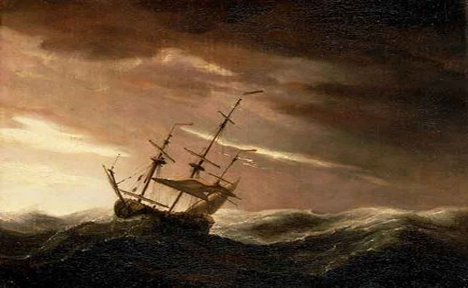
My conclusion became I will find a new path as long as I am speeding 100 miles down the old one. So here I am uncertain, but joyful; a bit perplexed but happy. I cast the lines off and am sailing into what I hope is a ‘new world’. I am grateful for the fortitude and belief in myself that made my new expedition possible. I am worth the risk!

I wondered about the explorers who’d sailed their ships
to the end of the world. How terrified they must have been
when they risked falling over the edge; how amazed
to discover, instead, places they had seen only in their dreams.
Jodi Picoult

Beyond Ideas of Wrong-Doing and Right-Doing

flock of migrating canada geese birds flying at sunset

Almost a year ago I saved a poem by American poet Mary Oliver titled “Wild Geese”. From the first reading the words touched me with their directness and clarity.

I felt certain the poem would be a good item to include in a future G.M.G. installment. Going back to it several times there was never a morning when it seemed to fit exactly into my thoughts. Today Mary Oliver’s poem surfaced again from my hard drive and I gave in to my desire to include it here. Instead of continuing to wait for it to fit into my writing, I have chosen to include it in place of my thoughts.

You do not have to be good.
You do not have to walk on your knees
for a hundred miles through the desert, repenting.
You only have to let the soft animal of your body
love what it loves.
Tell me about despair, yours, and I will tell you mine.
Meanwhile the world goes on.
Meanwhile the sun and the clear pebbles of the rain
are moving across the landscapes,
over the prairies and the deep trees,
the mountains and the rivers.
Meanwhile the wild geese, high in the clean blue air,
are heading home again.
Whoever you are, no matter how lonely,
the world offers itself to your imagination,
calls to you like the wild geese, harsh and exciting –
over and over announcing your place
in the family of things.

I long suffered with “trying to be perfect”. My future was held hostage by holding my past to my head and firing it into my brain over and over again. Mary Oliver’s poem tells me I don’t always have to be good, nor do I have to repeatedly repent until it hurts me. She goes on to assure me that it is okay to love who and what I love. Her words about a changing landscape are a reminder how quickly things change and how fast life passes by.

Then there are the Mary Oliver’s words that ring with the most comfort: “Whoever you are, not matter how lonely, the world offers itself to your imagination…announcing your place in the family of things”. With an emotional uprising in my chest each time I read those words, there is assurance I belong to this world and it to me. I am grateful for the peace that promise brings.

Out beyond ideas of wrong-doing
and right-doing there is a field.
I’ll meet you there.
When the soul lies down in that grass
the world is too full to talk about.”
Rumi

From Then Till Now

20130107__0308DSC_0308Imperial-Dunes-sandstorm

It’s not uncommon to have gone through something filled with difficulty and pain, only to end up grateful for what it taught. And so it has been with me the last half-dozen years or so. I went from who I was to who I have become. Like a walk through hell, I do not wish to ever have to again face the sort of things I went through. However, I am grateful to have survived and be so much better for the experience.

Sometimes fate is like a small sandstorm that keeps changing directions. You change direction but the sandstorm chases you. You turn again, but the storm adjusts. Over and over you play this out, like some ominous dance with death just before dawn. Why? Because this storm isn’t something that blew in from far away, something that has nothing to do with you. This storm is you. Something inside of you. So all you can do is give in to it, step right inside the storm, closing your eyes and plugging up your ears so the sand doesn’t get in, and walk through it, step by step. There’s no sun there, no moon, no direction, no sense of time. Just fine white sand swirling up into the sky like pulverized bones. That’s the kind of sandstorm you need to imagine.

And you really will have to make it through that violent, metaphysical, symbolic storm. No matter how metaphysical or symbolic it might be, make no mistake about it: it will cut through flesh like a thousand razor blades. People will bleed there, and you will bleed too. Hot, red blood. You’ll catch that blood in your hands, your own blood and the blood of others.

And once the storm is over you won’t remember how you made it through, how you managed to survive. You won’t even be sure, in fact, whether the storm is really over. But one thing is certain. When you come out of the storm you won’t be the same person who walked in. That’s what this storm’s all about. Haruki Murakami

I have learned it’s not unusual to go through something filled with difficulty and pain, only to end up grateful for what it taught. And so it has been for me the last half-dozen years or so. From then to now I went from who I was to who I have become. That journey was like a walk through a blinding sandstorm that bruised, blinded and left me completely lost at times. I am grateful to have somehow muddled through the shifting sands and be better for it. I am thriving!

There are two questions a man must ask himself:
The first is ‘Where am I going?’
and the second is ‘Who will go with me?’
If you ever get these questions
in the wrong order you are in trouble.
Sam Keen