 We are born helpless and completely dependent on others to stay alive. From a lack of love and nurturing many never overcome this need to be taken care of. Such people grow up with a fear of being alone that can be crippling.
For those of us with childhoods spent in dysfunction homes, by adulthood the belief was we had a decent handle on what we wanted and didn’t want; what we liked and don’t liked. But the unacknowledged under-pining was a feeling of incompleteness especially when we’re alone. Life can feel barely worth living by one’s self. We needed someone to “complete us”, if you will.
The problem is that we don’t talk about being alone. We avoid the conversation as if aloneness were vaguely shameful and – hopefully – a temporary state of affairs before we can be subsumed into relationships again. Rather than applaud other people for their ability to be alone, we feel sorry for them. We assure them that – sooner or later – relationships will come.
A baby with an attuned, attentive a parent gradually internalizes the presence of that parent, no longer needing him or her to be physically present for the baby to know that it’s not forgotten and, in that sense, not alone (Winnicott 1958). The theory goes that with enough of this early experience, a child is likely to grow up to be comfortable with his or her own company. Nick Luxmoore, http://www.psychologytoday.com/blog/young-people-close/201305/daring-be-alone
There lies the root of many of our adult problems with love and relationships. We don’t recognize the conditioning that began as a baby’s unfulfilled need to be loved, to be cared for, to be liked, to be admired and so on is the root of our incompleteness and inability to be alone. This merry-go-round is one of the reasons for so much wide-spread discontent in under loved children.
Success is only significant when compared to failure and without knowledge of both neither is particularly meaningful. If a person does not have the confidence of finding their way when lost, they will never truly know how to find their way. Each polar opposite experienced widens a person and makes him or her more able to handle both. If a person is unhappy alone, he or she will be just as discontented in the company of another.
Slowly learning to be by myself felt as if it was going to kill me at first. How well I remember my first “Thanksgiving for one” and the martyred feelings I had at the time. Now I am grateful to be able to look back and see I learned a lot from that experience and others like it that taught me to be content in my own company (at least most of the time!).
It’s on the edge of discomfort
where the magic happens.
panic turns to a pleasant,
high and you know you
can tackle the world.
Kirsten Stubbs
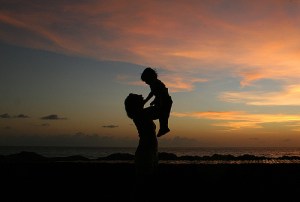 When the Good Lord was creating mothers, He was into his sixth day of “overtime” when an angel appeared and said, “You’re doing a lot of fiddling around on this one.”
 If a child lives with criticism, he learns to condemn . . .
 While the resolution of the image above is weak, the message it carries is strong. Many children not having enough to eat is a common reality. And it’s not only in some foreign country. Statistics say around 1 in 5 kids in the United States don’t get enough to eat each day. I hate to see adults suffer, but little children doing without food tears at all my emotions from sadness to anger. Have we accepted children going hungry as a fact of life? I can’t and I won’t!
 You can’t stop the future
 Getting to know myself more intimately and growing wiser with years has helped me see the greatest barrier to knowing “peace” has been ‘me’ all along. Being focused on everything and everyone external as the cause for a lack of tranquility hid the real culprit. But no longer. Awareness I am the key to my peacefulness has been mine for several years now. Yet the newness of this knowledge is still striking when I practice patience and understanding and don’t allow someone to disturb my inner harmony.
 No one is ever quite ready; everyone is always caught off guard. Parenthood chooses you. And you open your eyes, look at what you’ve got, say “Oh, my gosh,” and recognize that of all the balls there ever were, this is the one you should not drop. It’s not a question of choice. Marisa de los Santos
 Having grown up in 1960’s Alabama, it seemed everyday I witnessed the distance between people; the void between have’s and have not’s and between races. I was blessed to grow up poor in a family that believed all people should be treated with kindness and respect. Trials and difficulty is a great equalizer of people.
 A friend posted this photo on Facebook last night. I was mesmerized by it. My curiosity to know what the two little girls are looking at is akin to what they must have been feeling when the photograph was made. Apparently they are in a museum’s modern art gallery, but it’s not what’s hanging on the walls that is fascinating the young ones. It’s in solving the mystery of what’s behind the grate.
 In a backwards look it is relatively easy to see how my life moved from one point to another even thought back then forward momentum seemed to be straight into fog. Everything ahead was obscured and I gave little thought to what I was doing or how my actions were shaping my future life. In a way I was like the fish who did not know he lived in water, except my pond was a lake of dysfunctional behavior.
 Good Morning Gratitude