Keep Practicing the Art of Living

viktor-franklIn a little more than two weeks we arrive upon the 108th anniversary of birth for Austrian neurologist and psychiatrist, Dr. Viktor Emil Frankl, MD, PhD (March 26, 1905 – September 2, 1997). I did not read his renowned work “Man’s Search for Meaning” until about ten years and remember vividly how that little book stunned me with its simplicity and wisdom. In honor of the man and the teachings he left behind, what is just below is taken from an article published in the New York Times on the day Dr. Frankl died sixteen years ago.

Viktor Frankl’s mother, father, brother and pregnant wife were all killed in the camps. He lost everything, he said, that could be taken from a prisoner, except one thing: ”the last of the human freedoms, to choose one’s attitude in any given set of circumstances, to choose one’s own way.”

Every day in the camps, he said, prisoners had moral choices to make about whether to submit internally to those in power who threatened to rob them of their inner self and their freedom. It was the way a prisoner resolved those choices, he said, that made the difference.

In ”Man’s Search for Meaning,” Dr. Frankl related that even at Auschwitz some prisoners were able to discover meaning in their lives — if only in helping one another through the day — and that those discoveries were what gave them the will and strength to endure.

After their arrival at Auschwitz, they and 1,500 others were put into a shed built for 200 and made to squat on bare ground, each given one four-ounce piece of bread to last them four days. On his first day, Dr. Frankl was separated from his family; later he and a friend marched in line, and he was directed to the right and his friend was directed to he left — to a crematory.

As their illusions dropped away and their hopes were crushed, they would watch others die without experiencing any emotion. At first the lack of feeling served as a protective shield. But then, he said, many prisoners plunged with surprising suddenness into depressions so deep that the sufferers could not move, or wash, or leave the barracks to join a forced march; no entreaties, no blows, no threats would have any effect. There was a link, he found, between their loss of faith in the future and this dangerous giving up.

”We had to learn ourselves, and furthermore we had to teach the despairing men, that it did not matter what we expected from life, but rather what life expected from us,” he wrote. ”We needed to stop asking about the meaning of life but instead to think of ourselves as those who were being questioned by life, daily and hourly.

”Our answer must consist not in talk and medication, but in right action and in right conduct. Life ultimately means taking the responsibility to find the right answer to its problems and to fulfill the tasks which it constantly sets for each individual.”

Prisoners taught one another not to talk about food where starvation was a daily threat, to hide a crust of bread in a pocket to stretch out the nourishment. They were urged to joke, sing, take mental photographs of sunsets and, most important, to replay valued thoughts and memories. Dr. Frankl said it was ”essential to keep practicing the art of living, even in a concentration camp.” By Holcomb B. Noble http://www.nytimes.com/1997/09/04/world/dr-viktor-e-frankl-of-vienna-psychiatrist-of-the-search-for-meaning-dies-at-92.html?pagewanted=all&src=pm

When difficulty comes, I try to remember the insights Dr. Frankl left for us distilled in his quote, “Those who have a ‘why’ to live, can bear with almost any ‘how’. Dr. Frankl’s book, has been deeply meaningful to me and millions of others. I am grateful he left the world a better place than he found it.

Being tolerant does not mean
that I share another ones belief.
But it does mean I acknowledge
another ones right to believe,
and obey, his own conscience.
Victor E. Frankl

Words Of Wisdom Borrowed

160159330469133768_a8z26rl3_c

This world is your best teacher.
There is a lesson in everything.
There is a lesson in each experience.
Learn it and become wise.
Every failure is a stepping stone to success.
Every difficulty or disappointment is a trial of your faith.
Every unpleasant incident or temptation is a test of your inner strength.
Therefore nil desperandum (never despair).
March forward hero!
Sivananda Saraswati

“Everybody wants to be on the mountaintop, but if you’ll remember, mountaintops are rocky and cold. There is no growth on the top of a mountain. Sure, the view is great, but what’s a view for? A view just gives us a glimpse of our next destination-our next target. But to hit that target, we must come off the mountain, go through the valley, and begin to climb the next slope. It is in the valley that we slog through the lush grass and rich soil, learning and becoming what enables us to summit life’s next peak.” Andy Andrews

I make no profession of being wise; only that I am wiser than before. There has been no gain of wisdom from my casual observations of life. It came only from walking into the fire, letting it burn and scar me then walking out of it with intention, a changed man. Being mostly content with who I have become, it is impossible to damn the blazes of pain and heartache that shaped me. I am grateful for the those flames, especially those that scorched me when I resisted most.

By three methods we may learn wisdom:
First, by reflection, which is noblest;
Second, by imitation, which is easiest;
and third by experience, which is the bitterest.
Confucius

“Now” Is ALL There Is

string_vibrations2A man is as great as the dreams he dreams,
As great as the love he bears;
As great as the values he redeems,
And the happiness he shares.
A man is as great as the thoughts he thinks,
As the worth he has attained;
As the fountains at which his spirit drinks
And the insight he has gained.
A man is as great as the truth he speaks,
As great as the help he gives,
As great as the destiny he seeks,
As great as the life he lives.
C.E. Flynn

The way is forward. There is nothing to be found behind but cinders of days burned already. There is only the fire of today to forge living from. I’m thankful for the certainty of those words. “Now” is ALL there is.

You can’t go back to how things were.
How you thought they were.
All you really have… is now.
Elizabeth Scott

Before the Throne of Beauty

mother-natureOne heavy day I ran away from the grim face of society and the dizzying clamor of the city and directed my weary step to the spacious alley. I pursued the beckoning course of the rivulet and the musical sounds of the birds until I reached a lonely spot where the flowing branches of the trees prevented the sun from the touching the earth.
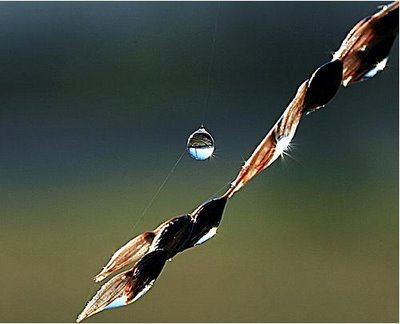
I stood there, and it was entertaining to my soul – my thirsty soul who had seen naught but the mirage of life instead of its sweetness.

I was engrossed deeply in thought and my spirits were sailing the firmament when an hour, wearing a sprig of grapevine that covered part of her naked body, and a wreath of poppies about her golden hair, suddenly appeared to me. As she realized my astonishment, she greeted me saying, “Fear me not; I am the Nymph of the Jungle.”

“How can beauty like yours be committed to live in this place? Please tell me who you are, and whence you come?” I asked. She sat gracefully on the green grass and responded, “I am the symbol of nature! I am the ever virgin your forefathers worshipped, and to my honor they erected shrines and temples…” And I dared say, “But those temples and shrines were laid waste and the bones of my adoring ancestors became a part of the earth; nothing was left to commemorate their goddess save a pitiful few and the forgotten pages in the book of history.”

She replied, “Some goddesses live in the lives of their worshippers and die in their deaths, while some live an eternal and infinite life. My life is sustained by the world of beauty which you will see where ever you rest your eyes, and this beauty is nature itself; it is the beginning of the shepherds joy among the hills, and a villagers happiness in the fields, and the pleasure of the awe filled tribes between the mountains and the plains. This Beauty promotes the wise into the throne the truth.”

Then I said, “Beauty is a terrible power!” And she retorted, “Human beings fear all things, even yourselves. You fear heaven, the source of spiritual peace; you fear nature, the haven of rest and tranquility; you fear the God of goodness and accuse him of anger, while he is full of love and mercy.”

After a deep silence, mingled with sweet dreams, I asked, “Speak to me of that beauty which the people interpret and define, each one according to his own conception; I have seen her honored and worshipped in different ways and manners.”

She answered, “Beauty is that which attracts your soul, and that which loves to give and not to receive. When you meet Beauty, you feel that the hands deep within your inner self are stretched forth to bring her into the domain of your heart. It is the magnificence combined of sorrow and joy; it is the Unseen which you see, and the Vague which you understand, and the Mute which you hear – it is the Holy of Holies that begins in yourself and ends vastly beyond your earthly imagination.”

Then the Nymph of the Jungle approached me and laid her scented hands upon my eyes. And as she withdrew, I found me alone in the valley. When I returned to the city, whose turbulence no longer vexed me, I repeated her words: “Beauty is that which attracts your soul, and that which loves to give and not to receive.” “Before the Throne of Beauty XXVI” by Kahlil Gibran

Kahlil Gibran’s work has been deeply meaningful to me since my introduction to it back in my “hippie days” in the 70’s. More than most things, his words have stayed with me, inspired me, taught me and helped me through my most difficult times. I am grateful to Gibran for his writing that has brought me a better understanding of my sorrows and joys, has made the unseen seeable, has allowed the vague to be more understandable and allowed what is silent to be known.

Beauty is eternity
gazing at itself in a mirror.
But you are eternity
and you are the mirror.
Kahlil Gibran

Image by Tusi Roy

Ready To Be Changed

natureThe paradox of our time in history is that we have taller buildings, but shorter tempers; wider freeways, but narrower viewpoints; we spend more, but have less; we buy more, but enjoy it less.
We have bigger houses and smaller families; more conveniences, but less time; we have more degrees, but less sense; more knowledge, but less judgment; more experts, but more problems; more medicine, but less wellness.

We drink too much, smoke too much, spend too recklessly, laugh too little, drive too fast, get angry too quickly, stay up too late, get up too tired, read too seldom, watch TV too much, and pray too seldom.

We have multiplied our possessions, but reduced our values. We talk too much, love too seldom, and hate too often. We’ve learned how to make a living, but not a life; we’ve added years to life, not life to years.

We’ve been all the way to the moon and back, but have trouble crossing the street to meet the new neighbor. We’ve conquered outer space, but not inner space; we’ve done larger things, but not better things. We’ve cleaned up the air, but polluted the soul; we’ve split the atom, but not our prejudice.

We write more, but learn less; we plan more, but accomplish less. We’ve learned to rush, but not to wait; we have higher incomes, but lower morals; we have more food, but less appeasement; we build more computers to hold more information to produce more copies than ever, but have less communication; we’ve become long on quantity, but short on quality.

These are the times of fast foods and slow digestion; tall men, and short character; steep profits, and shallow relationships. These are the times of world peace, but domestic warfare; more leisure, but less fun; more kinds of food, but less nutrition.

These are days of two incomes, but more divorce; of fancier houses, but broken homes. These are days of quick trips, disposable diapers, throw away morality, one-night stands, overweight bodies, and pills that do everything from cheer to quiet to kill.

It is a time when there is much in the show window and nothing in the stockroom; a time when technology has brought this letter to you, and a time when you can choose either to make a difference, or to just hit delete… By Dr. Bob Moorehead

Within the hurricane of modern life my experience has included thinking lots of money fixed everything, only to find it fixed nothing and after a point only created a lack of appreciation. I have been loved deeply but walked past it thinking something somewhere else would be better, but nothing was. I chased success, achieved it and discovered it contains its own unique way of ‘undoing’ a person. There have been years when I knew more people and had far fewer friends than now.

Each and every broken stepping stone has moved me ever onward, often staggering and involuntarily falling forward. But keep moving I did and now on the far side of the mountain, life is very good. Imperfect certainly, just as I am. The landscape changed very little. Instead I did.  Lessons that arrived didn’t teach simply because they came into my life. Nothing was learned until I opened myself and was ready to be changed and became grateful for each difficulty that was my teacher.

We were all born equal,
but where we are in life now
is of our own making
Stephen Richards

But Are We Grateful?

Green-Forest-Wallpaper-green-20036570-1280-1024What an irony it is that these living beings

whose shade we sit in,
whose fruit we eat,
whose limbs we climb,
whose roots we water,
to whom most of us rarely give a second thought,
are so poorly understood.
We need to come,
as soon as possible, to a profound
understanding and appreciation
for trees and forests
and the vital role they play,
for they are among our best allies
in the uncertain future that is unfolding.
From ” The Man Who Planted Trees: Lost Groves, Champion Trees,
and an Urgent Plan to Save the Planet” by Jim Robbins

water%20sunset%20sunHere in plain sight I make a public commitment to pay more attention to the abundantly present, but mostly overlooked, building blocks of  life such as trees, water and the sun. All deserve my earnest gratitude and will receive more of it. I will look up and take notice realizing that the greatest bounty of life lies outside of me and not within my usual thoughts.

The things that most deserve our gratitude we just take for granted.
Without air we cannot live for more than a minute or two. Everyday
we are breathing in and breathing out, but do we ever feel grateful
to the air? If we do not drink water, we cannot survive. Even our
body is composed to a large extent of water. But do we give any
value to water? Every morning when we open our eyes, we see
the sun… offering us light and life-energy, which we badly need.
But are we grateful to the sun?
From “The Jewels of Happiness: Inspiration and Wisdom
to Guide Your Life-Journey” by Sri Chinmoy

Who Am I?

welcome_to_the_good_life_by_CYWORLDThe following taken from words spoken almost a hundred years ago by twentieth-century Indian Guru Sri Ramana Maharshi is heady stuff and took me a few reads to let it soak it.

Every living being longs to be perpetually happy, without any misery. Since in everyone the highest love is alone felt for oneself, and since happiness alone is the cause of love, in order to attain that happiness, which is one’s real nature and which is experienced daily in the mindless state of deep sleep, it is necessary to know oneself. To achieve that, enquiry in the form ‘Who am I?’ is the foremost means. ‘Who am I?’ The physical body… is not ‘I’. The five sense organs… and the five types of perception known through the senses… are not ‘I’. The five… vital functions such as respiration, are not ‘I’. Even the mind that thinks is not ‘I’. Devoid of sensory knowledge and activity, even this [state] is not ‘I’. After negating all of the above as ‘not I, not I’, the knowledge that alone remains is itself ‘I’. The Self, one’s real nature, alone exists and is real.

What I end up with in boiling down the Guru’s line of thinking is: when everything I think, feel or can do is stripped away, it is there “I” am to be found. It is only then when I am in touch with the essence of myself can I be truly happy. I get it and am grateful for light into my understanding. It is in the letting go; letting go of everything, where “I” am to be discovered.

We carry within us
the wonders we seek
without us.
Eric Butterworth

To Learn and Grow

Beautiful-Nature-beautiful-nature-1600x900Another new day has arrived I am blessed to get to live. Some things I do will be well done. Others mediocre at best. Through it all I will try to live the hours better than yesterday. I will do my best and be content with it, yet knowing life will continue to improve me day by day if I live with intention.
 “The true measure of greatness is our capacity to navigate between our opposites with agility and grace — to accept ourselves exactly as we are, but never to stop trying to get better.”

Constantly seek to learn and grow, but accept yourself exactly as you are.

Learning and growing require a willingness to look honestly and unsparingly at our shortcomings. Start with your own greatest strength. When you overuse it, it’s almost surely a window into your own greatest weakness.
In my case, the strength is drive and passion. Overused, it turns into aggressiveness. By being aware of my inclination to overuse a strength — by recognizing my own vulnerability — I was able to make a different choice.

Add Value to Others and Take Care of Yourself

Gratifying our most immediate needs and desires provides bursts of pleasure, but they’re usually short-lived. We derive the most enduring sense of meaning and satisfaction in our lives when we serve something larger than ourselves. Giving to others generates an extraordinary source of energy.

Selfishness is about making your own gratification paramount. Self-care is about making sure you’re addressing your own most basic needs, so you’re freed and fueled to also add value to others.

Focus Intensely and Renew Regularly

Unlike machines, however, human beings aren’t meant to operate at the highest intensity for very long. Instead, we’re designed to pulse between spending and renewing energy approximately every 90 minutes.

The world’s best performers — musicians, chess players, athletes — typically practice the same way: for no longer than 4 ½ hours a day. They also sleep more than the rest of us, and take more naps.

These great performers figured out that when they push for too long, their attention wanders, their energy flags, and their work suffers. But because they’re so focused when they are working, they get more done, in less time. Taken from “Six Ingredients of a Good Life” By Tony Schwartz http://blogs.hbr.org/schwartz/2010/12/six-ingredients-of-a-good-life.html

To find balance between who I am and who I wish to be is my intention this day. To wish for no more than I am, but know it is made possible by living each day well. For the every breath I take today, I am grateful!

2 things:
If it makes you happy, do it.
If it doesn’t, then don’t.
Unknown

If You Don’t Love What You Do…

berlin1

I had been busy deafening my parents for years by creating high-pitched squawking melodies on my “recorder”, the closest thing we had to a wood instrument at home. On band day I was so excited to finally get to see and hold a genuine, shiny flute in my 10-year-old hands.

I picked it up, my eyes gleaming, and held it to my lips. “Pfffffffffffffffffffft.” Nothing. I tried again, blowing into it like the 12-year-old owner of the flute had showed me. Again, nothing but a music-less “Pfffffffft.” I couldn’t believe it. My heart-felt heavy in my chest, and tears pricked at my eyes. I gave up, and handed her back her flute. Next, I decided to try the clarinet. It wasn’t the flute, and I wasn’t a huge fan, but at least it was still in the part of the orchestra that got the pretty melodies. “Honk-screech!”

Feeling even worse, I made my way to the back of the room where the brass instruments were. Someone handed me a French Horn. I held it to my lips, and out came a full, rich sound totally recognizable as belonging to a musical instrument. I shrugged, and wrote down “French Horn” next to my name, as by default this was obviously my instrument.

I played the French Horn for five years, including the first couple of years of junior high school. I hated the thing. I never got the good parts of any musical piece. In my second year of junior high school, my apparent “rare talent” for this instrument got the attention of a professional French Horn player in the city. He even offered me free private lessons after school. (It really was so kind of him to do that, I hope he never reads this). The plan was that I’d play in a major youth orchestra, and eventually play professionally.

I don’t remember how, but somehow I managed to quit the darn thing, despite everyone’s excitement about my supposed talent. I didn’t get much respite though, as fairly soon after I got sucked into the vortex of being a “gifted student in the Sciences”. I was finally spit out by the system at the age of 28. By then, I was not surprisingly a suicidally depressed Emergency Medicine resident. Same phenomenon, different vocation.

People don’t mean any harm by identifying talent in kids and giving them opportunities to develop that talent. If the child actually enjoys the activity, this is a fantastic thing. A friend of mine in junior high was discovered by a professional ballet company, and within weeks accepted an offer of a full scholarship at the best ballet school in the country. She dances professionally today at a well-respected company. But she loves ballet – this is the difference.

I so wish that some grown-up had encouraged me to choose the musical instrument that I loved passionately, along with the reassurance that I could learn how to play it. I wish that someone had seen past my “gift for science” and paid equal attention to how much I loved my creative writing classes.

You can only go so far on talent alone. If you’re good at something, it gets noticed and valued by others, and it certainly opens doors. It can generate much-needed income, which can be important. Yet when it comes to truly fulfilling your potential and knowing the joy of doing what you were made to do, the only thing that will give you that experience is what you love.

I fully appreciate that you can’t always do what you want. Economic realities are what they are, and it would be foolish for many people to abandon the job that pays the bills in order to pursue their passion. Then again, there are plenty of people who have done just that, and have done very well.

Regardless, if you’re honest with yourself about what your true passion is, you owe it to yourself to pursue it in some form, even if you never quit your day job and you never earn a penny doing what you love. The key is to do what you love, somehow. From “Being Good at Something Doesn’t Mean You Should Be Doing It” by Dr. Susan Biali, M.D. http://www.psychologytoday.com/blog/prescriptions-life/201203/being-good-something-doesn-t-mean-you-should-be-doing-it

And so it is with great gratitude within the last year I discovered what I have long done as a profession was never what I truly loved, but instead what I chose to make money doing. The avocation has treated me well, but is far from the work I want this life to leave behind. This is the year I change direction and follow my dreams. For the inspiration and new courage to try something new, I am thankful.

Until a person can say deeply and honestly,
“I am what I am today because of the choices
I made yesterday,” that person cannot say,
“I choose otherwise.”
Stephen R. Covey

With Our Thoughts

19All that we are is the result of what we have thought.
If a man speaks or acts with an evil thought, pain follows him;
if a man speaks or acts with a pure thought, happiness follows him;
like a shadow that never leaves him.
Buddha

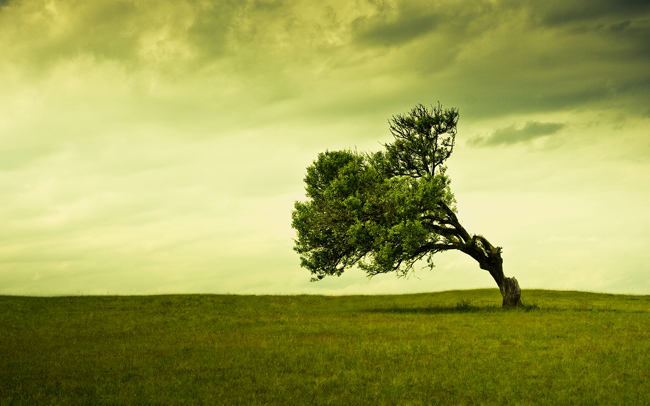
In my mind there is always a wind of thought blowing. It’s precise force and direction is ever-varying, but the breeze is constant. If I focus on one way of thinking enough I become bent into that direction like a tree blown by a constant wind.

If I spend time thinking of my want and desire of something, I get no closer to satisfying the longing and instead cause unsated yearning to grow.

If frequently go to thoughts of how much someone hurt me in the past, I bring the pain to the present to breathe new life into it.

If I am able to bring a joyful memory to mind during a difficult time, my trouble is tempered and made less heavy.

The more I am grateful of love I am given, the more love I received.

The more I am grateful for happy moments when they arrive, the more come to me.

The greater my gratitude for life, more arrives to be grateful for.

It is not within my control to master all my thoughts, but at any given moment I am capable of moderating them. It is the direction of the winds in my mind that shape my life. Realizing quality of life is more about my thinking that any other factor has been a great insight. I am grateful that with awareness I can paint whatever comes at me with new color of my choosing.

With our thoughts,
we make the world.
Buddha