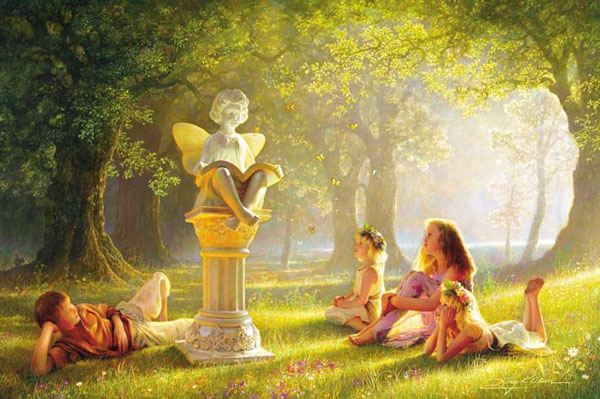
A Small Miracle

A few weeks ago I found out mid one afternoon that a local major cinema complex was showing a restored version of “Casablanca” once at 7pm that evening. Having never seen it on the big screen, I was excited. A half hour before the showing was to begin I walked up to the ticket window and said “one for Casablanca please” to which the teenage girl behind the glass offered a comforting smile and said “I’m sorry sir. It’s sold out”. I am certain she saw the disappointment on my face akin to that of a let down 10-year-old boy.

I did my best to take it in stride and shake off the “downer”.  My self-administered solace? Go home, make popcorn and watch my DVD copy of “Casablanca”. I was proud I didn’t let disappointment linger and turn into a “why me” sort of questioning thrown at the universe. Ten years ago I might have. Today I am wiser.  An improved ability for accepting what “is” has brought refreshing change.

Three days ago I was surprised to see mentioned in the electronic version of the local daily paper that “Casablanca” was being shown again at the same theatre. Like the first time it was pure chance I stumbled across it.  I immediately bought tickets on-line and was at the theatre an hour and a half early last evening. A dear friend met me, we bought popcorn and found good seats before the theatre started to fill up (which it did). We munched and caught up on each other’s ‘news’ while we waited till show time.

Certainly “Casablanca” was not shown again to please me. However, I do like to think of getting to see the movie as a reward for not being bothered too much when I missed out before. Call it serendipitous, coincidence, luck, a twist of fate or what ever you choose.  I am thankful for a second chance to get to see this wonderful old black and white film about love, sacrifice and intrigue. Bogart and Berman “on the big screen” … what a delightful treat!

A coincidence is a small miracle
in which God chooses to remain anonymous.
Unknown

…And So Much More

An hour ago I stopped at Baskin and Robbin’s for an ice cream cone on my way home. Today is utterly spectacular without a single cloud in the sky and a comfortable temperature around 70 degrees. It was an easy choice to enjoy my treat on a bench out front of the store.

The ice cream shop is in a strip center near one the busiest shopping zones in town that includes a big mall across the street. As I sat back enjoying one dip each of strawberry and butter pecan, a consistent, but gentle breeze brushed across my arms and face. A nearby restaurant was having a “biker day” where weekend riders could co-mingle, enjoy a live band and purchase lots of ‘beer and wings’. When I first sat down it was “Come Together” from the Beatles “Abbey Road” album the band at the event was knocking out (and doing a fine job of it too!). Looking up at the pristinely blue and cloudness sky I was stuck by a strong sense of gratitude.  It was a delicious epiphany about the richness of my life.  There is so much…

I am healthy and able to be outside under my own power.
I have a car to drive and can provide gas to power it.
I have the financial resources to have most anything, within reason, that I desire.
I have close friends like the one I spent a few hours with today looking at old records.
I love ice cream, especially strawberry, butter pecan, vanilla and black walnut.
…and so much more.

Such moments present true clarity about life. Through keeping my epiphany front of my mind and putting a post it note on my fridge and bathroom mirror, I want to remind myself of today’s inspiration moment.

LOOK AT YOUR HAND. Take a closer look. The skin, the nails, the fine hairs, the breathing pores, the fine bones beneath the surface. No hand like this ever existed since creation began. Your own hand – UNIQUE. Let the hand stand for you: your existence, inimitable, unprecedented. The mystery of you being here. You, who have a particular history, a biography, as well as a biology. You have countless stories, memories, intuitions and desires within you. You are the AUTOBIOGRAPHY OF A MIRACLE !!” (Howard Cooper from The Alphabet of Paradise)

Both abundance and lack exist simultaneously in our lives, as parallel realities. It is always our conscious choice which secret garden we will tend…when we choose not to focus on what is missing from our lives but are grateful for the abundance that’s present–love, health, family, friends, work, the joys of nature and personal pursuits that bring us pleasure–the wasteland of illusion falls away and we experience Heaven on earth. (Sarah Ban Breathnach)

Gratitude, like faith, is a muscle. The more you use it, the stronger it grows, and the more power you have to use it on your behalf. If you do not practice gratefulness, its benefaction will go unnoticed, and your capacity to draw on its gifts will be diminished. To be grateful is to find blessings in everything, This is the most powerful attitude to adopt, for there are blessings in everything. (Alan Cohen)

When I allow myself to “just be” life brings me to the best moments. I only have to stop (the most difficult), look (and really see) and listen (pay close attention to what I am hearing) to find a momentary peace that always takes me to gratefulness.

Be thankful for what you have; you’ll end up having more.
If you concentrate on what you don’t have, you will never, ever have enough.
Oprah Winfrey

One of the Few Havens

A good friend who knows books are prized possessions asked, “if you could only keep a few in your collection what would you pick?” This morning I spent about fifteen minutes looking from shelf to shelf in my library contemplating which of these “friends” I most prize. Here’s what’s in the stack on my desk I selected:

1 – “The Family Mark Twain”. Most all of Twain’s work in one volume. Sam Clemens had a style that speaks to me in a way no on else does. His sense of humor, adventure and speaking of the truth even when it was not popular moves my soul.

2 – “The Treasured Writings of Kahlil Gibran”. Again I am cheating just a little for a number of Gibran’s books are contained in this one big volume. He had a special way of writing that touches the fiber of my being with their emotional truth. It moves my heart.

3 – “Why Your Life Sucks..” by Alan H. Cohen. There is no modern-living handbook that lays out how to achieve some measure of contentment and happiness so practically. His advice can be life changing. It was for me! I re-read this book around every two years.

4 – “Learned Optimism” by Martin Seligman PhD. Through the knowledge in this book I came to know that Optimism or Pessimism is a learned/chosen way of being ingrained by behavior and manner of thinking. One can change/grow, it just takes time.

5 – “Man’s Search For Meaning” Viktor Frankl. From a man who survived the Nazi death camps with his sanity I learned first hand that the quality of one’s life is not so much about what happens, but how we each allow what happens to effect us.

6 – “Walden” by Henry David Thoreau. If I could keep two or three books this one would be among them. Thoreau wrote in a way that speaks authoritatively from first hand knowledge how his by-the-lake experiment showed how little a man actually needs.

7 – “The Power of Now” by Eckhart Tolle. What I needed showed up at the exact right moment. When I was truly ready to begin to learn a path to a better life, this book came to me through a friend. The past is a delusion; the future a delusion. There is only ‘now’.

8 – “Awakening the Buddha Within” by Lama Surya Das. This book and Tolle’s “Now” came into my life at almost the same time. Each compliments the other. It was here I discovered the enlightening ‘Eightfold Noble Path” I imperfectly do my best to live by.

9 – “Conversations with God” by Neale Donald Walsch. Traditional Christianity calls this book heresy, but I find it to contain a great deal practical advice about views of life and God. Fact or fiction, the contents set my mind at ease more so than ever before.

10.- “Additional Poems to the Golden Treasury”. Published in 1931, a copy of this little red book came to me over 30 years ago. More than any other factor it strengthened a still continuing love of poetry. My thanks to a one-time mother-in-law for giving it to me.

11 – “Letters of Robert Browning and Elizabeth Barrett 1845-1846”. No greater love story has ever been. My first-edition copy of this two-volume set only came into my life about six years ago. Through reading them the hapless romantic was kept alive within.

12 – “Leaving Microsoft to Change the World” by John Wood. All I have to do is look at this book to be reminded one person can make a huge difference if prepared to do what is necessary to accomplish a meaningful goal. It removes doubt about the power of one.

13 – “Growing Yourself Back Up” by John Lee. Another of the books I re-read every year or two. Small, simple and easy to read it’s been a big help in reconnecting me with my inner child. Finding out about another’s path to healing helped to heal me.

There are more and as I wrote down this list here I thought of at least a half-dozen other book with deep personal meaning. However, I have resisted the urge to lengthen the list past my initial selections. All total I paid no more than a few hundred dollars for the entire stack of thirteen, but their continuing value to me is near priceless.

To the writers I am thankful for the help each gave to me. To an even greater degree I am grateful to whatever divine force that brought book and author into my life at a time I could appreciate and learn from each one.

A book is the only place in which you can examine a fragile thought without breaking it, or explore an explosive idea without fear it will go off in your face. It is one of the few havens remaining where a man’s mind can get both provocation and privacy.
Edward P. Morgan

At What Age Are We the Happiest?

By pure synchronicity I came in contact with two articles about levels of happiness this weekend. The first was a 2006 Harvard paper that took a look at how happy people in the USA were. Since 1972 several thousand people were asked each year “Taken all together, how would you say things are these days – would you say that you are very happy, pretty happy, or not too happy”. People were of all ages were combined and differences analyzed by comparing income levels, education, ethnicity, gender, etc.

A sobering overall conclusion was that since the 1970’s the general level of happiness has failed to grow in this country. At the same time income levels grew, discrimination by race and gender diminished markedly and the average level of education increased substantially. At first thought one would think that happiness surely would have charted better each year on those factors alone. But for the population at large, that is not what the facts say.

The second article was published a little over a year ago in the “Economist” and called “The U-Bend of Life”. Unlike the Harvard paper, global levels of happiness and well-being were looked at taking into account four main factors: gender, personality, external circumstances and age.

Generally women are slightly happier overall than men but are more susceptible to depression with about 20% of women saying they experience depression at some point in their lives compared to about 10% of men. Some suggest the percentages are probably about the same, but appear different due to men having more of a problem admitting depression and seeking help.

When personal traits were looked at, two showed themselves to be factors effecting happiness and well-being: neuroticism and extroversion. It comes as no surprise those prone to guilt, anger and anxiety tend to be unhappy. Studies over time have repeatedly shown being neurotic caused people to have negative feelings and low emotional intelligence which makes them bad at forming and managing relationships and that in turn makes them unhappy.

Being an extrovert does the opposite as being neurotic. Those who enjoy being around people, working with others and who relish social interaction tend to be happier than those who shut their office doors in the daytime or hole up at home in the evenings.

Then came the factor of age and the somewhat surprising statistic that in the great majority of countries people are at their unhappiest in their 40s and early 50s with a global average of 46. There were extremes when separated by individual country such as Ukrainians are at their most miserable at 62 and the Swiss at 35.

In 2006 in a Stanford study a group of 30 years olds and a group of 70 year olds were asked to rate their level of well-being and the 70 year olds were a lot happier. This difference is referred to as the “U-Bend” of aging where well-being consistently decreases until about fifty and then reverses to grow positively into old age. It was suggested that one explanation for this difference is that unhappy people die early. It is difficult to know for certain how much this factor needs to be taken into account. However, given that death in middle age is relatively rare it is likely to explain only a portion of the trend.

Another suggestion is differences could be an expression of external circumstances, Certain common factors affect people at particular stages of life. For example, people in their 40s, often have teenage children. Could the difficulty of the middle-aged have anything to do with sharing space with rebellious adolescents? Then older people tend to be more financially well off. Could their relative contentment be the result of their money?

The conclusion overall is people behave differently at different ages. Older people have fewer disagreements with others. They also come up with better solutions to conflict. They are better at controlling their emotions, better at accepting misfortune and less prone to anger. Maybe the experience for older people of contemporaries dying fairly frequently gives survivors determination to make the most of their remaining years.

Whatever the reason I am glad to have confirmed my growing feeling of well-being as I age is not an illusion. Further, I am grateful to know if I am blessed to live into old age, the odds are with me that my sense of well-being is likely to continue to grow!

The complete life, the perfect pattern, includes old age as well as youth and maturity. The beauty of the morning and the radiance of noon are good, but it would be a very silly person who drew the curtains and turned on the light in order to shut out the tranquility of the evening. Old age has its pleasures, which, though different, are not less than the pleasures of youth.
W. Somerset Maugham

Most of Them Never Happened

There is a guy in this 30’s I work with who is quite a cynic but calls himself a “realist”.  A few days ago in conversation I said to him “realist is just another name for a pessimist”.  He is the sort that often finds things to be down about or else he anticipates something of the sort will come his way.  Reflecting later on what I had said, the feeling was a bit of research is in order.  I began by looking through definitions for pessimist, realist and optimist.

Pessimist:  tendency to stress the negative or unfavorable or to take the gloomiest possible view.  The doctrine or belief that this is the worst of all possible worlds and that all things ultimately tend toward evil.  A pessimist is someone who is rarely disappointed, but sadly, very rarely pleasantly surprised.

Realist:  do not see the glass as half empty or half full, but see what’s exactly in the glass.  Rarely try to make a bad situation seem better than it is, but also never sabotage any good things going on.  Realists are brutally honest in assessments of situations – and this seems to help them cope.

Optimist: expects a favorable outcome.  The tendency to expect the best, look for good in all things and have hopefulness of the ultimate triumph of good over evil while believing this is the best of all possible worlds. The state of being cheerful or hopeful about the future and about the world around you.

William Arthur Ward pointed out his view of the differences between the three when he said The pessimist complains about the wind; The optimist expects it to change; The realist adjusts the sails.  Another related thought is a pessimist is a misunderstood realist, who would like to visit the planet optimists live on, but wouldn’t like to live there.

Optimist is fairly easy to get a grasp on. In trying to get further separation between realist and pessimist I came across the statement “hyper-realism and pessimism are the same thing” and that rings true to me.  I ended up with a clear view of optimism but thinking that the boundary between realism and pessimism is a very thin one and has mostly to do with how strongly a person’s attitude leans positive or negative.

Researchers believe that a pessimistic attitude might negatively affect health. Studies conducted in the Netherlands around fifteen years ago point to a probable link between pessimism and heart disease. The studies followed over 900 Dutch citizens from ages 65 to 85 over the six-year period. Each participant was ranked on a scale of optimism and pessimism. The study found that 30.4% of the optimistic participants died during the study period, compared to 56.5% of the pessimistic participants.

And there’s more.  In a study of 99 Harvard University students, those who were optimists at age 25 were significantly healthier at ages 45 and 60 than those who were pessimists. Other studies have linked pessimistic thinking with higher rates of infectious disease, poor health, and earlier mortality.

Optimists seem to have it best.  They don’t give up as easily as pessimists. They also tend to experience less stress than pessimists or realists. Because they believe in themselves and their abilities, they expect good things to happen. Optimists see negative events as setbacks to be overcome, and view positive events as evidence of further good things to come.

Optimistic people, get sick less often, they are more successful in their careers, they make more money, they’re happier and they tend to live longer. When it comes down to it, positive, optimistic people are happier and healthier, and enjoy more success than those who think negatively. The key difference between is how they think about and interpret the events in their life.

Positive and negative thoughts can become self-fulfilling prophecies: What I expect can often come true. If I start off thinking I will mess up a task, the chances are that I will. I may not try hard enough to succeed, I won’t attract support from other people, and I may not perceive any results as good enough.

Generally speaking the American public divides itself with an approximate split of 50% optimistic, 40% realistic and 10% pessimistic.  It’s important to note that psychology has proven that about 50% of our happiness levels are set at birth by our genes.  That leaves the other 50% within our control.  Anybody can learn to be more optimistic and thus happier if they want to.

If you will call your troubles experiences, and remember that every experience develops some latent force within you, you will grow vigorous and happy, however adverse your circumstances may seem to be is a quote from John Heywood I agree with completely.  Through application of such thinking to my approach to life there has been a dramatically positive shift for me within the last ten years.

I  realize now my friend at work is probably a true realist who is fairly neutral about things most of the time. Once upon a time I identified myself as a “realist” also but was actually a pessimist who could not admit it to myself or anyone else.   Today I choose to be  optimistic and am grateful for the goodness that approach brings.  It was in deciding not to dwell on negative things ahead of time, and not “borrow trouble” as my grandmother used to call it, that brought a true change. Mark Twain summed it up in a sentence:  I’ve known a great many troubles, and most of them never happened.  I am a recovering realist, who today leans toward being an optimist.  I am thankful for how much better such a view makes life!

A man is but the product of his thoughts.
What he thinks, he becomes.
Mahatma Gandhi

What Day Is It? (April Fool’s Day!)

I thought about writing that this would be my final blog because I was part of a pool of people who won Friday’s 650 million Mega Lottery and planned to collect my cash slip quietly into rich obscurity.  Then I thought about revealing that I had made arrangements to go into space on one of Richard Branson’s Virgin Galactic spaceships.  Or maybe revealing the year I dated Cindy Crawford secretly and the child we had together that almost no one knew about.  Of course, those were my feeble attempts at a April Fools joke.  There are some really good ones in the past that really did fool people.  Here is thirteen of them:

New Starbucks drink sizes – Starbucks announced the introduction of two new beverage sizes in stores in the U. S. and Canada this Fall. The announcement follows a year of research and direct customer feedback through MyStarbucksIdea.com requesting even more choice in beverage size.  “Whether customers are looking for a large or small size, the Plenta and the Micra satisfy all U.S. and Canada customers’ needs for more and less coffee,” said Hugh Mungis, Starbucks VP of Volume. “Our size selection is now plentiful.” (see photo above)

Auspicious Alignments – April 1976, BBC Radio 2 astronomer Patrick Moore announced the approach of a once-in-a-lifetime astronomical event and said the planet Pluto would pass directly behind Jupiter. At that moment their gravitational alignment would counteract and thus lessen the pull of Earth’s gravity. Moore told his listeners that if they jumped in the air at the exact moment of this planetary alignment, they would experience a strange floating sensation. At 9:48, callers flooded the lines of BBC 2 with stories of their brief buoyant experiences.

Flying Penguins – On April 1, 2008, the BBC played footage of a colony of flying penguins that it claimed had just been discovered on King George Island near Antarctica. In the “mockumentary,” former Monty Python star Terry Jones played the David Attenborough-esque guide.

Telepathic Tweeting – The April 1999 edition of Red Herring Magazine, then a successful tech/business publication, included an article about a revolutionary new technology that allowed users to compose and send email messages of up to 240 characters… telepathically. The article attributed the new development to computer genius Yuri Maldini, who had supposedly created it as a spinoff of the encrypted communications systems he developed for the U.S. Army during the Gulf War.

Discovering the Bigon – In April 1996, Discover Magazine reported that physicists had discovered a new fundamental particle of matter: the bigon. Like other recent particle finds, the bigon flutters in and out of existence in mere millionths of a second, they explained. But unlike the others, this one is the size of a bowling ball.

New Google Email Feature – Last year, Google announced “Gmail Motion”,  a feature in Gmail that would allow your webcam to recognize simple actions like pretending to open an envelope in order to open your inbox. Because gesture recognition is indeed a hot trend, this video is almost real enough to believe.

The Swiss Spaghetti Harvest – On April 1, 1957, a news show news announced that thanks to a very mild winter and the virtual elimination of the dreaded spaghetti weevil, Swiss farmers were enjoying a bumper spaghetti crop. It accompanied this announcement with footage of Swiss peasants pulling strands of spaghetti down from trees. Huge numbers of viewers were taken in. Many called wanting to know how they could grow their own spaghetti tree

Sidd Finch – The April 1985 issue of Sports Illustrated contained a story about a new rookie pitcher who planned to play for the Mets. His name was Sidd Finch, and he could reportedly throw a baseball at 168 mph with pinpoint accuracy. This was 65 mph faster than the previous record. Surprisingly, Sidd Finch had never even played the game before. Instead, he had mastered the “art of the pitch” in a Tibetan monastery under the guidance of the “great poet-saint Lama Milaraspa.”

Instant Color TV – In 1962 there was only one TV channel in Sweden, and it broadcast in black and white. But on April 1, 1962, the station’s technical expert, Kjell Stensson, appeared on the news to announce that, thanks to a new technology, viewers could convert their existing sets to display color reception. All they had to do was pull a nylon stocking over their TV screen.

The Taco Liberty Bell – The Taco Bell Corporation took out a full-page ad that appeared in six major newspapers on April 1, 1996, announcing it had bought the Liberty Bell and was renaming it the Taco Liberty Bell. Hundreds of outraged citizens called the National Historic Park in Philadelphia where the bell was housed to express their anger

San Serriffe – On 1 April 1977, a European newspaper published a special seven-page supplement devoted to San Serriffe, a small republic said to consist of several semi-colon-shaped islands located in the Indian Ocean. A series of articles affectionately described the geography and culture of this obscure nation. Its two main islands were named Upper Caisse and Lower Caisse. Its capital was Bodoni, and its leader was General Pica.

 The Left-Handed Whopper – Burger King published a full-page advertisement in the April 1st edition of USA Today announcing the introduction of a new item to their menu: a “Left-Handed Whopper” specially designed for the 32 million left-handed Americans. According to the advertisement, the new whopper included the same ingredients as the original Whopper (lettuce, tomato, hamburger patty, etc.), but all the condiments were rotated 180 degrees for the benefit of their left-handed customers.

Whistling Carrots – The British supermarket chain Tesco published an advertisement in 2002 in The Sun announcing the successful development of a genetically modified ‘whistling carrot.’ The ad explained that the carrots had been specially engineered to grow with tapered air holes in their side. When fully cooked, these air holes caused the vegetable to whistle.

Drunk Driving on the Internet – An article by John Dvorak in PC Computing magazine described a bill going through Congress that would make it illegal to use the internet while drunk, or to discuss sexual matters over a public network. The bill was supposedly numbered 040194 (i.e. 04/01/94), and the contact person was listed as Lirpa Sloof (April Fools backwards).

I am grateful for my sense of wonder, humor and amazement at what people will believe and for the good feeling inside I got from reading about the pranks above.  It confirms what I already know as true:  you can fool all of the people some of the time!

If every fool wore a crown, we should all be kings.
Welsh Proverb

A Cumulative Treasure

There are many great thinkers and doers I was never taught about in school.  They were left for my eventual discovery at a time when I am capable of appreciating them. As a kid I would not have understood what those men and women stood for or have learned anything but surface facts anyway.

Bertrand Arthur William Russell is one of those whose wisdom and legacy I have only encountered in recent years. He was a British philosopher, mathematician and writer known for his work in broad range of subjects from education and history to philosophy and social commentary. It is the latter two for which I have become an admirer.

Noted for his many spirited anti-war and anti-nuclear protests, Russell was a prominent public figure until his death at the age of 97 in 1970. He never slowed down until the very end and lived his life about as fully as a person can. At the beginning of his autobiography is the following abundantly real prologue that within a few paragraphs tells pointedly who Bertrand Russell was and what he believed.  The second paragraph when he writes about love I find particularly meaningful.

 “What I Have Lived For” by Bertrand Russell

Three passions, simple but overwhelmingly strong, have governed my life:  the longing for love, the search for knowledge, and unbearable pity for the suffering of mankind. These passions, like great winds, have blown me hither and thither, in a wayward course, over a great ocean of anguish, reaching to the very verge of despair.

I have sought love, first, because it brings ecstasy – ecstasy so great that I would often have sacrificed all the rest of life for a few hours of this joy. I have sought it, next, because it relieves loneliness–that terrible loneliness in which one shivering consciousness looks over the rim of the world into the cold unfathomable lifeless abyss. I have sought it finally, because in the union of love I have seen, in a mystic miniature, the prefiguring vision of the heaven that saints and poets have imagined. This is what I sought, and though it might seem too good for human life, this is what–at last–I have found.

With equal passion I have sought knowledge. I have wished to understand the hearts of men. I have wished to know why the stars shine. And I have tried to apprehend the Pythagorean power by which number holds sway above the flux. A little of this, but not much, I have achieved.

Love and knowledge, so far as they were possible, led upward toward the heavens. But always pity brought me back to earth. Echoes of cries of pain reverberate in my heart. Children in famine, victims tortured by oppressors, helpless old people a burden to their sons, and the whole world of loneliness, poverty, and pain make a mockery of what human life should be. I long to alleviate this evil, but I cannot, and I too suffer.

This has been my life. I have found it worth living, and would gladly live it again if the chance were offered me.

I read Russell’s words again for the umpteenth time and am moved even more deeply than each previous reading.  They educate me at a core spiritual and emotional level beyond my ability to describe intellectually.

Whether from a century just past or millenniums ago, the richness of wisdom and knowledge others have left behind is a cumulative treasure I benefit from today. We all do if we pay attention to what has come before us. Mr. Russell died the year before I graduated high school. I believe he would be pleased of my eventual discovery of him at a time when I can appreciate what he had to say. It has been my discovery that reading what great men and women had to say is a tremendous way of gaining time-tested insight. This knowledge does not make my life any easier. Rather, it makes it more understandable and to have greater meaning to me. It is with humble gratitude I acknowledge that.

 Judge a man by his questions rather than by his answers.
Voltaire

Fairy Tales Are More Than True

“Once upon a time”… a story begins signaling almost always there is happiness to be found before the tale ends. For the happy to have meaning, there must be trouble or heartache or tragedy; sometimes all three and more. Such is life.

If one turns the thoughts of the difficulty and trials of one’s life inside out, there is to be found a fairy tale in each one. Some times a life story is only a small tale, to be told infrequently to few. Others are almost bigger than reality tales told often to many. But every life creates its own legend, saga and yarn. And who writes those stories? Each one of us pens them with each day another word in the true story that has been our existence.

“Fairy tales are more than true; not because they tell us that dragons exist, but because they tell us that dragons can be beaten.” G. K. Chesterton

“When I examine myself and my methods of thought, I come to the conclusion that the gift of fantasy has meant more to me than any talent for abstract, positive thinking.” Albert Einstein

“Fairy tales were not my escape from reality as a child; rather, they were my reality — for mine was a world in which good and evil were not abstract concepts, and like fairy-tale heroines, no magic would save me unless I had the wit and heart and courage to use it widely.” Terri Windling

“Think of every fairy-tale villainess you’ve ever heard of. Think of the wicked witches, the evil queens, the mad enchantresses. Think of the alluring sirens, the hungry ogresses, the savage she-beasts. Think of them and remember that somewhere, sometime, they’ve all been real.” Jim Butcher

“Classic fairy tales do not deny the existence of heartache and sorrow, but they do deny universal defeat.” Greenhaven Press

“At all ages, if [fantasy and myth] is used well by the author and meets the right reader, it has the same power: to generalize while remaining concrete, to present in palpable form not concepts or even experiences but whole classes of experience, and to throw off irrelevancies. But at its best it can do more; it can give us experiences we have never had and thus, instead of ‘commenting on life,’ can add to it.” C. S. Lewis

“..at the center of every fairy tale lay a truth that gave the story its power.” Susan Wiggs

“There is the great lesson of ‘Beauty and the Beast,’ that a thing must be loved before it is lovable.” G. K. Chesterton

… In most instances, fantasy ultimately returns us to our own now re-enchanted world, reminding us that it is neither prosaic nor meaningless, and that how we live and what we do truly matters.” Michael Dirda

“We may say that the characters in fairytales are ‘good to think with’…[and that] the job of the fairytale is to show that Why? Questions cannot be answered except in one way: by telling the stories. The story does not contain the answer, it is the answer.” Brian Wicker

Each life creates a surprising and amazing tale to be told. No two are ever fully alike. Every one is extraordinary and amazing; some are odd and bizarre; others are remarkable only in tiny ways. Every single life is a story filled with unique wonders of being that contain remarkable and uncommon happenings.

Gratefulness fills me when I realize that troubles and pain somehow akin to mine are told in every fairy tale ever written. And like my life, every fairy tale has happy parts mixed in with heartache and tragedy. A movie lasting two hours can only contain a small portion of what is in the book it is based on that took days to read. Likewise every detail of a life can not be told even in volumes of books. My tendency of living is to get hung up on the details. If I can pay attention to what my life distills down to on a few pages like a fairy tale, the realization comes quickly that I am in fact living an incredible story.

At the essence of my days is a story of wonder and intrigue; of happiness and heartbreak; of joy and sorrow. With how each day is lived I write the story that is “mine”; one never gold before.  Seeing life cast in this light no longer allows me see my existence as anything but remarkable and as truly a fairy tale as any one ever told. I am deeply thankful for this new perspective. .

Though we travel the world over to find the beautiful,
we must carry it with us or we find it not.
Ralph Waldo Emerson

Slow Down, You Move Too Fast

While there is no absolute certainty, I suspect today will be quite a bit like yesterday and not very different from tomorrow.

The sun rose as it did yesterday and will tomorrow. The birds happy for springtime will be singing tomorrow morning just like today. This new day will be unseasonably warm, just like the ‘morrow will be and yesterday was. I will go to the same job today as I did yesterday and will tomorrow. Today I awoke in the same bed as yesterday and will awaken in tomorrow. Exactly like yesterday and likely tomorrow, the same leg will go into my pants first. I will use the same soap in the shower today along with the same aftershave, deodorant, and toothpaste as yesterday and tomorrow.

Some would call such things that repetitiously happen day after day a rut.  I prefer “groove”.  Just like a turntable needle tracks a record one groove at a time, my life is tracked one day at a time. Without the groove there were be no structure for the needle to reproduce music from.  Without my groove, life would be without much form or direction.

Definition of a “rut”:  When life feels the same all the time and nothing much is changing or happening. A rut is like a channel that has been worn into the ground in the same place similar to what is created by a vehicle going over and over the same ground again and again . It becomes so worn and deep it is hard to get out once something goes in. Life is a ‘rut’ when one’s thinking places life’s repetition into a negative light.

Living in a rut:  After pushing the snooze for the 5th time reluctantly you start moving from horizontal to vertical.  Feeling sleepy there’s a wish is for another hour’s sleep as you realize you have to go to work.  Having overslept there will be no exercise today.  There is only time to shower, dress and head to work grabbing a fast food sandwich on the way, if anything. Travel to work is spent day dreaming about all the things you could be doing;  all that you wish would fill your day instead of working.   Life seems boring and truly living seems to be located somewhere else.  There is little awareness of “what is”.

Definition of a “groove”:   When life is lived within a settled routine and is mostly the same day-to-day.  A groove is like a furrow one has made from footsteps over and over on the same path repeatedly.  A usual situation or an activity that one enjoys or to which one is well suited and takes pleasure or satisfaction in or interacts harmoniously with. Life is a groove when one’s thinking places life’s day to day sameness in a positive light.

Living in a groove:  You wake up just ten before the alarm and while more sleep is appealing, getting up is just as attractive.  Waking before the alarm will allow a few minutes of stretching or exercises that always makes one feel better after.  There is casual time to check email and the news on-line, on TV or radio.  There will be time for breakfast at home.  Travel to work will include organizing thoughts for the day’s work along with hope for a coming vacation soon or retirement someday.  Life feels good and worth living.  There is gratefulness for ‘what is’.

The difference between a “rut” and a “groove”?  Ninety percent or more of the answer has to do with attitude and little to do with circumstances!

Speaking honestly, I do sway between ruts and grooves, although I am grateful to spend much more time in the latter than the former.  If I knew exactly what makes the difference I would bottle it and become a billionaire selling it to others.

What I do know for certain is “I find what I go looking for”.  If it is a rut I see my life as, that is what I will find.  If I see my life as a groove, I will likewise find myself cruising within one.  And when I am stuck in a rut and want out of it what do I do?  While it is an imperfect ‘fix”, I find ‘fake it until you make it’ to be a good practice.  A rut only gets deeper the longer I mentally allow myself to stay there.  I can get back into my ‘groove’ by adjusting my thinking.  It takes a bit of mental wrestling and I don’t always win the match, but most of the time I do.  And the more I wrangle with my thoughts, the more I get them moving in the direction of my choice.

A concept so basic and simplistic, most will only think I am expressing some sort of well intended hogwash or pie-in-the-sky wishful thinking.  I am certain those stuck in a rut will think that, while those in a groove will readily see the wisdom of the simple concept.  Grove or rut?  It’s purely up to you.

Today I am grateful to be feeling “groovy”.

Slow down, you move too fast,
You’ve got to make the morning last
Just kickin’ down the cobble-stones,
Lookin’ for fun and feelin’groovy
Life I love you, all is groovy.
From Feeling Groovy (59th St. Bridge Song) by Simon & Garfunkel

The Only Life You Could Save

One of the type phrases I have worked diligently to eliminate are statements like “she made me angry…”, “he made me feel bad…”, “they caused me to feel self-conscious.” and any other assertion that pushed the majority of my mood or state of mind off on someone else.  Certainly what others do, affects me.  Being long shy of perfection, the actions and words of others do get to me, but far from how the once did.

If I could soak up only the good effects that come from praise, positive acknowledgement or expressions of caring and love, that would be wonderful.  I am glad to be “made” by others to feel such things and choose to be effected by them.  However, the tendency is to reflect away the pleasant to some degree and soak up the negative to a point beyond what was said or done.  It is a human condition that dates back to living in the wild when acute awareness of what was bad, wrong or dangerous kept one alive.  That sensing ability is not without benefit today, but I would be better if about 90% of that sense left me.

I know the effect on me of another’s actions or words is in vast majority my choice.  No one makes me feel ANYTHING unless I give my permission.  No longer does that old dodge for my feelings and reactions work well for me.  Once the truth is known, it is quite difficult to delude one’s self any more.

“THE JOURNEY” by American poet Mary Oliver

One day you finally knew
what you had to do, and began,
though the voices around you
kept shouting
their bad advice—
though the whole house
began to tremble
and you felt the old tug
at your ankles.
“Mend my life!”
each voice cried.
But you didn’t stop.
You knew what you had to do,
though the wind pried
with its stiff fingers
at the very foundations,
though their melancholy
was terrible.
It was already late
enough, and a wild night,
and the road full of fallen
branches and stones.
But little by little,
as you left their voices behind,
the stars began to burn
through the sheets of clouds,
and there was a new voice
which you slowly
recognized as your own,
that kept you company
as you strode deeper and deeper
into the world,
determined to do
the only that you could do—
determined to save
the only life you could save.

These days I am focused on saving and shaping the one life I have control over: MINE!  In the doing of it there has been a discovery I actually can change others indirectly.  As time passes others notice my genuine growth and peace of mind and end up wanting some of what I have.  It is a path I can instruct others about.  The best I can do is illustrate what I have learned through my actions and thereby teach by example.

Once upon a time “I walked mostly in the dark of ignorance”, but now make my way largely “in the light of knowledge” learned the hard way (at least the majority of the time!).  To be grateful for the person I am today, gratitude must be genuine for every trial and problem faced.  Those challenges, especially the ones I could not imagine how I was going to live through initially have brought my most profound teachings.

Don’t settle for comfort.
Don’t ignore the emptiness.
Seek love.
KatieP – http://head-heart-health.com/