Nobility of Spirit

Just_Momements_Before_Sunrise

In a quiet moment after my morning meditation I began thinking about those people who have most influenced my spirituality. A prominent person on that list whose writing I began to read about a decade ago is religious studies scholar, Huston Smith. He was raised by Methodist missionary parents and became a minister. Later for more than ten years each he practiced Vedanta, Zen Buddhism and Sufi Islam.

Huston Smith studied long, walked many spiritual paths and is considered one of the foremost authorizes in the world on the common threads running through all religions. He has said of these commonalities, “If we take the world’s enduring religions at their best, we discover the distilled wisdom of the human race. ”

Huston Smith lost his oldest daughter Karen about ten years ago and I remember clearly reading about it. Later in 2009 John Blake of CNN wrote:

Smith… was struggling. He said his daughter’s illness forced him to call upon the spiritual traditions he had studied for much of his life.

He thought about the “Five Remembrances” that some Buddhist monks chant each day: I will lose my youth, my health, my loved ones, everything I hold dear and, finally, life itself by the very nature of being human.

Smith said those remembrances told him that the transient nature of life does not mean people should love others less but more. Smith then recalled a quote from Buddha: “Suffering, if it does not diminish love, will transport you to the furthest shore.”

Karen died one night as Smith sat beside her bed. Smith sobbed uncontrollably. He said that at the moment of his daughter’s death, he had trouble believing in what he had long written about: God’s “justice and perfection.”

Yet even when he was doubled over in anguish beside his daughter’s bed, she seemed to be reaching out to him. As he sat alone with Karen’s body, in the moments after her death, he suddenly stopped crying.

He could somehow sense her presence in the room.

“The sensation was so palpable I almost turned around, expecting to see her,” he said.

“Nobody wants to learn from a child how to die well, but I learned it from Karen,” he said.

Smith traveled around the world to study under some of the most famous spiritual masters. But it was his daughter who became one of his greatest teachers.
“She taught me nobility of spirit,” he said.

My daily meditation practice has returned to be what I do most mornings while the coffee is brewing. There’s something special about my not fully awake mind that’s yet to be crowded with thoughts of the day that makes this time the best for contemplation. I am grateful for the inspiration to return to meditating. It does me a lot of good!

Quiet the mind,
and the soul will speak.
Ma Jaya Sati Bhagavati

Memories of Better Days

Storm-Rainbow

If you know someone who’s depressed, please resolve never to ask them why.
Depression isn’t a straightforward response to a bad situation;
depression just is, like the weather.
Try to understand the blackness,lethargy,
hopelessness, and loneliness they’re going through.
Be there for them when they come through the other side.
It’s hard to be a friend to someone who’s depressed,
but it is one of the kindest, noblest, and best things you will ever do.
Stephen Fry

What a proficient teacher feeling down has turned out to be for me. Please don’t misunderstand. The sort of despair that depression brings hits me a few days each month and is never fun. It’s is anything BUT something anticipated positively. Uderstanding the what’s and why’s of it has brought a painful appreciation. And what I have been taught is useful for any sort of bad day any person ever has.

The most basic awareness the big “D” has taught me is to be grateful for good times. In appreciating the silver lining in dark clouds even a gloomy sky is diminished in intensity and duration. The enemy is made less powerful when memories of better days are used to counter it.

This is the day I’m going to choose —
I’m coming out of the blues.
I don’t believe, I’ve got anything to lose,
I’m coming out of the blues.
Kissed too many days goodbye —
Too many tears I’ve cried —
I’ve got to get rid of these blues…

I remember when sleeping was something I abhorred
Then it became something I adored.
I remember when eating was such an event
Then it became just a job just to live.
I remember when the mirror was a friend of mine,
Then it became a painful reminder.

I’m not gonna stay in this state I’m in,
I’ve got too much to live for; so much to give.
I’m not gonna think of lost days gone by;
I’m not gonna hang my head and cry;
I’m just gonna leave these blues behind.
Anonymous

The wider one has been emotionally stretched the greater the knowledge of the distance between two points becomes. In the process good, bad and all parts in between bring a more detailed knowing of how precious all parts of life are. A person feeling moderately good and above most of the time may only partially grasp what I have shared. But even those living the happiest lives possible will in time find them self in the dark valley of wretched sadness and gut-wrenching grief. For one and all, good memories are the good medicine when those days come.

The good news today is I am not feeling depressed. Actually my mood is quite contrary to being down. And this sense of happiness, even joy, is made larger by not forgetting how bad “D” feels when it comes. I am grateful to have made depression my friend.

If you desire healing,
let yourself fall ill…
Rumi

The “Just War Theory”

ELT200803171822515783026

On a semi-regular basis I attend a local Unitarian church and always benefit from each visit. This morning the minister talked about a concept I had not heard of called “Jus Ad Bellum” which in Latin translates to “The Law to War Theory”. Some refer to it as “The Just War Theory”.

At a time my country is considering making war in another country (again) I hope many will go through the seven criteria for a “Just War” and come to their own conclusion concerning possible new military action in the Middle East.

Just Cause: The reason for going to war needs to be just and cannot therefore be solely for recapturing things taken or punishing people who have done wrong; innocent life must be in imminent danger and intervention must be to protect life.

Comparative Justice: While there may be rights and wrongs on all sides of a conflict, to overcome the presumption against the use of force, the injustice suffered by one party must significantly outweigh that suffered by the other

Competent Authority: Only duly constituted public authorities may wage war. “A just war must be initiated by a political authority within a political system that allows distinctions of justice. Dictatorships are typically considered as violations of this criterion.

Right Intention: Force may be used only in a truly just cause and solely for that purpose… correcting a suffered wrong is considered a right intention, while material gain or maintaining economies is not.

Probability of Success: Arms may not be used in a futile cause or in a case where disproportionate measures are required to achieve success.

Last Resort: Force may be used only after all peaceful and viable alternatives have been seriously tried and exhausted or are clearly not practical..

Proportionality: The anticipated benefits of waging a war must be proportionate to its expected evils or harms. In modern terms, just war is waged in terms of self-defense, or in defense of another (with sufficient evidence).

“The Just War Theory” has Catholic roots, but in my mind stands as wisdom unbound by any dogma. War is something that has always been difficult for me to sort out and I often been a fence straggler. I have grateful that “Jus Ad Bellum’ has been made known to me. It will a useful yardstick from now on when the politicians and generals start talking about making war, not matter how limited in scope.

There is no such thing
as a little war.
It’s like trying to say someone
is a little pregnant.
unknown

Nothing Is Holier

beautiful-tree-and-river1

For me, trees have always been the most penetrating preachers. I revere them when they live in tribes and families, in forests and groves. And even more I revere them when they stand alone. They are like lonely persons. Not like hermits who have stolen away out of some weakness, but like great, solitary men, like Beethoven and Nietzsche. In their highest boughs the world rustles, their roots rest in infinity; but they do not lose themselves there, they struggle with all the force of their lives for one thing only: to fulfill themselves according to their own laws, to build up their own form, to represent themselves.

Nothing is holier, nothing is more exemplary than a beautiful, strong tree. When a tree is cut down and reveals its naked death-wound to the sun, one can read its whole history in the luminous, inscribed disk of its trunk: in the rings of its years, its scars, all the struggle, all the suffering, all the sickness, all the happiness and prosperity stand truly written, the narrow years and the luxurious years, the attacks withstood, the storms endured. And every young farm boy knows that the hardest and noblest wood has the narrowest rings, that high on the mountains and in continuing danger the most indestructible, the strongest, the ideal trees grow.

Trees are sanctuaries. Whoever knows how to speak to them, whoever knows how to listen to them, can learn the truth. They do not preach learning and precepts, they preach, undeterred by particulars, the ancient law of life.

A tree says: A kernel is hidden in me, a spark, a thought, I am life from eternal life. The attempt and the risk that the eternal mother took with me is unique, unique the form and veins of my skin, unique the smallest play of leaves in my branches and the smallest scar on my bark. I was made to form and reveal the eternal in my smallest special detail.

A tree says: My strength is trust. I know nothing about my fathers, I know nothing about the thousand children that every year spring out of me. I live out the secret of my seed to the very end, and I care for nothing else. I trust that God is in me. I trust that my labor is holy. Out of this trust I live.

When we are stricken and cannot bear our lives any longer, then a tree has something to say to us: Be still! Be still! Look at me! Life is not easy, life is not difficult. Those are childish thoughts. Let God speak within you, and your thoughts will grow silent. You are anxious because your path leads away from mother and home. But every step and every day lead you back again to the mother. Home is neither here nor there. Home is within you, or home is nowhere at all.

A longing to wander tears my heart when I hear trees rustling in the wind at evening. If one listens to them silently for a long time, this longing reveals its kernel, its meaning. It is not so much a matter of escaping from one’s suffering, though it may seem to be so. It is a longing for home, for a memory of the mother, for new metaphors for life. It leads home. Every path leads homeward, every step is birth, every step is death, every grave is mother.

So the tree rustles in the evening, when we stand uneasy before our own childish thoughts: Trees have long thoughts, long-breathing and restful, just as they have longer lives than ours. They are wiser than we are, as long as we do not listen to them. But when we have learned how to listen to trees, then the brevity and the quickness and the childlike hastiness of our thoughts achieve an incomparable joy. Whoever has learned how to listen to trees no longer wants to be a tree. He wants to be nothing except what he is. That is home. That is happiness.” From “Bäume. Betrachtungen und Gedichte” by Hermann Hesse

WOW! I will never look at a tree the same again. I am grateful to Mr. Hesse for widening my view.

Love the trees until their leaves fall off,
then encourage them to try again next year.
Chad Sugg

My Devil Called “Fear”

playing with fire imagesCADUG068EDIT

Unobtrusive music is usually playing when I write and a style of electronic music called ‘chill’ is my favorite to have in the background. Traveling in Europe I developed a taste for this ‘chillout’ music that is characterized by a mellow style and mid to very slow tempo. Today a song called “Hayling” by FC Kahuna (Jon and Dan Kahuna) caught my attention. The song contains only two lines of lyrics that are repeated several times:
Don’t think about all those things you fear
Just be glad to be here.
Those words got me thinking about my “Fear” and the battles I have fought with it (lots of successful ones I might add). Four thoughts that surfaced this morning were:

1) There has been nothing, and I repeat NOTHING, that has had a more negative impact on my life than FEAR. The underpinning of almost every one of my failures, mistakes or fiascos has been one of the family of fearful feelings: dread, worry, anxiety and shame. The realization alone that these are the greatest blocks to joy and happiness diminished their power over me.

Men go to far greater lengths to avoid what they fear than to obtain what they desire. Dan Brown

2) The essence of life boils down into two forces: Love and Fear. Those two emotions are like the ends of a see-saw. The quality of my life is determined by which end is currently tipped. Life is hell when “Fear” is the heaviest. Living is good when I can keep the see-saw balanced. “Joy” fills me when Love has the greater weight.

There are two basic motivating forces: fear and love. When we are afraid, we pull back from life. When we are in love, we open to all that life has to offer with passion, excitement, and acceptance.   John Lennon

3) Far too many of my fears, for FAR too long, were long based on what others thought of me. A “feeling of not being good enough” is fertile ground for fear to grow in and a sense of flaw and defect is water and fertilizer to enhance its growth and power.

The moment we begin to fear the opinions of others and hesitate to tell the truth that is in us… the divine floods of light and life no longer flow into our souls. Elizbeth Cady Stanton

4) My fears thrived in part because I long believed somehow, someway I could figure out ‘why’ things happen or are the way they are. The eventual realization that some things don’t make sense and never will was a giant step. It’s not the answering of ‘why’ that matters most. It’s in the search wisdom is found.

It’s the questions we can’t answer that teach us the most. They teach us how to think. If you give a man an answer, all he gains is a little fact. But give him a question and he’ll look for his own answers. Patrick Rothfuss

Bringing up the subject of “Fear” and writing about it is a bit like dancing with the Devil but hoping to not be burned. The good news for me is seeing/thinking/writing about “Fear” is now figuratively like blowing on coals that usually aren’t hot enough to burst back into flame.  I’m grateful for that. Fear is no longer the silent, hidden and disguised illness within it used to be. Exposure to the light of day makes my Devil called “Fear” smaller and the coals of fearfulness too cold to restart a fire.

I must not fear. Fear is the mind-killer.
Fear is the little-death that brings total obliteration.
I will face my fear.
I will permit it to pass over me and through me.
Frank Herbert

Promises, Promises

promises ave and realiry way

A promise kept is a healthy, living thing. A broken promise lives in the land of the dead.

Wikipedia explains a “promise” to be: commitment by someone to do or not do something. As a noun promise means a declaration assuring that one will or will not do something. As a verb it means to commit oneself by a promise to do or give.

Unfortunately I learned about promises as a child from parents and adults who made them easily and broke them with even less thought. The flimsy guarantees behind what the grownups pledged taught me it was ‘normal’ to make and break my word in romantic relationships.

Is this what sadness is all about? Is it what comes over us when beautiful memories shatter in hindsight because the remembered happiness fed not just on actual circumstances but on a promise that was not kept? Bernhard Schlink

After I point I can’t blame childhood caregivers at all. It’s my belief we can only hold our parents responsible into our 20’s at the latest for bad habits and behaviors they taught us by example. After that age being an ‘adult trainee’ should be over and the fiber of one’s character should become choice rather than conditioning. I was a slow learner.

Some of my usual behavior looks to be anything but admirable in hindsight. It took time, but the difference between habit and what is honorable slowly came into focus. My childhood conditioning fostered many of my typical practices that were in fact dysfunctional. Just because I do something with regularity does not make it good. A habit is just a habit.

As a fully grown man, cultivating healthy habits and behaviors was not an easy process. It was a bit like preparing overgrown land for growing crops. First what is already growing had to be cut back or removed. The rocks and roots had to be cleared from the soil before successful planting. Likewise, my first task was recognizing the unwanted and unhealthy tendencies that had grown with in me. Afterwards the clearing out of “rocks and roots” could begin. Only when those two steps were practiced could I successfully plant and nurture new ways of behaving.

Words can be twisted into any shape. Promises can be made to lull the heart and seduce the soul. In the final analysis, words mean nothing. They are labels we give things in an effort to wrap our puny little brains around their underlying natures, when ninety-nine percent of the time the totality of the reality is an entirely different beast. The wisest man is the silent one. Examine his actions. Judge him by them. Karen Marie Moning

On my left upper arm is a tribal tattoo that means “honor”. At the time it was created I did not yet fully deserve it. It was something for me to grow into. While imperfect, today I endeavor every day to deserve the symbol permanently etched on my arm. I’m grateful for each bump in the road that taught me, every peer in recovery who listened without judgment and to my Higher Power who has made possible that which I could not do alone.

I  know it is a bad thing to break a promise,
but I think now that it is a worse thing
to let a promise break you.
Jennifer Donnelly

Who Am I?

3789365159_74c3abfc4e

Please don’t be fooled by me. Don’t be fooled by the face I wear, for I wear a mask. I wear a thousand masks, masks that I’m afraid to take off and none of them are me. Pretending is an art that is second nature to me, but don’t be fooled, for God’s sake don’t be fooled.

I give you the impression I’m secure and that all is sunny and unruffled with me, within as well as without, that confidence is my name, coolness my game, that water is calm and I’m in command and that I need no one, but don’t believe me, please don’t believe me.

My surface may be smooth, but my surface is a mask–my every varying and ever concealing mask. Beneath it dwells the real confusion, fear and aloneness. Beneath lies my smugness, my complacently, but I hide this–I don’t want anyone to know it.

I panic at the thought of my weakness and fear being exposed. That’s why I frantically created a mask to hide behind– nonchalant sophisticated facades to help me pretend– to shield me from the glance that knows– but such a glance is precisely my salvation, my only salvation and I know it. That is if it’s followed by acceptance. If it’s followed by love, it’s the only thing that can liberate me from myself, from my own self built prison walls and from the barriers that I so painstakingly erect. It’s the only thing that will assure me of what I cannot assure myself, that I’m really worth while, but I don’t tell you this, I don’t dare–I’m afraid to.

I’m afraid that your glance will not be followed by acceptance and love. I’m afraid you’ll think less of me and you’ll laugh and your laugh will kill me. I’m afraid that deep down, I’m nothing and that I’m just no good and that you’ll see this and reject me.

So I play my game; my desperate pretending; with the facade of assurance without and a trembling child within. And so begins the parade of masks, the glittering, but empty parade of masks and my life becomes a front. I idle chatter to you in suave tones of surface talk. I tell you everything that’s really nothing and nothing of what’s everything and what’s crying within me.

So when I’m through going through my routine, do not be fooled by what I’m saying. Please listen carefully and try to hear what I’m not saying–what I’d like to be able to say, but for survival I need to say, but what I can’t say.

I dislike hiding, honestly, I dislike the superficial game I’m playing, the superficial phony game. I’d really like to be genuine, spontaneous and me, but you’ve got to help me, you’ve got to hold out your hand, even when it’s the last thing I seem to want or need.

You can help wipe away from my eyes–the blank stare of grieving dead. You can help call me into aliveness each time you’re kind, gentle and encouraging. Each time you try to understand because you really care, my heart begins to grow wings, very small wings, very feeble wings, but wings.

If you choose to, please choose to. You can help break down the wall behind which I tremble. You can encourage me to remove my mask. You can help release me from my shadowed world of panic and uncertainty. From my lonely prison.

So do not pass me by– please don’t pass me by. It will not be easy for you. A lone conviction of worthlessness builds strong walls. The nearer you approach me, the blinder I may strike back.

It’s irrational, but despite what books say about man, I am irrational, I fight against the very things that I cry out for, but I am told love is stronger than strong walls. In this lies my hope, my only hope, please help beat down those walls with firm hands, but with gentle hands–for a child is very sensitive.

Who am I, you may wonder? I am someone you know very well. For I am every man you meet and I am every women you meet. “Don’t Be Fooled By Me” by Charles C. Finn

Once in a while I find something to share that brings me to a loss for words. I have no comments or thoughts that can embellish what is above. So I won’t try. Instead I will just say thank you Mr. Finn. I am grateful to you for writing this piece that speaks to me so clearly and deeply.

Never miss a good chance to shut up.
Will Rogers

Heard, Understood and Touched

IMG_1867edit2

I have no idea who “K.” was but Virginia Satir was an influential 20th century psychotherapist and notable author. She described her work as helping others in “Becoming More Fully Human”. What is below Ms. Satir wrote for a twelve-year old patient who said “What is life about anyway. Life makes no sense. What is the meaning of it all?”

I am Me.
In all the world,
there is no one else exactly like me.
Everything that comes out of me
is authentically mine, because I alone chose it.
I own everything about me:
my body, my feelings, my mouth, my voice,
all my actions, whether they be to others or myself.
I own my fantasies, my dreams, my hopes, my fears.
I own my triumphs and successes, all my failures and mistakes.
Because I own all of me,
I can become intimately acquainted with me.
By so doing, I can love me and be friendly with all my parts.
I know there are aspects about myself that puzzle me,
and other aspects that I do not know,
but as long as I am friendly and loving to myself,
I can courageously and hopefully look for solutions
to the puzzles and ways to find out more about me.
However I look and sound, whatever I say and do,
and whatever I think and feel at a given moment
in time is authentically me.
If later some parts of how I looked, sounded,
thought, and felt turn out to be unfitting,
I can discard that which is unfitting,
keep the rest, and invent something new
for that which I discarded.
I can see, hear, feel, think, say, and do.
I have the tools to survive, to be close to others,
to be productive, and to make sense
and order out of the world of people
and things outside of me.
I own me, and therefore,
I can engineer me.
I am me,
and I am Okay.

I am grateful for my favorite used bookstore (Gardner’s) where I found Virginia Satir’s simple book filled with the insightful words above. Her thoughts give me sharpened insight here at the start of a new month.

I believe the greatest gift I can conceive
of having from anyone is to be seen by them,
heard by them, to be understood and touched by them.
Virginia Satir

Photo credit: Pol Ubeda Hervas
(“I am not there” series)

You Bring Me Joy (Still)

Near two and a half years of daily posts now total near 900. Once in a while I skip back months or more to see what was was at the top of my thoughts then. Today I was curious about what was on my mind a year ago. This is what I found:

The years have not caused me to forget. Still there are remnants of feelings strong beyond explanation. You cracked me wide-open and I was never the same again.

Was it because you loved me so unwaveringly deep and passionately?

Was it because you were so exotic and intelligent that you were able to enter my heart so easily?

Was it because I filled your need to be loved?

Or you filled mine?

It was all these things and a hundred more. There was a time we found ‘home’ in each other’s arms.

Once in a great while a feeling of loneliness for you, and you only, still touches down to the quick of my heart. Always I smile with hope that you are well and happy. You married in your 30’s and our contact appropriately stopped not too longer after.

Maybe my memory has elevated what we shared to a fantasy beyond fact. Although our love covered a lot of years it was not long when measured in the actual length of time we spent together. But in weight of what was shared we took a trip around the world.

Times change.
People move on.
Some grow together.
Some grow apart.

Some like us knew each other at the wrong time. I was still a boy in a man’s body pretending he knew what he wanted and needed. I pushed you away because I was afraid to be cared about as much as you loved me.

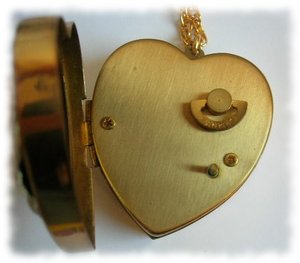
Hidden away safely, even for the time being from myself, is the only physical memory I have of you: the gift you gave me of a small music box shaped like a heart with a beautiful photo of  you inside. It will go to my safe deposit box once I find it again.

I will always be grateful that once I knew you and for the space you occupy in my memories. The pain has long evaporated and today only a sweet memory remains. There has been no greater love in my life. I’m grateful that whenever I hear Anita Baker singing you always come to mind…

If I can’t see your face,
I will remember that smile
’Cause you’re the finest thing
I’ve seen in all my life.
You bring me joy.
From Anita Baker’s song “You Bring Me Joy” by David Lasley

Wasting Time Well

time-travel2-photo-courtesy-of-junussyndicate-on-deviantART

Time is an equal opportunity employer.
Each human being has exactly the same
number of hours and minutes every day.
Rich people can’t buy more hours.
Scientists can’t invent new minutes.
And you can’t save time
to spend it on another day.
Denis Waitley

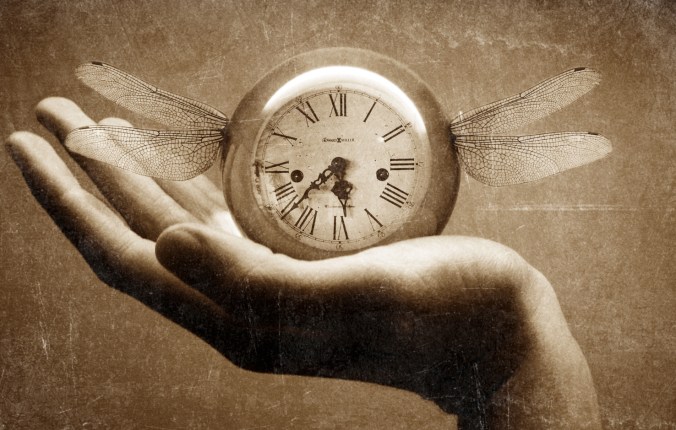
Until recently losing track of time was mostly restricted to great moments of a vacation, being totally engrossed in a good conversation or activity, being stunned by beauty or becoming caught up in the rapture of love. In those instances my awareness of the day and/or hour was fleeting and lasted for no more than seconds and minutes.

The fact that I lose track of time more now in semi-retirement is a wonderful thing. What’s meaningful is the experience of being so absorbed and so immersed is no longer restricted to “doing”. With increasing regularity I find myself wasting time without much care about its passage. It feels like I have been freed from a prison where time was my jailer.

One of my newly founded beliefs of the last decade is modern wealth is more about time than money. It was not that long ago rushing from one endeavor to another, one meeting to the next one and seeing this person and then the next person occupied the majority of my awake time. For a long while being so involved in work gave me a sense of importance that today I don’t find significant.

Time goes faster the more hollow it is. Lives with no meaning go straight past you, like trains that don’t stop at your station. Carlos Ruiz Zafon

Today I am discovering time has only the amount of importance I place on it. My experience of being alive is better when I can stop having thoughts like “what should I be doing?”, “I should be working on ___” or “I’ve got to be productive”. Such things are all in my head and broken down to their essence are actually borderline crazy! My time is mine to spend any way I choose and if ‘wasting’ it feels best, then I will do just that.

I had the mistaken belief that value should be placed based on rarity. My finding concerning time is my value of it is now placed based on the quantity of it I have. It is my hope that I can become as proficient at wasting time well as I once was at being productively time conscious.

For the wealth of time life has brought me to, I am grateful. To realize wasting time well is a good thing brings a smile of happiness and peace.

Free time is the most expensive time you have,
because nobody pays for it but you.
But that also makes it the most valuable time you have,
as you alone stand to reap the profits from spending it wisely.
Jarod Kintz