When You Look Back

C_-S_-Lewis-Desk-and-StudyThis morning browsing for a quotes something C.S. Lewis wrote came into my view: When I was ten, I read fairy tales in secret and would have been ashamed if I had been found doing so. Now that I am fifty, I read them openly. When I became a man I put away childish things, including the fear of childishness and the desire to be very grown up. Those words started me thinking how absurd a good bit of what society defines adulthood is.

Long ago I grew tired of being young although our society holds youth as it’s holy grail. The 20s and 30s were exhausting as I tried to fit in, succeed and act like I knew what I was doing when I really didn’t. Somewhere in it all, I started to become ‘me’. In some ways mature for my years and in others quite childish for my age. That was the start of becoming a man. Lesson: Don’t be in too big a rush to lose everything behind related to childhood. Innocence is often a clear scope for looking at things accurately.

To be concerned about being grown up, to admire the grown up because it is grown up, to blush at the suspicion of being childish; these things are the marks of childhood and adolescence. And in childhood and adolescence they are, in moderation, healthy symptoms. Young things ought to want to grow. But to carry on into middle life or even into early manhood this concern about being adult is a mark of really arrested development. C.S. Lewis

The changes from twenty-one to thirty years of age exceed all my combined changes of all other years. What level of maturity I did  attain came mostly from painful experience and no other place. Lesson: The only real ‘truth’ anyone can ever know for certain comes from their own experiences, especially the painful ones.

Pain insists upon being attended to. God whispers to us in our pleasures, speaks in our consciences, but shouts in our pains. It is his megaphone to rouse a deaf world. C.S. Lewis

Most of my life I have been afraid of love; fearful of being hurt. What life taught is love always bring suffering to balance its joy. Without that certainty, the love I have come to know would have far less meaning. Lesson: The greatest and deepest love will in time bring the greatest pain. To fear the latter is to deny one’s self the former.

To love at all is to be vulnerable. Love anything and your heart will be wrung and possibly broken. If you want to make sure of keeping it intact you must give it to no one, not even an animal. Wrap it carefully round with hobbies and little luxuries; avoid all entanglements. Lock it up safe in the casket or coffin of your selfishness. But in that casket, safe, dark, motionless, airless, it will change. It will not be broken; it will become unbreakable, impenetrable, irredeemable. To love is to be vulnerable. C.S. Lewis

My heart and mind are buzzing now with the lines of thinking C.S. Lewis put me on today. I was only ten years old when he passed away, but his legacy lives on for me as a favored writer, teacher and adviser. I owe a debt of gratitude to C.S. Lewis’ best friend, JRR Tolkien, for introducing me to Lewis in an article I read about the two men when I was at a young, impressionable age. Within the fantasies they spun I found wisdom I will always be grateful for.

Isn’t it funny how day by day nothing changes,
but when you look back, everything is different…
C.S. Lewis

The Ultimate Virtue

11b

Wanting to love someone is not the same as loving someone.
Knowledge of how to build something will not build anything.
Needing to get in better shape does not make me healthier.
Aspiring to make a difference does not make a difference.
Wishing to be kinder does not make me more kind.
Knowing what is right is not doing what is right.
Realizing what I should do is not the doing of it.
Craving a relationship does not put me in one.
Desiring to apologize is not an apology.
Yearning to finish a book is not writing.
Wanting to travel is not traveling.
Longing for love is not love.

Knowing is a small thing.
Using what I know is a big thing.

Almost two hundred years after he lived Johan Wolfgang von Goethe is remembered as many things: poet, playwright, dramatist, novelist, scientist. But it’s what the man left behind as a philosopher that has taken root within. Sometimes when I kind of lose my way, I frequently find something ‘good ole Wolfgang’ wrote will nudge me out of “thinking” and into “doing”. Here are four examples:

Doubt can only be removed by action.

As soon as you trust yourself, you will know how to live.

Knowing is not enough; we must apply. Willing is not enough; we must do.

Thinking is easy, acting is difficult, and to put one’s thoughts into action is the most difficult thing in the world.

With the gift of lots of time on my hands it’s not easy some days to direct myself toward something, even if my desired ‘something’ is screwing off. That too can be done well. Wasting time is not performed to its full potential if the voice inside is saying I should get busy being productive. Today I make the commitment to ‘screw off and waste time’ to my fullest potential. I smiled as I typed that because I am humbly grateful for a Tuesday that is mine, all mine.

Knowledge without application
is simply knowledge.
Applying the knowledge
to one’s life is wisdom,
and that is the ultimate virtue.
Kasi Kaye Ilopouloa

Sooner or Later

two women on rocks edit

Love causes pain.
Love cures pain.
And love is a pain.
Where love is,
pain is never far away.
Love will fill your heart,
break your heart
and heal the heart that’s broken.
And it is true that
every love story has an unhappy ending,
sooner or later –
even if the love lasts a lifetime,
somebody dies first,
leaving somebody behind with the pain of grief.
Love is blind – and love opens eyes.
Falling in love with someone of another race,
another religion, or another class will be
both painful and instructive,
sooner or later.
Falling in love with someone
not of your sexual persuasion
will bring pain and knowledge,
sooner or later.
And falling in love with love instead of a person
will pain you and teach you,
sooner or later.
Love is an active verb – a river, not a pond.
Love can make you want to die –
and love can make you want to live.
From the book “True Love” by Robert Fulghum

Years ago I became friends with a woman I worked with who was openly gay. In spite of knowing what I did, in time I began to fall for her. I could not help it. She was beautifully feminine, lots of fun and such a caring soul. I tried my best to keep our relationship that of two good friends. It worked for a time and then one night I tried to kiss her. I was out of line. We both ended up confused. My action started the unraveling of what we shared and in a few months I moved away for a new job. I went east and a while later she went west. Within a year we lost track of each other completely.

D… where ever you are I hope you are living a good and contented life. I pray you found the woman of your dreams and are living contentedly like you hoped. The romantic love that tried to sprout within me for you has mellowed into the kind one feels for family; for a cherished friend. You taught me about how difficult the world can be for a pretty woman who isn’t straight. Some hated you for being true to yourself. Others did not understand. Maybe I didn’t way back then, but I do now. Be happy sweet Angel… where ever you are.

A rose dreams of enjoying
the company of bees,
but none appears.
The sun asks: “
Aren’t you tired of waiting?”
“Yes,” answers the rose,
“but if I close my petals,
I will wither and die.”
Paul Coelho

To Better Practice What I Already Know – Part Two

RealityCheck_display_image

Tomorrow Part Two of Ms. Marshall’s “Twenty Six Ways To Love Life

Eight months ago my post here ended with those words. It was my intention was for a back to back ‘two-part’er’ but the second installment got lost on my hard drive and was never posted. Albeit late, I am making good on posting the remaining half.

14.Travel. Explore different places. If you can’t afford to fly, drive. You don’t have to go far. just go. Learn how to travel on a budget and go twice as much.
15. Celebrate Mondays. Mondays are 1/7 of your life. Do something special on Mondays so they feel like Fridays. Notice the attitude you have on Friday compared to Monday. How can you make Mondays special.
16. Volunteer. This will add to your mental and emotional health. It’s a feeling money can’t buy. Do your part to make the world a better place.
17. Play. Balance life with play. Play cards. Play with children. Play outside. Play games. Play for fun. Play to improve yourself.
18. Live in the present moment. When we are anxious we are either living in the pain of the past or the fear of the future. Learn to take one moment at a time. Live in the present.
19. Respect elderly people. Spend time with them. They are worthy and wise. You will be old someday yourself.
20. Read. You can learn something new everyday. Never stop learning. Never stop growing.
21. Breathe. Learn to breathe properly. Breathe deeply and often. It will decrease your tension and anxiety.
22. Be patient. Learn to wait patiently. We spend between 3-5 years of our life waiting in line. Learn to be patient with others. We don’t all grow at the same pace. Learn to be patient with your children, it is a wonderful gift to give them.
23. Learn to deal with your emotions. It’s a scientific fact that the center for emotional control is not in someone else’s behavior it’s in your brain.
You can talk with a friend, journal or exercise, these are a few methods for dealing with your emotions. Anger covers up pain, pain covers fear. Recognize your feelings, emotions and know how to remain calm in chaos.
24. Take the high road. Know what your values are and live by them. If a cashier gave you an extra five dollars back in change would you give it back?
25. Simplify. List the areas of your life that need to be simplified. Choose one area of your life and begin. Keep it simple.
26. Love. Learn how to express your love to others. Speak loving words and take loving action. Decide to contribute love to the world.
http://theboldlife.com/2009/01/26-ways-to-love-life/

I’m glad items number 14 through 26 came back into my field of consciousness. No time will be spent regretting my forgetfulness that caused close to a year to pass between part one and part two being posted. I have faith that part two was something I needed to read NOW. Several of the items are precisely on target for what I needed to be reminded of this morning.

I am grateful for a rich and rewarding life. It’s sometimes grueling, complicated, and agonizingly painful… but my life is ALWAYS good even at its most difficult.

Always be fearless. Walk like lion,
talk like pigeons, live like elephants
and love like an infant child.
Santosh Kalwar

Any Family With More than One

winniethepooh1

In late 1925, a newspaper in London published a story by A.A. Milne titled “The Wrong Sort of Bees”. The tale introduced a bear named Winnie the Pooh who would become the lead character of one of the most successful children’s stories of all time. Inspiration came to A.A. Milne’s from his son’s meeting at the London Zoo of a black bear from the wilderness of the Canada. The son was named Christopher Robin Milne and the bear was called “Winnipeg” or “Winnie”.

In his stories Milne endeavored to make his character’s less than perfect with the belief it made them more loveable. Most of us have been familiar since childhood with Pooh’s forgetfulness, Tigger’s mood changes and Piglet’s fear of just about everything. Here in plain terms is a list of the dysfunctions I believe A.A. Milne’s gave his characters of Hundred Acre Wood to make them have human likeness.

Pooh Bear – suffers from an eating disorder and food (honey) addiction, episodes of dementia and exhibitionist tendencies (reluctance to wear pants).

Tigger – mood swings from irrational exuberance to despair combined with narcissistic behaviors and A.D.H.D. evidenced by his inability to ever be still.

Piglet – General Anxiety Disorder with a variety of phobias including creaking branches, small streams, gusting wind, his own shadow and other irrational and delusional fears.

Eeyore – clinical depression and feelings of inadequacy driven by his lack of a tail and his need to overcompensate by wearing a fake one made from fabric and a nail.

Owl – narcissistic personality approaching delusions of grandeur fed by anti-social tendencies and an over inflated ego with an irrational need to always be correct.

Rabbit – obsessive-compulsive personality with a side helping of neurosis exhibited by his incessant, exacting attention to his gardening, cooking and keeping things orderly.

Even the Christopher Robin character, patterned after A.A. Milne’s son, could be said to have “issues”. Some have surmised that in the story his playing in the woods all the time while talking to stuffed animals could be looked upon as either just a kid’s story or a form of psychotic hallucination.

You may or may not choose to think it is fairly apparent the benign messaging of story shapes the consciousness of children in a healthful way. I choose to think the characters are not just entertainment, but art in the way the writer poured emotion into their creation.

Having been in depression recovery for years now I can readily think of people I know in self-help groups that match each of the Pooh characters. I am grateful A.A. Milner created such deep characters and meaningful stories that have more significance today than when they were written. To smile, be entertained and be touched, all at the same time, is truly the mark of great work.

You know the definition
of a dysfunctional family,
don’t you?
It’s any family with more
than one member in it.
Sarah Pekkenen

Based on articles found at:
http://thedailyretort.com/on-the-psychiatric-couch-winnie-the-pooh/
http://top4eva.tumblr.com/post/13572677292/acronyms-the-dysfunctional-psychology-of-winnie

Worth the Risk

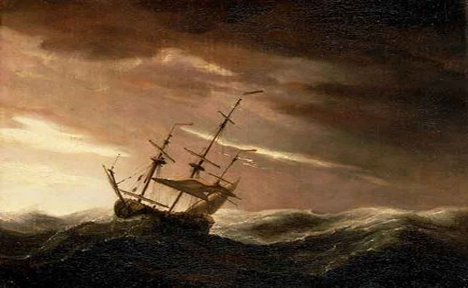
ship_storm SIZED

Once in a while a thought comes so strong it blocks out all other thinking temporarily. Even when I move on to other considerations and ideas, the over-riding concept blazes back into my mind frequently.

It was scary as hell when I was deliberating about walking away from my profession with no concrete thought of what was next. There was a dumpster of cranky inquiries as my ego fought the possibility.

What happens if your hopes don’t come true?
What if you run out of money?
What if you’re wrong?
What if others think you are crazy?
What if you want back in and no one wants you?
When are you going to start this new life?
When will you know if you’ve done the right thing or not?
Why do you think you’ll succeed at something new?
Why do you really want to do quit your career?

Five when’s and a pair of when’s and why’s are only the beginning of the consternation I want through. Ultimately there was no logic to walking away from a successful career of decades. Rather it was a feeling in my heart and gut that I just had to. I would suffocate emotionally if I kept on doing the same thing and denying myself a chance at other aspirations. Finally I just said “F’ it”. I know this is what I need to do, although I can’t explain it to anyone else.

Even if no one is watching you, lighting out for new, unmarked territories is terrifying. “We impute a lot of power to the unknown, because it was life-threatening for much of human history… Putting that fear in its proper perspective can help. You are probably not going to fall down a ravine or get eaten by a lion if you move to the opposite coast.”

… the human spirit wants to break out of habitual constraints. Studies confirm… We tend to regret the things we didn’t try more than those we did—even when we fail. http://www.psychologytoday.com/articles/200611/you-20

Don’t ask me to explain why I resigned years before my planned retirement. I can’t tell you why the desire to travel the world, weeks at a time, burns so hot in my soul. Where I got the idea I could be a writer I am clueless. There is no logic to walking away from a flourishing professional life when all I have are dreams.

And there was the answer. Screw logic and follow your heart! Stop paying so much attention to you mind.

My conclusion became I will find a new path as long as I am speeding 100 miles down the old one. So here I am uncertain, but joyful; a bit perplexed but happy. I cast the lines off and am sailing into what I hope is a ‘new world’. I am grateful for the fortitude and belief in myself that made my new expedition possible. I am worth the risk!

I wondered about the explorers who’d sailed their ships
to the end of the world. How terrified they must have been
when they risked falling over the edge; how amazed
to discover, instead, places they had seen only in their dreams.
Jodi Picoult

Beyond Ideas of Wrong-Doing and Right-Doing

flock of migrating canada geese birds flying at sunset

Almost a year ago I saved a poem by American poet Mary Oliver titled “Wild Geese”. From the first reading the words touched me with their directness and clarity.

I felt certain the poem would be a good item to include in a future G.M.G. installment. Going back to it several times there was never a morning when it seemed to fit exactly into my thoughts. Today Mary Oliver’s poem surfaced again from my hard drive and I gave in to my desire to include it here. Instead of continuing to wait for it to fit into my writing, I have chosen to include it in place of my thoughts.

You do not have to be good.
You do not have to walk on your knees
for a hundred miles through the desert, repenting.
You only have to let the soft animal of your body
love what it loves.
Tell me about despair, yours, and I will tell you mine.
Meanwhile the world goes on.
Meanwhile the sun and the clear pebbles of the rain
are moving across the landscapes,
over the prairies and the deep trees,
the mountains and the rivers.
Meanwhile the wild geese, high in the clean blue air,
are heading home again.
Whoever you are, no matter how lonely,
the world offers itself to your imagination,
calls to you like the wild geese, harsh and exciting –
over and over announcing your place
in the family of things.

I long suffered with “trying to be perfect”. My future was held hostage by holding my past to my head and firing it into my brain over and over again. Mary Oliver’s poem tells me I don’t always have to be good, nor do I have to repeatedly repent until it hurts me. She goes on to assure me that it is okay to love who and what I love. Her words about a changing landscape are a reminder how quickly things change and how fast life passes by.

Then there are the Mary Oliver’s words that ring with the most comfort: “Whoever you are, not matter how lonely, the world offers itself to your imagination…announcing your place in the family of things”. With an emotional uprising in my chest each time I read those words, there is assurance I belong to this world and it to me. I am grateful for the peace that promise brings.

Out beyond ideas of wrong-doing
and right-doing there is a field.
I’ll meet you there.
When the soul lies down in that grass
the world is too full to talk about.”
Rumi

A Blessing of Grace

swaddle-baby-636 blur

When getting married the second time, I knew exactly what I was doing. I was motivated by love. In the light of day the internal dysfunction that beat on me constantly could not be seen. And in time it took control again. While my then-wife was not blameless, my behavior is ultimately what brought a divorce.

I really did love her. Always will. There I a debt of gratitude I carry for her for how she helped me when I earnestly got into recovery from PTSD, childhood trauma, compulsion, depression and such. Even after divorce she came around and gave me support for a couple of years before telling me she had to get on with her life and could no longer have contact with me.

In time I have come to accept A. moving on. I understand she did what she needed to do for herself. She remarried and has custody of the child of a family member. She always wanted to be a Mother and I bet she is doing a great job raising that little boy.

Two weeks ago my mobile phone rings. Caller ID says it’s ‘her’. It’s been a long time since we’d spoken and I was surprised. I answer and soon notice it’s a ‘pocket dial’. To no avail I tried making whistling noises and such to get her attention so she’d know I was on the other end of the phone.

For a couple of minutes I listened to her sing along with the little boy while driving. It was touching when she switched to “you are my sunshine, my only sunshine, you make me happy when skies are gray, you’ll never know dear how much I love you, so please don’t take my sunshine way…”

You see those were the words we sang at least part of to each other just about every day while hugging and greeting each other after being apart. My first reaction was sadness, but it was quickly replaced with good feelings. It was with the knowing the only way she could be singing those words was if she was past the hurt of our relationship.

It was the happiness in her voice that meant the most. It lifted a good bit of my weight off the hook I had kept myself hung on for hurting her.

While I could have kept listening, I smiled and pressed disconnect instead. Initially the thought came I should text her or email to let her know about accidentally calling me, but thought better of it. There would have been no point except to bring a little of her attention to me.

I will never know if A. realizes she called me without knowing it. I actually hope she doesn’t. The accidental phone call gave me a good bit of relief from the guilt I was still carrying about the end of our marriage.

I will always love her, but can do so now easier in a past-tense sense. Knowing she is happy and content living a life that contains her dream of motherhood made me feel good. After all, if a person truly loves another it’s that person’s happiness that is most important. It’s another small example of a divine force at work. What might appear only as an accidental phone call was a blessing of grace. To the source from which all things originate I will always be grateful for this gift.

Love is when the other person’s
happiness is more important
than your own.
H. Jackson Brown, Jr.

Living From the Inside Out

03cov_583

Once in a while I find myself wishing to be in a time before now. I have imagined living in Victorian times when history tells us manners and romantic love were in vogue. On other occasions, my fantasy has been living in the age of honor and chivalry written about the Knights of the Roundtable. Both are pure make believe and in truth both times were actually really tough for average folks.

It’s more productive to come back to my life experience. Many people wish for earlier times in their life and I am not immune. The late 60s and early 70s have long seemed like a cool time to visit as long as I could have a different life back there than I actually had.

Most people, from the age of about 16 to about 30 have dreams, expectations, zest and energy. They are still young and the future is before them. Often, there is a certain feeling of euphoria and great expectations. This is the time when people are at the start of their life, still able to think big, before settling down, getting a job, getting married, and entering the hustle and bustle of life.

When you think about the past, the feelings of joy, happiness and expectation associated with it awaken, and you feel good. Then you associate those feelings with the past, and get the impression that the past was a better time. Actually, what you are yearning to is to the feelings of euphoria that you experienced when young, to the dreams and expectations, which are gone now.

My advice to you is to awaken those feelings and thoughts intentionally, and to associate them with the present. No matter how old or young you are, where you live, and under what circumstances you are living, you can use these thoughts and feelings to motivate you. ou can again experience the euphoria and great expectations you had when young, but use them constructively to make them come true. Remez Sasson http://www.successconsciousness.com/blog/motivation/past-better-than-present/

A fairly recent discovery of mine has been changing the direction of my life has brought back some of the good feelings enjoyed in my teens and 20s The reason is not complicated. I am embracing the possibilities of being alive in ways like I did when young. And it’s not just the feel-good neurochemicals that my waxing nostalgic brings. Back in my younger days there were many “things I thought I could be” and lots I was “going to do”. Life seems filled with such possibility again.

One of the benefits of “old days” was the amount of times I spent with people. Today with all the possibilities to entertain myself it’s easy to fall into a hole and not spend much time with others. I’ve found adding more time with friends and making new ones is one of the best uses of my time. Making new “good old times” with others has become my best remedy for yearning for times past.

As a society we do live in challenging times with monstrously huge problems. However the overall quality of my life really does not have much to do with them. I can be socially aware and even active without internalizing the issues. Living from the inside out is a lot healthful than life being shaped from the outside where I have no control.

The chief beauty about time
is that you cannot waste it in advance.
The next year, the next day,
the next hour are lying ready for you,
as perfect, as unspoiled,
as if you had never wasted or misapplied
a single moment in all your life.
Arnold Bennett

From Then Till Now

20130107__0308DSC_0308Imperial-Dunes-sandstorm

It’s not uncommon to have gone through something filled with difficulty and pain, only to end up grateful for what it taught. And so it has been with me the last half-dozen years or so. I went from who I was to who I have become. Like a walk through hell, I do not wish to ever have to again face the sort of things I went through. However, I am grateful to have survived and be so much better for the experience.

Sometimes fate is like a small sandstorm that keeps changing directions. You change direction but the sandstorm chases you. You turn again, but the storm adjusts. Over and over you play this out, like some ominous dance with death just before dawn. Why? Because this storm isn’t something that blew in from far away, something that has nothing to do with you. This storm is you. Something inside of you. So all you can do is give in to it, step right inside the storm, closing your eyes and plugging up your ears so the sand doesn’t get in, and walk through it, step by step. There’s no sun there, no moon, no direction, no sense of time. Just fine white sand swirling up into the sky like pulverized bones. That’s the kind of sandstorm you need to imagine.

And you really will have to make it through that violent, metaphysical, symbolic storm. No matter how metaphysical or symbolic it might be, make no mistake about it: it will cut through flesh like a thousand razor blades. People will bleed there, and you will bleed too. Hot, red blood. You’ll catch that blood in your hands, your own blood and the blood of others.

And once the storm is over you won’t remember how you made it through, how you managed to survive. You won’t even be sure, in fact, whether the storm is really over. But one thing is certain. When you come out of the storm you won’t be the same person who walked in. That’s what this storm’s all about. Haruki Murakami

I have learned it’s not unusual to go through something filled with difficulty and pain, only to end up grateful for what it taught. And so it has been for me the last half-dozen years or so. From then to now I went from who I was to who I have become. That journey was like a walk through a blinding sandstorm that bruised, blinded and left me completely lost at times. I am grateful to have somehow muddled through the shifting sands and be better for it. I am thriving!

There are two questions a man must ask himself:
The first is ‘Where am I going?’
and the second is ‘Who will go with me?’
If you ever get these questions
in the wrong order you are in trouble.
Sam Keen